Guest post from Stephen Jackson, Stephen Jackson is Senior Curator, Furniture and Woodwork at National Museums Scotland, and the author of the book Scottish Furniture, 1500-1914.
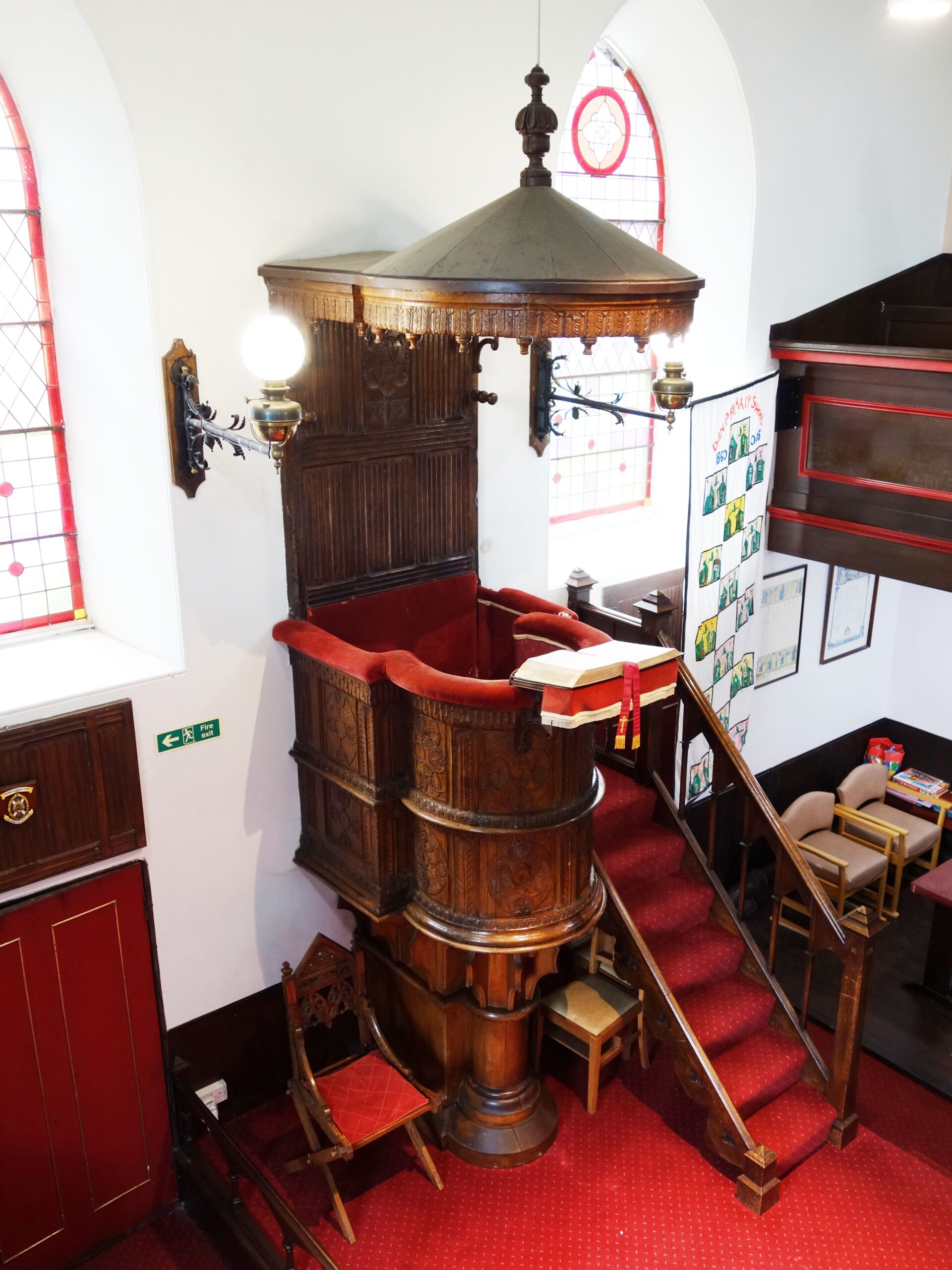
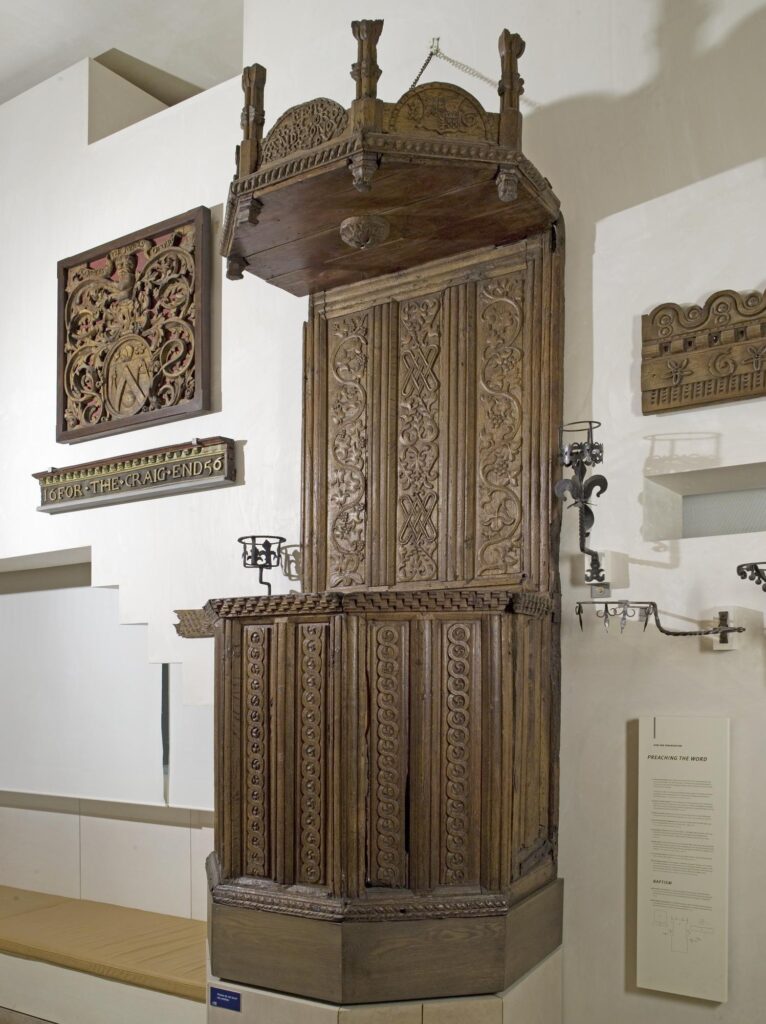
Is the national museum a repository of last resort? Sadly, not. Our storage capacity and operational resources are strictly finite and our collecting must balance historical and artistic merit against future needs and the financial cost of preservation in perpetuity. This recent case study concerns the now redundant church at Dun, in Angus. It was built in 1834 after the heritor, Margaret Erskine, Marchioness of Ailsa, decided to convert the medieval church into a family mausoleum, and thereby push the working church further away from House of Dun. The pulpit, dated 1615, had been removed during the late eighteenth century but was restored to the new building.
The Dun Pulpit (c) Stephen Jackson
As an early-seventeenth-century furnishing event, it had an eye-catching genesis. In 1610 the lairdship of Dun fell to a boy of ten, who was placed in the care of his father’s cousin, the minister of nearby Ecclesgreig (St Cyrus). In 1613, however, his uncle and aunts succeeded in poisoning him. They were prosecuted and executed while his younger brother inherited and the minister, John Erskine, was appointed to the parish of Dun. It was he who commissioned the new pulpit, resplendent with his own arms. This gives us something of a parallel story to that of the pulpit erected at Parton in Kirkcudbrightshire in 1598, and given to the National Museum of Antiquities of Scotland in 1865. In that instance, the father of the minister, Robert Glendonwyn, had purchased the church lands of Parton in the wake of the Reformation and wrestled the right of presentation from a senior branch of his own family who remained Catholic into the nineteenth century.
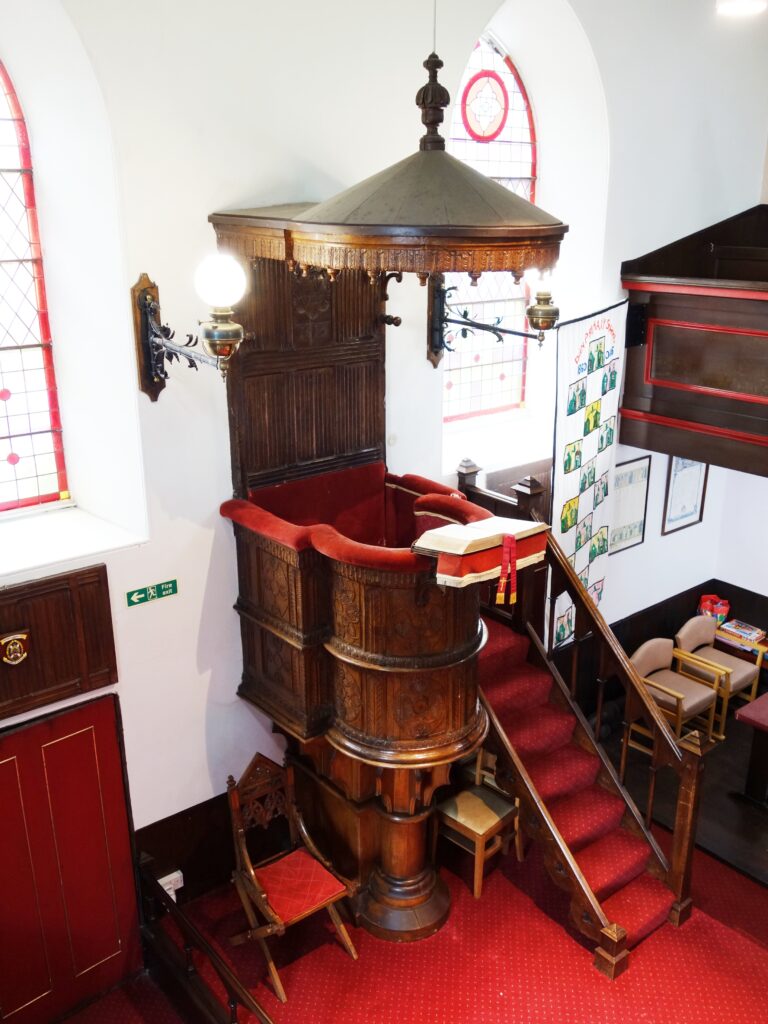
The Dun Pulpit (c) Stephen Jackson
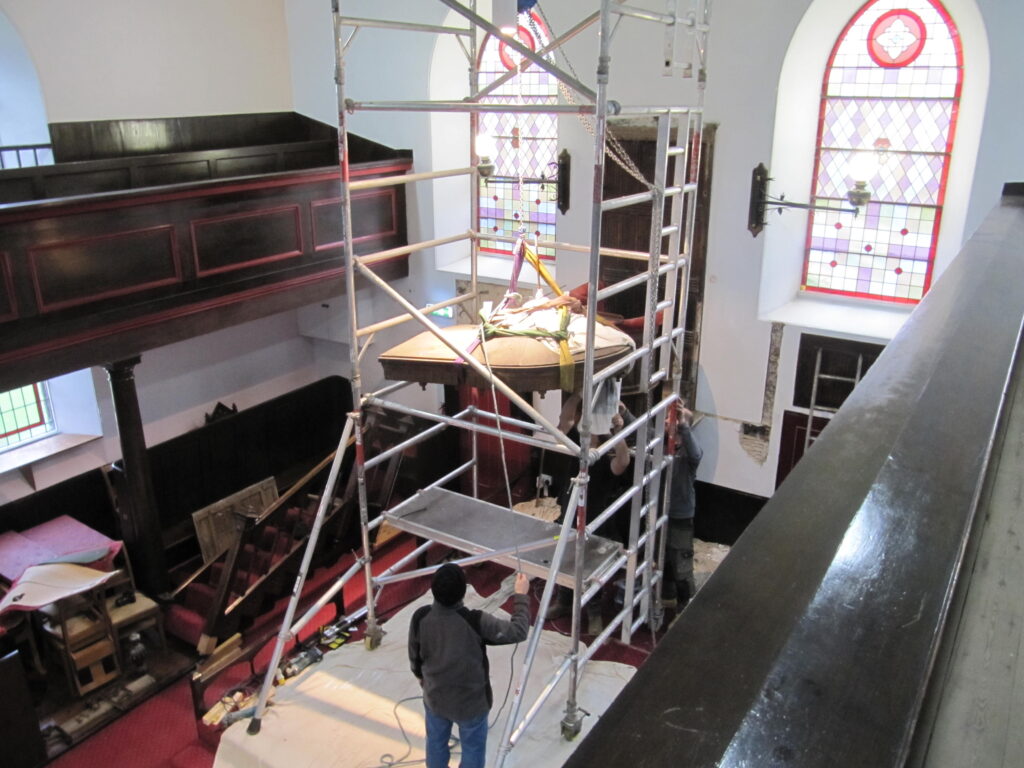
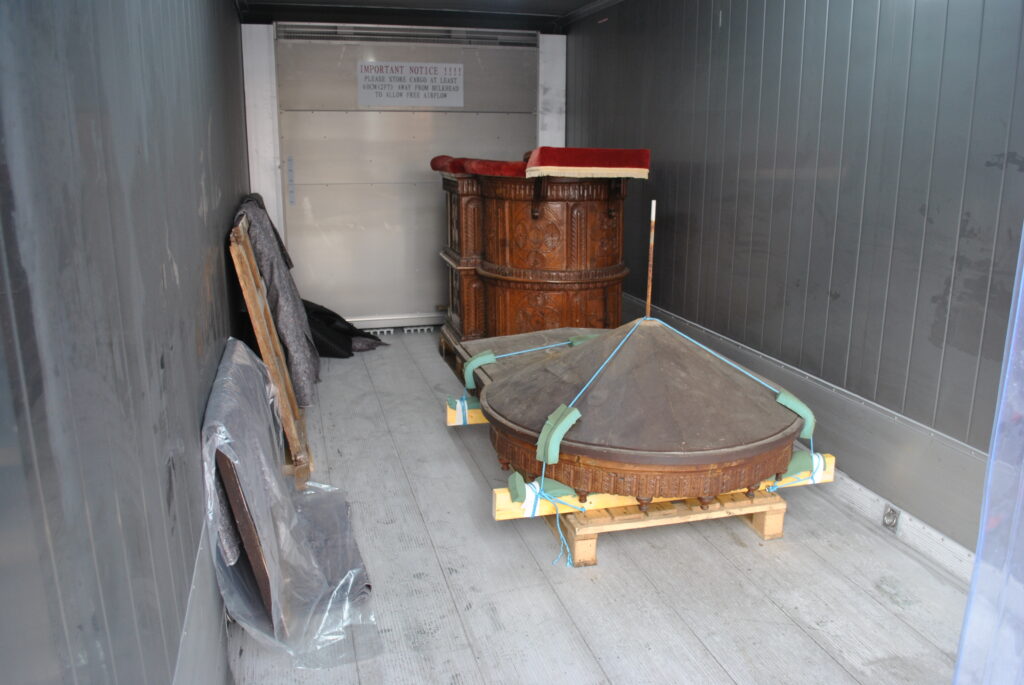
We don’t enjoy taking things out their contexts and nor do we want to build up a large holding of similar large objects. Yet when Anna Groundwater, Principal Curator, Renaissance and Early Modern History at National Museums Scotland and I learnt of the vulnerability of the Dun pulpit, we sought to calculate just what was at risk. We knew that there are not many more than fifteen seventeenth-century Scottish pulpits surviving, and that only four, at most, are older than this one. Several that are still in use are cared for in non-parochial settings, and hence comparatively secure, while the Dun example possesses a good degree of physical integrity compared with others that were over-restored in the past. Thus we accepted it as a gift from the General Trustees of the Church of Scotland, and with support from the Pilgrim Trust our conservators went about the complicated task of removing it, in collaboration with specialist contractors. We decided not to take the nineteenth century pedestal and staircase. Within the confined medieval structure for which it was made, although closer to the floor, it would have been even more imposing.
The Dun Pulpit (c) Stephen Jackson
Prosperity and renewal during both the late eighteenth and late nineteenth centuries resulted in considerable heritage loss. The twentieth century was largely a period of neglectful survival, yet anyone consulting the architectural historian George Hay’s 1957 inventory of church furnishings will read of once well-regarded objects that have since vanished without trace. Museums are not a one-stop solution for vulnerable heritage, however, and the enjoyment of things that remain in situ is greatly to be encouraged.
Parton Pulpit, in the NMS (c) Stephen Jackson
Our thanks to Stephen for sharing his reflections on our blog and at our launch symposium.
Guest Post by Dr Lizzie Swarbrick and Dr Mark Hall
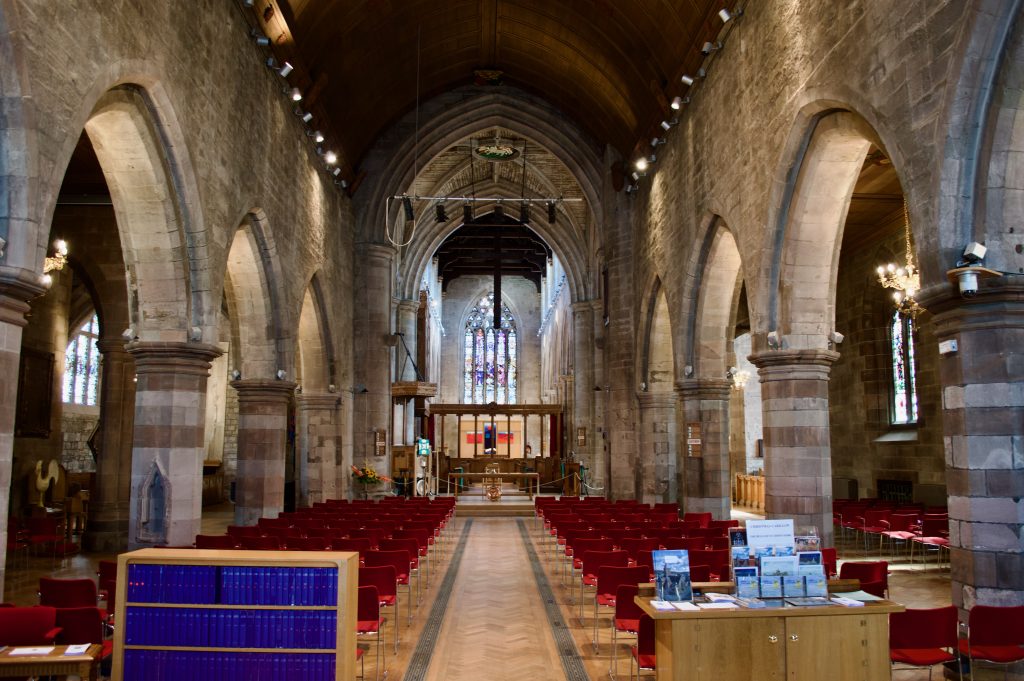
St John the Baptist’s parish church in the centre of Perth is famous for having been the crucible of the Reformation in Scotland. It was here on the 10thof May 1559 that John Knox and others gave sermons to the populace which erupted the day after into a thorough, violent, and widespread destruction and looting of religious buildings in Perth. Knox wrote that, in the parish church itself, ‘the whole multitude cast stones, and laid hands on the said tabernacle, and on all other monuments of idolatry.’1 The ‘monuments’ in question were things which we might now call religious heritage – art and artefacts of all kinds – which were against Protestant doctrines. We know that images of Christ and the saints and liturgical items were particularly targeted in Scotland. However, in St John’s, Perth, the very heart of the Scottish Protestant Reformation, there are a few things which survived the attention of iconoclastic mobs.
Perth St John’s Chandelier (c) Lizzie Swarbrick
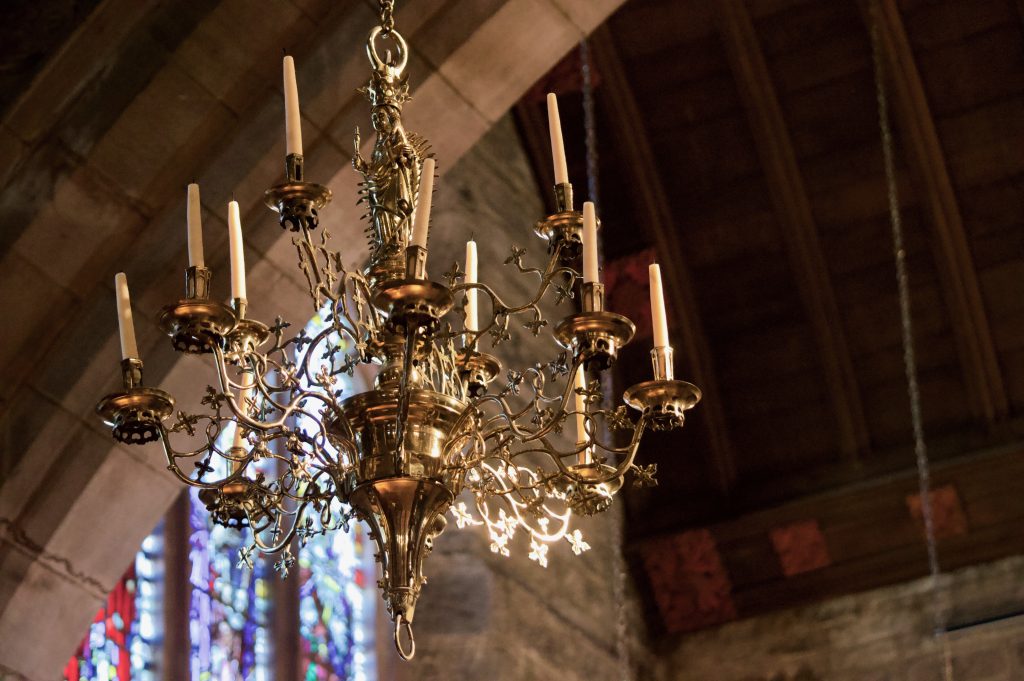
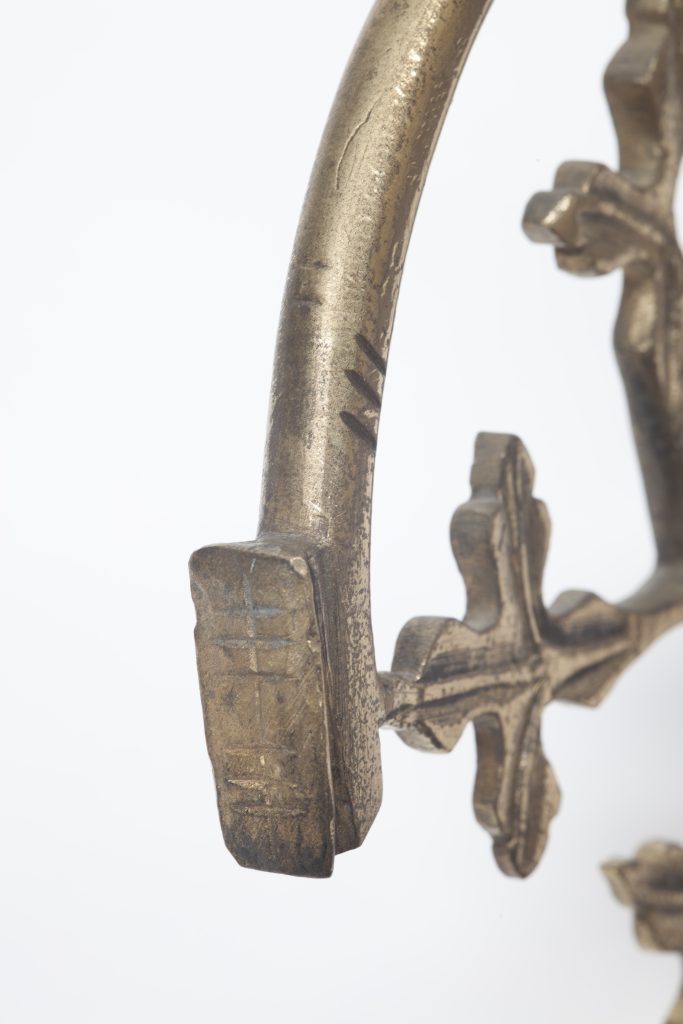
One of these tantalising traces of Scotland’s Pre-Reformation material culture, and perhaps the most spectacular, survives as a gilded brass chandelier, its elements made in the late Fifteenth Century in Flanders. Whilst we now know that this is a composite chandelier, refashioned into a single chandelier probably in the 18th century (see below) when it came to antiquarian attention in the late 18th century, it was understood as the example made for (or purchased by) the skinner or the shoemaker incorporation for their patronage of side altars within St John’s (typical practice of medieval trade and craft incorporations). It now hangs above the north transept, but it may have been made for a chapel dedicated to the Virgin Mary further east.2 This glittering light source has twelve branching brackets (complete with leaves) with cups for candles, a mouth of a lion holding a ring (which would have been used to lower and raise the chandelier when the candles needed replacing) and, at its centre, an image of the Beata Maria in Sole, the Virgin and Child wreathed in a fiery sunburst.
This imagery was particularly popular in Scotland, where it was quickly adopted after its original emergence in Rome in the 1470s-80s when it was linked to the devotion to the rosary.3 On the St John’s chandelier we can see the Virgin Mary, crowned as Queen of Heaven, holding the infant Christ and a sceptre, standing on a crescent moon, and with the sun’s rays shooting out from her mantle. She appears as she is described in the Book of Revelation 12:1: ‘a woman clothed with the sun, and the moon under her feet, and on her head a crown of twelve stars’. This is not the Mary of a cute Nativity scene with a wee donkey, but Mary as she would appear at the Apocalypse, where her role was to entreat Christ, her son, to show mercy to us sinful humans as we rise from our graves at the Last Judgement.
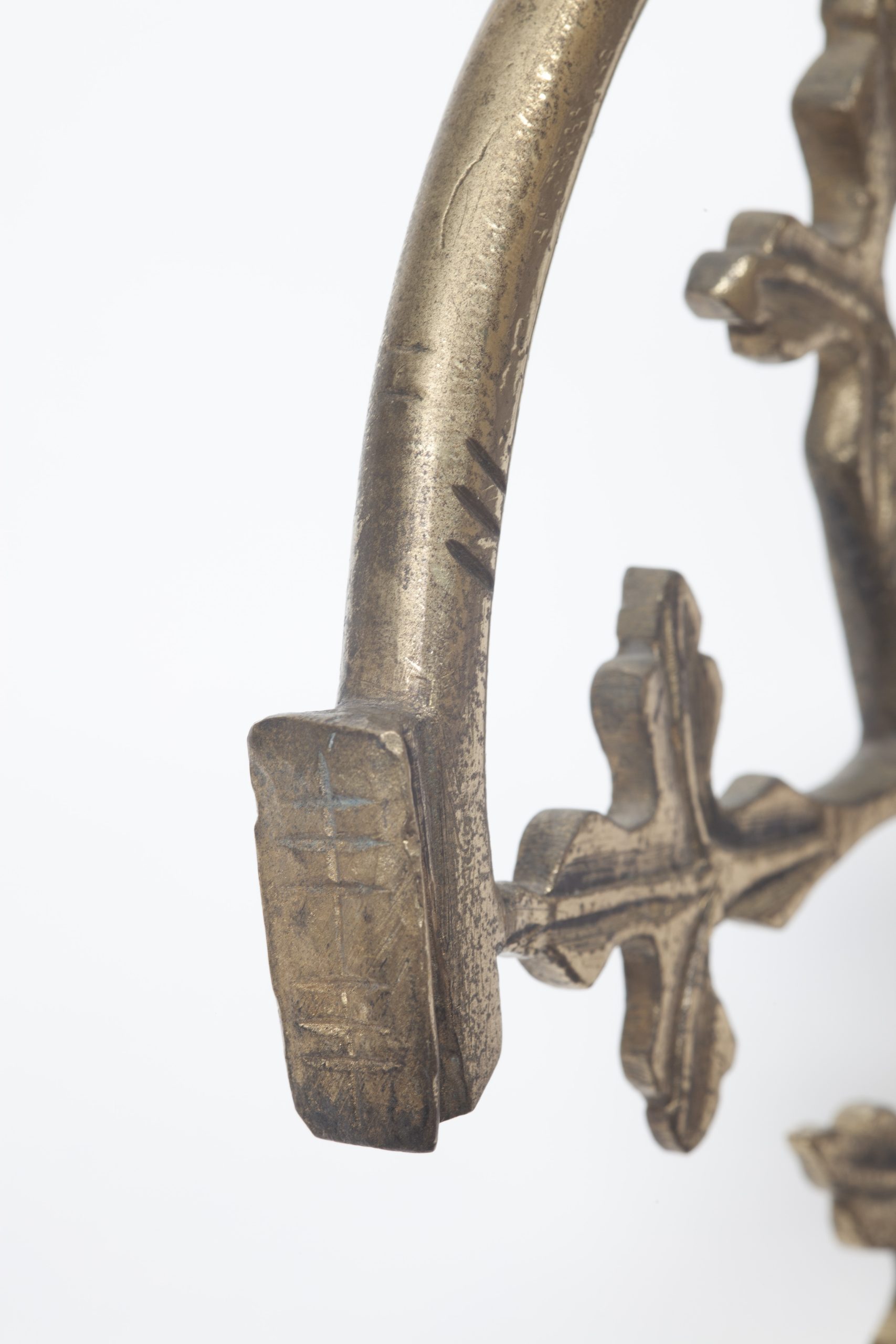
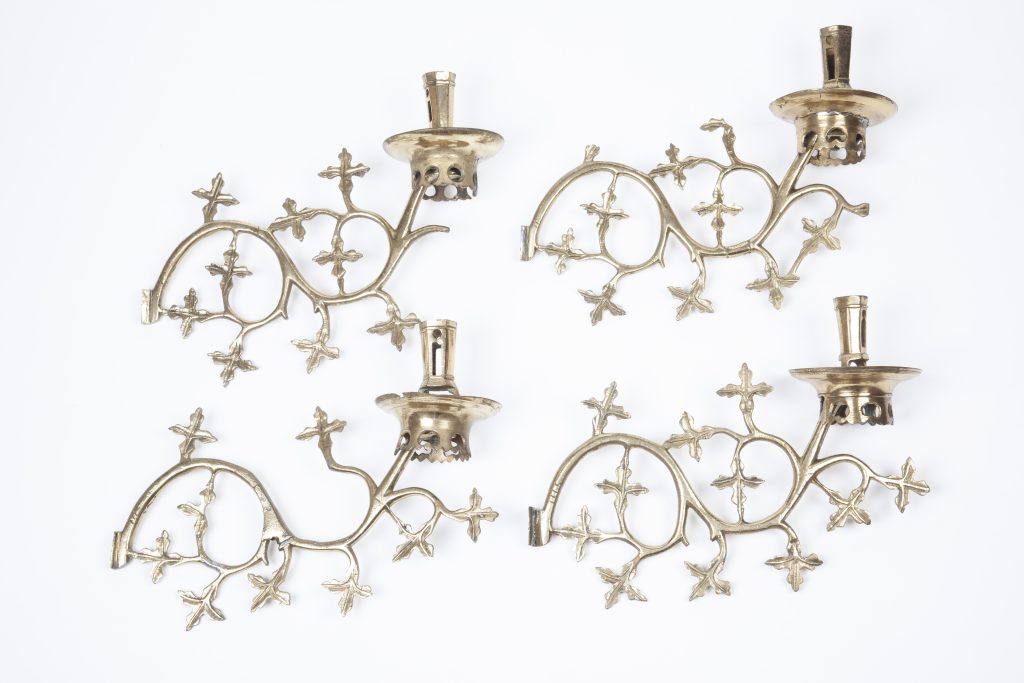
Detachable chandelier brackets each comprising holder, dish and arm (c) Mark Hall
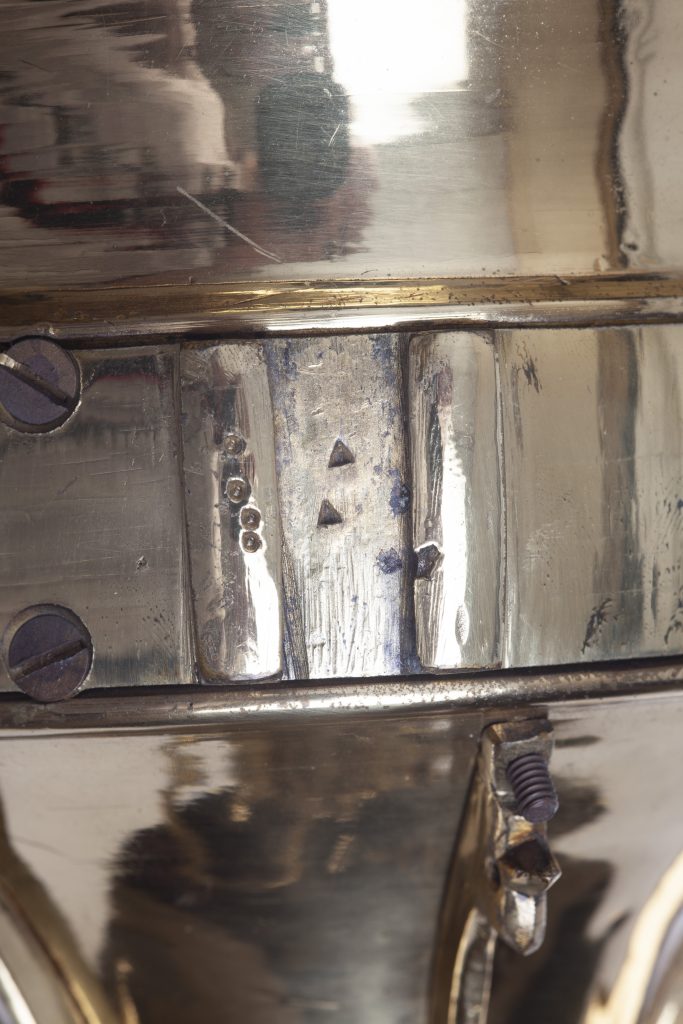
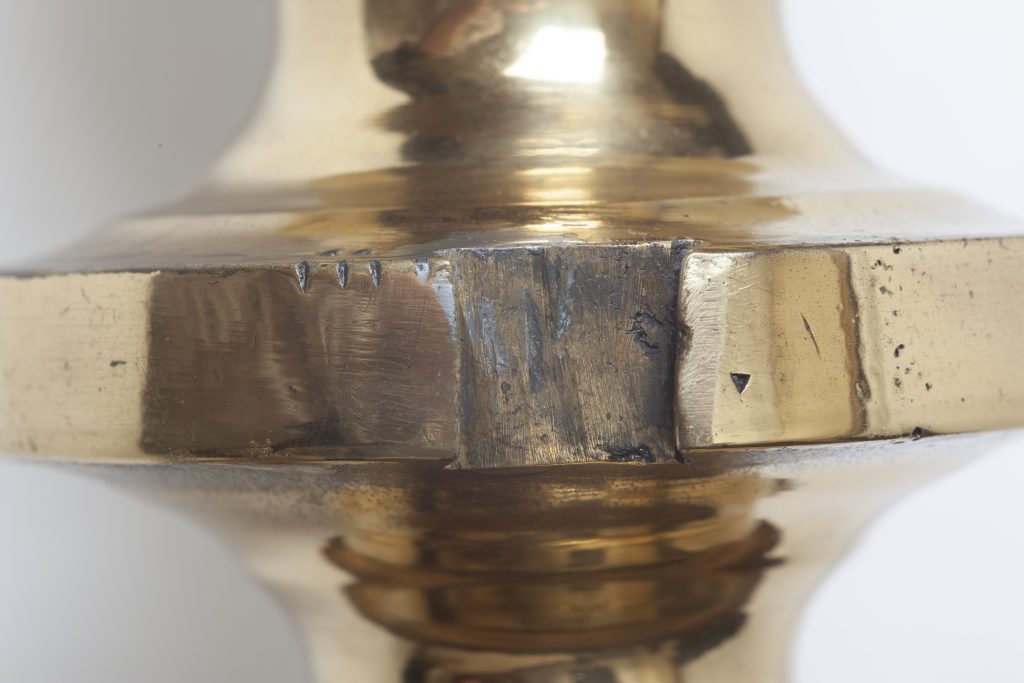
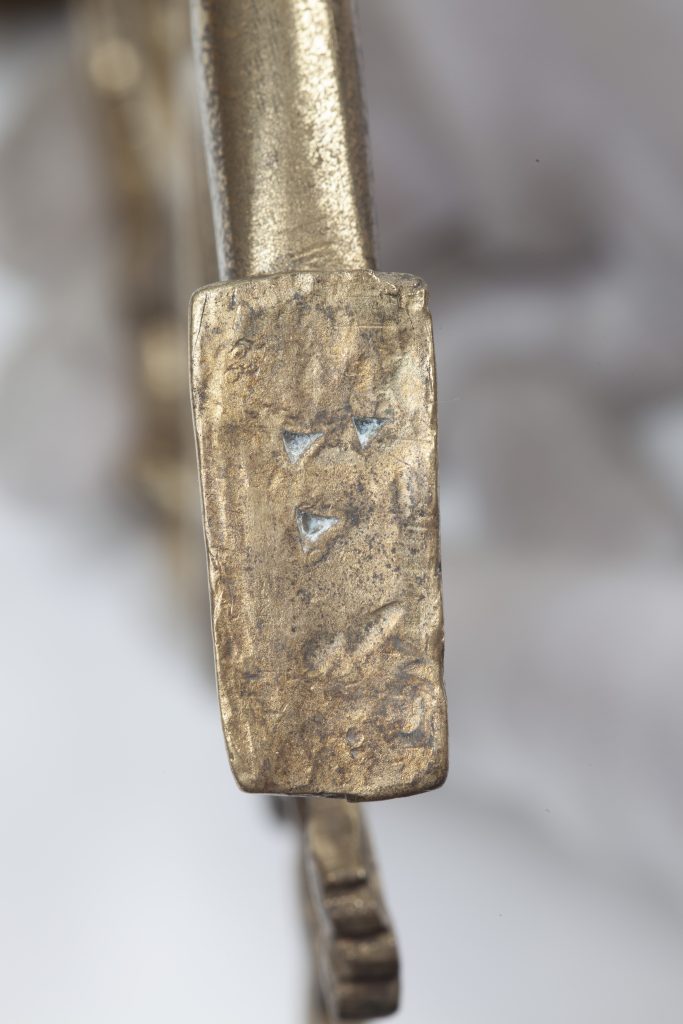
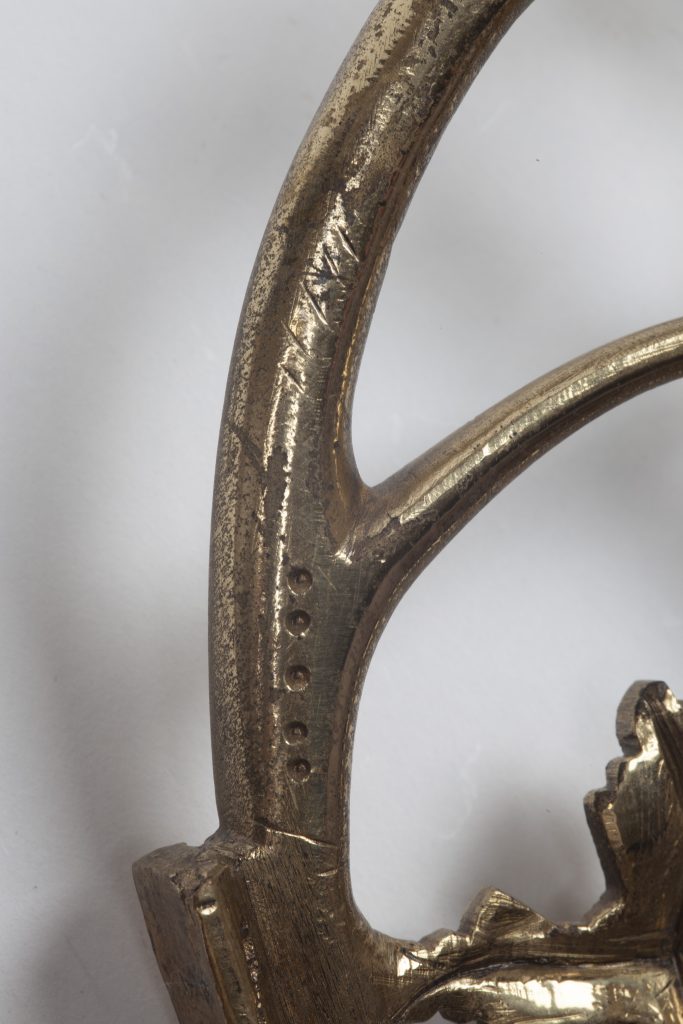
Though it still adorns the church for which it was made, the chandelier was purchased by the Perth Literary and Antiquarian Society in 1812.4 It is now part of the collections of the Society’s successor body, Perth Museum. It still hangs in the Kirk, where (apart from occasional inclusions in exhibitions elsewhere) the chandelier has been on loan since the 1920s after Robert Lorimer completed his restoration of the church interior. In 2010, the museum conducted a technical analysis of the chandelier, following its inclusion in the exhibition celebrating 800 years of Perth’s history. The museum’s analysis revealed that it is, in fact, a composite of several chandeliers, reconstructed from the remnants of various parts of chandeliers which survived the iconoclastic zeal of Reformers. This sort of collaboration between the Museum and the Kirk could serve as a model for the potential ways that heritage bodies and denominations could work together to protect church treasures.
FLower body attachment point with two different symbol matching systems (c) Mark HallUpper body attachment point with three different symbol matching systems (c) Mark Hall
St John’s in Perth is cared for by the Church of Scotland. In 2025, St John’s was awarded a major grant from the National Lottery Heritage Fund, and it has been named as one of the Church of Scotland’s ‘Signature Churches’, a list of what it considers to be its most important properties. It certainly seems that the future of St John’s is as an active church within the Church of Scotland. Even if something were to happen to the church, the magnificent chandelier would be returned to the Museum, so the chandelier is absolutely safe. Both the church and the chandelier would be less significant were they ever to be separated because they add meaning to each other, which is why it’s so brilliant that the museum and the church work together to care for this important work of medieval art.
Bracket foot plate with stamped triangles to match slot on baluster (c) Mark HallTwo sets of attachment guide symbols on lower portion of bracket stem (c) Mark Hall
Within the Church of Scotland, the General Trustees own the church building with all its fixtures and fittings (though the congregation are responsible for its maintenance and insurance), and the congregation own furnishings and movable items within the church (except for communion ware, which was sold to Perth Museum with the aid of National Heritage Lottery funding). So, when a church is closed, there’s often a lot of questions around who owns what, and what should be done with the contents of a building. The Church of Scotland’s own guidance states that ‘The Church has been criticised in the past for cavalier treatment of movable items in church buildings’ before advising that congregations should conduct inventories and then clear the church of items prior to sale.5 Given the scale and rapidity of church closures at the moment, it’s difficult in practice for any denomination to look into every nook and cranny of a building, and even harder to access expert knowledge which could guide those responsible about what is historically significant.
arm with two different symbol systems to guide attachment (c) Mark Hall
Here at ReACH, we’re not saying that there are things like the magnificent St John’s chandelier in every closing church, but there certainly are innumerable objects which have played a part in people’s faith and sense of community. Some items might be nationally important, and others might hold significant memories for individuals. The church surveys by volunteers from Scotland’s Churches Trust have recorded all manner of things, from memorial plaques to hymn books with humorous sketches of locals. Also, because Scottish churches are understudied, there may be historic treasures lurking in a cupboard or forgotten on a dusty shelf. In some cases, those responsible for a church are extremely knowledgeable about the wonders they care for, but in other cases, people simply don’t know the significance of what they have. ReACH is currently bringing together data from all kinds of sources to build a record of the heritage of Scotland’s closing churches. By using this, people involved in heritage and communities caring for it can get a better understanding of what’s out there, and how important it is. All of these things are part of our shared heritage as a nation, and it’s crucial that we understand what we have before things are dispersed.
Perth St John’s (c) Lizzie Swarbrick
When the chandelier was first installed, the parishioners of St John’s in Perth would have gazed up at the glittering vision of the Virgin Mary and Christ Child, surrounded by candles which flickered and blazed, animating the holy figures. They may have been dazzled by the beautiful Virgin in the sun and felt moved to pray to her, they might have been made fearful for the Last Judgement, or perhaps they would have just been impressed by the shining gold – proud of the richness of their burgh’s church. Thanks to Perth Museum and St John’s Kirk, you can still go and look up at this gilded apparition, just as people did in the Fifteenth and Sixteenth Centuries. Why not make a visit? Bring a friend and listen to the guides there about how much they love their church. St John’s and its chandelier have a brilliant past and a bright future. Other churches, and the items within them, may not be so lucky, unless we all act on behalf of our shared heritage.
Our thanks to Lizzie Swarbrick and Mark Hall for their thoughtful contribution to our Heritage Spotlight series
Dr Georgia Vullinghs is Curator of Renaissance and Early Modern History at National Museums Scotland. Her remit covers objects relating to Scotland 1450 -1750. With specialism in Jacobite objects, she is learning ever more about the church and religious material culture of the period.
Textiles are some of the larger-scale, non-architectural items of historical significance relating to Scotland’s churches. These include vestments, furnishings, flags and banners such as the pre-Reformation Fetternear banner. As well as providing devotional inspiration and glorifying God, these textiles carry images and words that represent the church community.
During the armed conflicts of the 17th century, banners were made and carried into battle by the Covenanters. Not strictly ecclesiastical textiles, these large painted cloth flags were a rallying point for the defence of the Scottish Presbyterian church from the 1640s right into the 18th century.
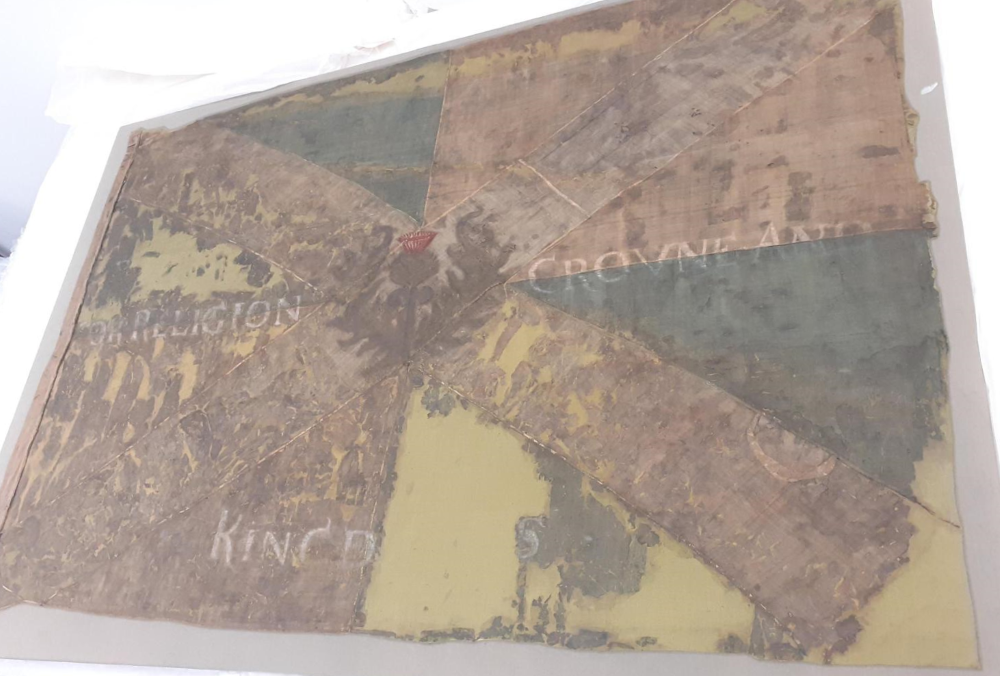
A key feature of ‘Covenanting’ banners is their use of words. Sometimes depicting a book, they emphasise the importance of the word of God as written in the Bible to the Presbyterian church. They also tend to carry distinctly Scottish symbols. One of the earliest, the Garscube flag (H.LF 3) is said to have been carried at the battle of Worcester by the Covenant-Royalist forces against Cromwell in 1651. It is made of silk, the design a saltire painted with the words ‘For Religion Croune [crown] and Kingdoms’ and a large thistle in the centre.
The Garscube flag (H.LF 3)
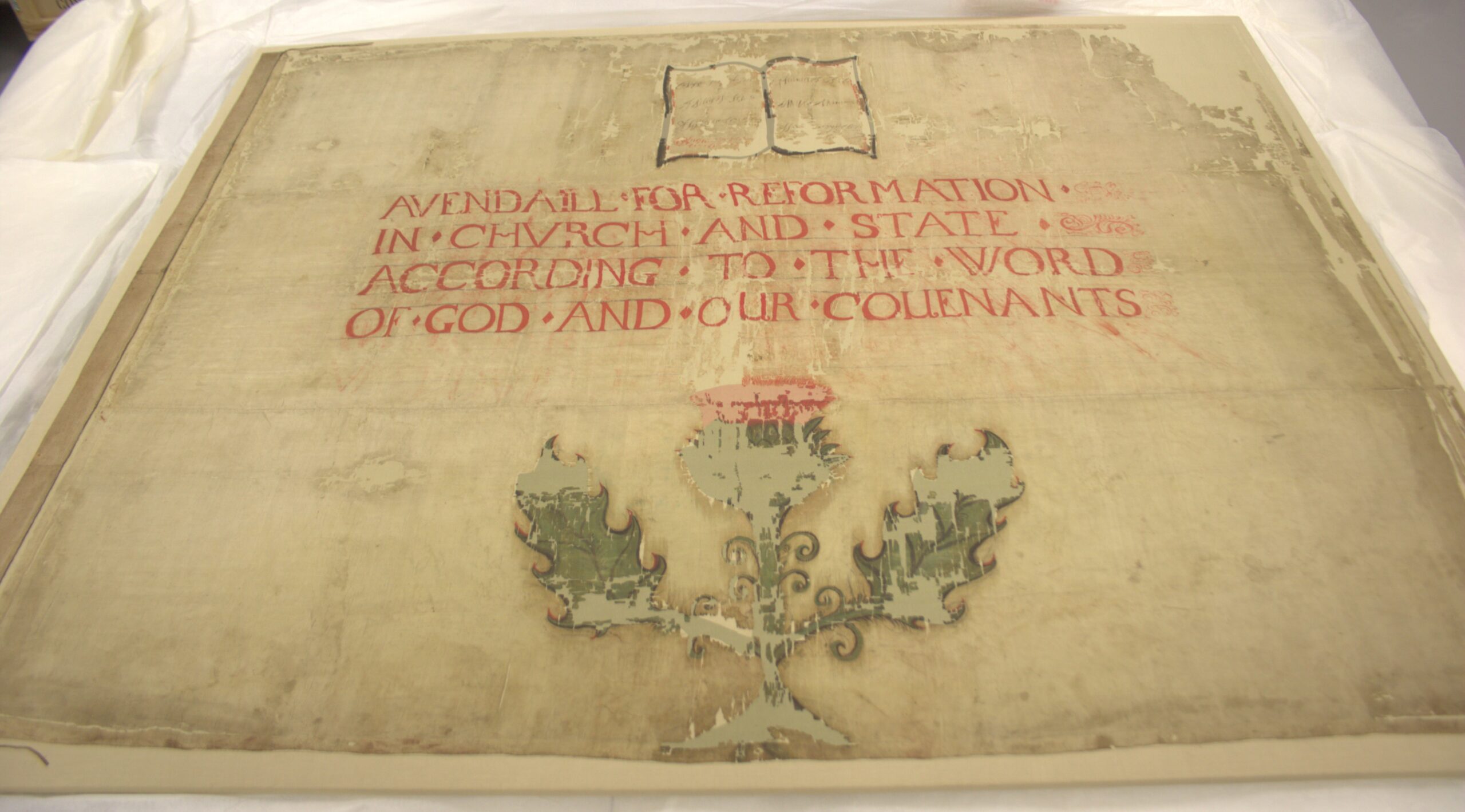
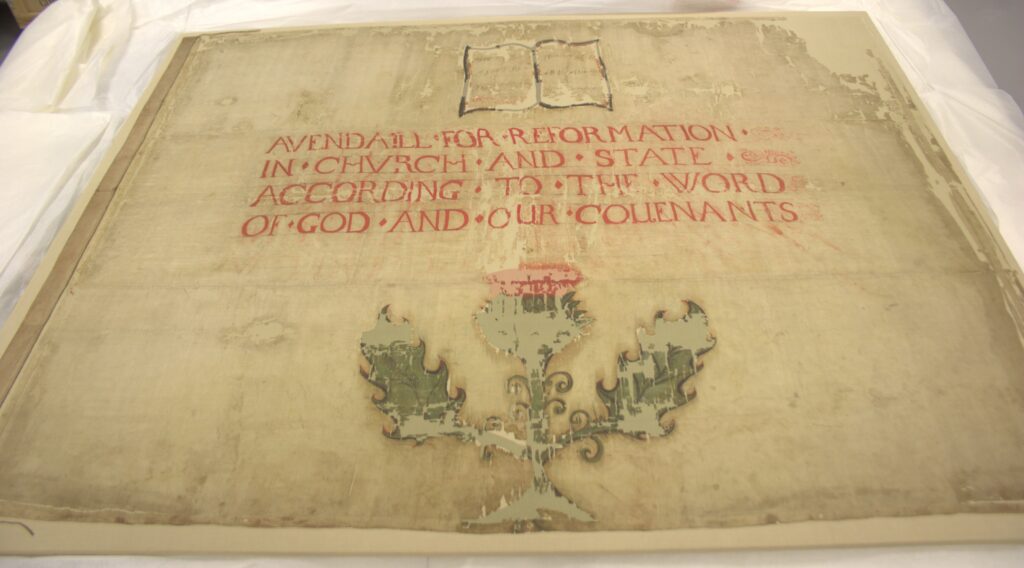
The Avendale banner (H.LF 8) is a key example of how the banners might rally a community around defence of the Covenants and church. Dating to the 1670s period of militant religious dissent, the motto reads: ‘Avendaill For Reformation in Church and State According to the Word of God and Our Covenants’. Avendale had a particularly strong Covenanter tradition. In 1679, a nearby conventicle – an illegal outdoor church meeting – famously turned into what is known as the Battle of Drumclog when the gathered congregation took an armed stand against the forces of John Graham of Claverhouse who had been sent to disperse such meetings (along with making arrests and punishing those captured).
The Avendale banner (H.LF 8)
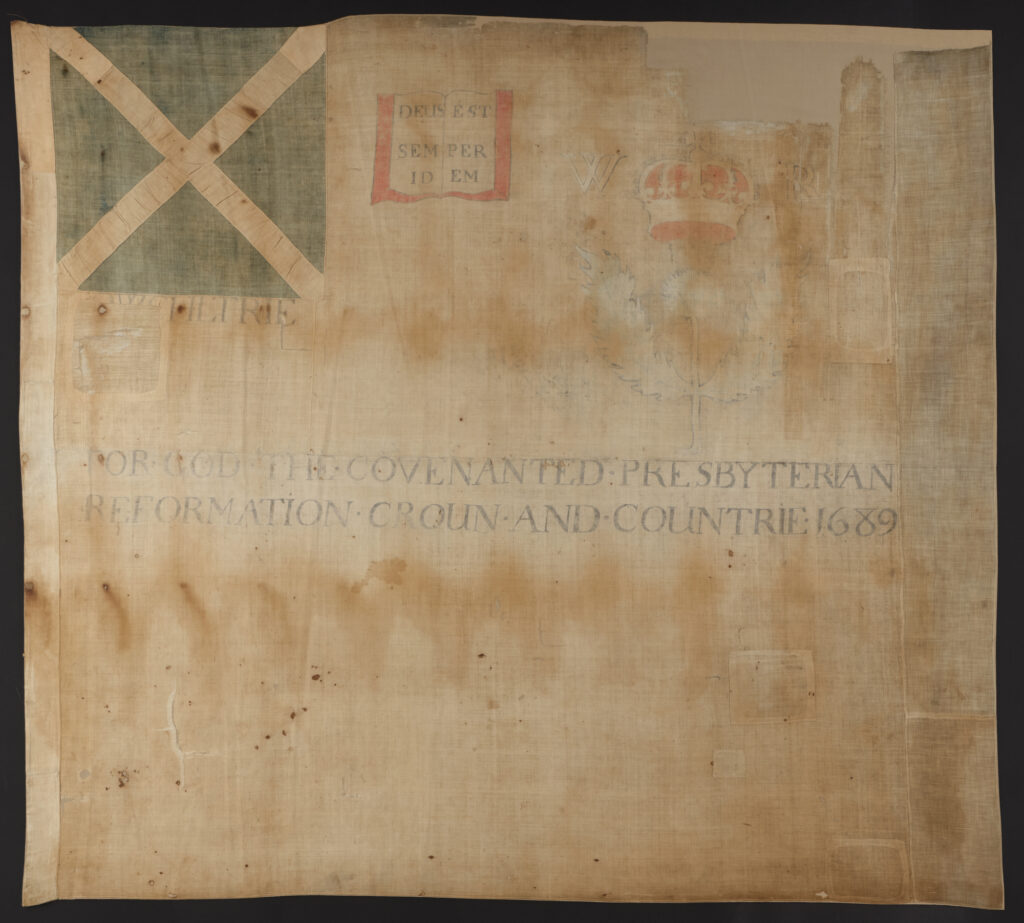
The Ochiltree flag (H.LF 14) demonstrates the legacy of the Covenanting banners and the lasting significance of the covenants to defence of the Presbyterian church into another phase of Scottish political and religious history. Painted with the words ‘For God the Covenanted Presbyterian Reformation Croun and Countrie 1689’, this banner demonstrates Scottish support for William and Mary’s overthrow of the Catholic King James VII. As well as a saltire and book with the motto ‘Deus Est Semper Idem’ (God is unchanging/always the same) the flag depicts a crowned thistle flanked by the letters W R for William Rex. Other flags with similar mottoes are associated with the Jacobite threats of the 1715 and 1745 risings.
The Ochiltree flag (H.LF 14)
Overall, the survival of these banners is remarkable given the circumstances of their use outdoors and in battle. While they belonged outside the walls of church buildings, they are a material legacy of a complex and violent period of Scottish church history, when the practices and powers of the established Presbyterian Church were disputed, threatened, and intertwined with national politics.
Our thanks to Georgia for sharing her reflections on our blog and at our launch symposium.
Prof Cumming has worked as a research scientist for over 40 years in the defence field. He is an Honorary Professor in the University of Edinburgh School of Chemistry.
He has a life-long interest in church architecture and history, particularly Scottish, and this led him to become a Fellow of the Society of Antiquaries of Scotland as well as to membership of other related organisations. He became firstly a supporter and then a Trustee of Scotland’s Churches’ Trust before becoming its Chair in October 2022. This led to his becoming a Trustee of the Scottish Pilgrim Routes Forum. He has lectured on Scottish church architecture to several groups. His work involvements allowed him to visit many churches across Europe and has observed similarities in approach and architecture.
Interest in music is reflected in his support for both the Scottish Chamber Orchestra and the Royal Scottish National Orchestra.
My lifetime interest in churches developed from architecture but grew to include other things such as history, music etc, and how they fit into all parts of life. Churches do not exist in isolation. They reflect the culture and its changes and are part of the community and the nation. In many ways they are interconnected and are hosts for the memory of the people. That means that learning about one building should lead to others so you can see how they are linked! So many sites and places in Scotland need that recognition as they are a part of the whole. They are individual but connected and not just across Scotland.
I have been constantly delighted as I discover more; the churches in Scotland reflect our history and culture and while related to those elsewhere they are distinct. There is common ground but that is limited. In many ways their development is closer to that in other parts of Northern Europe and separate from England. That needs both understanding and publicity, with examples.
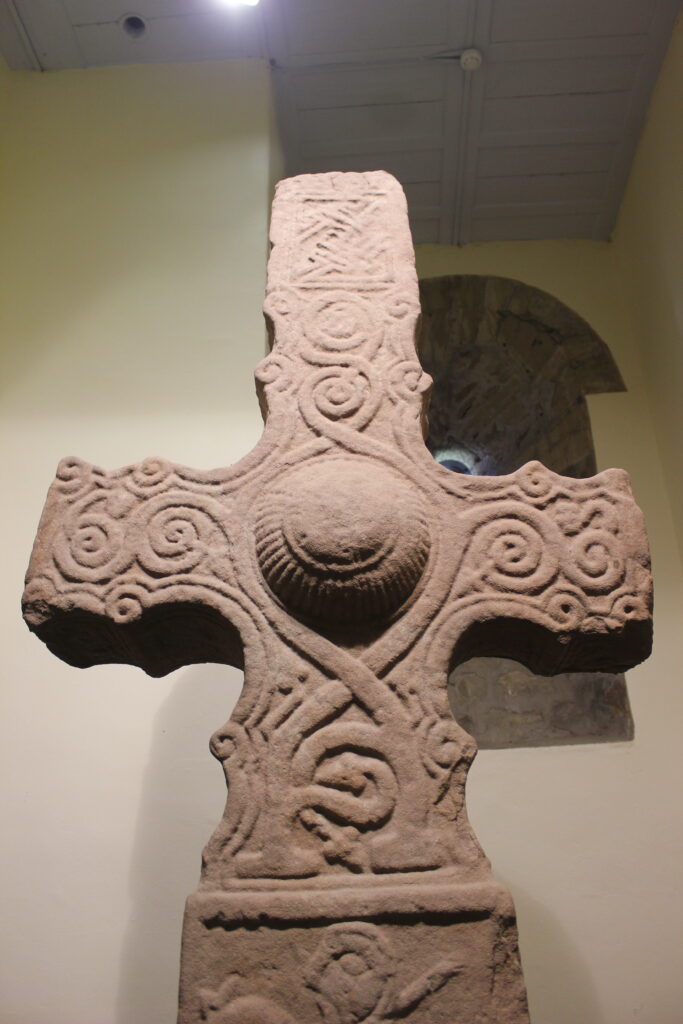
Dupplin Cross, Dunning (c) Adam Cumming
All that is why I am involved in both Scotland’s Churches Trust and the Scottish Pilgrim Routes Forum. It is a way of telling people about what we have and the connections. It is also why I joined Soc Ant and have given talks on the area.
One area of importance across Europe is pilgrimage – moving thoughtfully through the land and the history usually with church buildings as a focus. It was important in Scotland, with Whithorn, Glasgow and Dunfermline amongst the sites. It is another part of the culture and heritage.
Old West Kirk, Greenock (c) Adam Cumming
Pilgrimage was recognised as important by SCT and the need for a unified approach produced SPRF which coordinates an overall approach and certifies routes after assessment. It encourages visits and arranges places to stop with champing and open churches. SPRF like SCT stresses awareness of heritage, the history of the routes and their reasons for existing both now and in the past. I find when you learn how connected things are understanding can grow.
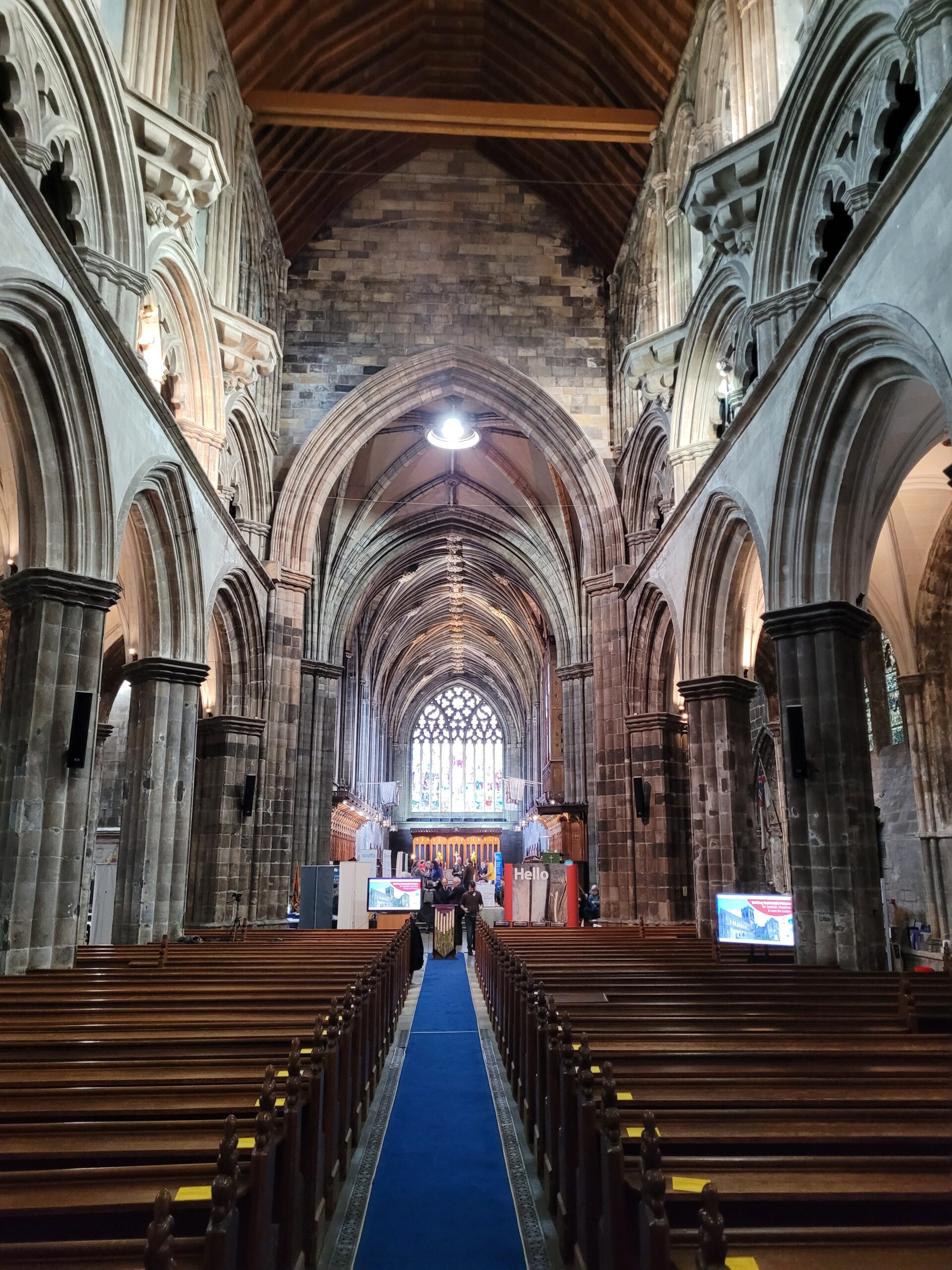
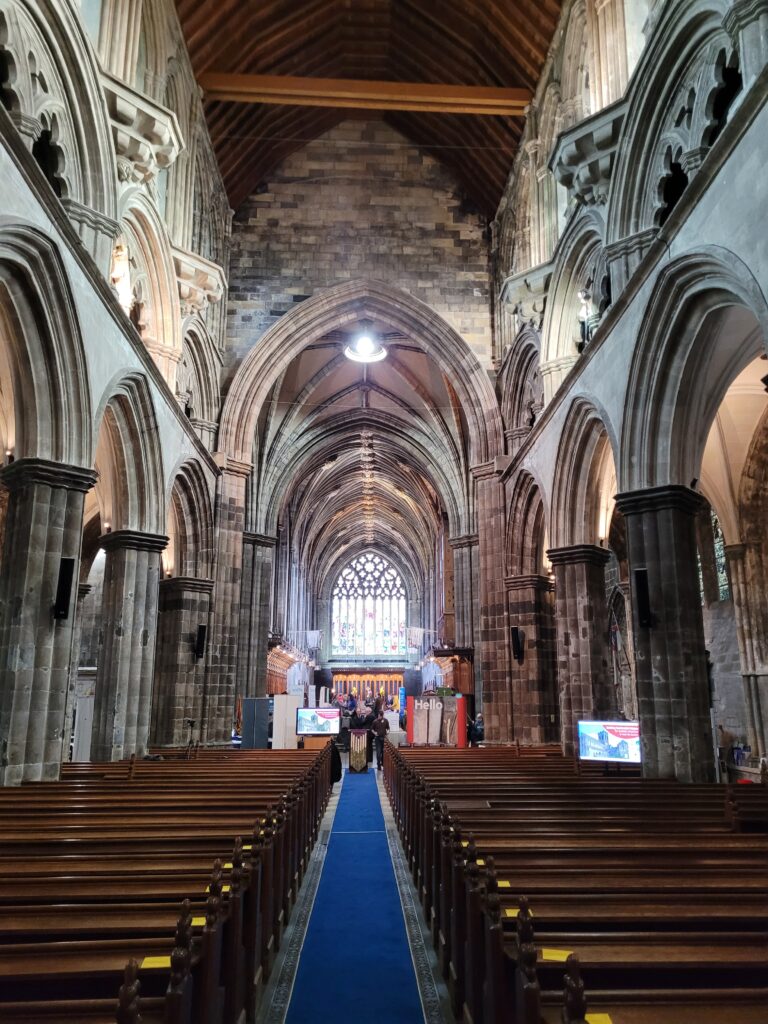
Paisley Abbey (c) Adam Cumming
As routes old and new are developed there are other activities such as the creation of a Fife Pilgrim Route pastor, and links with other similar bodies across Europe. We can support and learn from each other, and it illustrates the connections with Europe!
Symington Kirk (c) Adam Cumming
Ruins form part of this connectedness for they link to living buildings whose contents enrich the pilgrimage and the sense of cultural heritage. They should form part of the network together with the intact buildings. There are always things to discover and new insights, or so I find.
Our thanks to Adam Cumming for sharing his reflections in this post and at our launch event
Matthew Dransfield, under the name @BrutalBasil, documents post-war modernist and brutalist architecture, from churches and swimming pools to pubs and housing schemes. He is passionate about photographing buildings before they are gone. His book Modernist Churches of Scotland was produced in partnership with The Modernist Society. His work has been published widely, including in The Guardian.
Churches are more than concrete, brick and glass and none more so than those created in postwar Scotland. In a relatively short span of time, Modernist architecture blossomed in ecclesiastical buildings across the Central Belt and beyond.
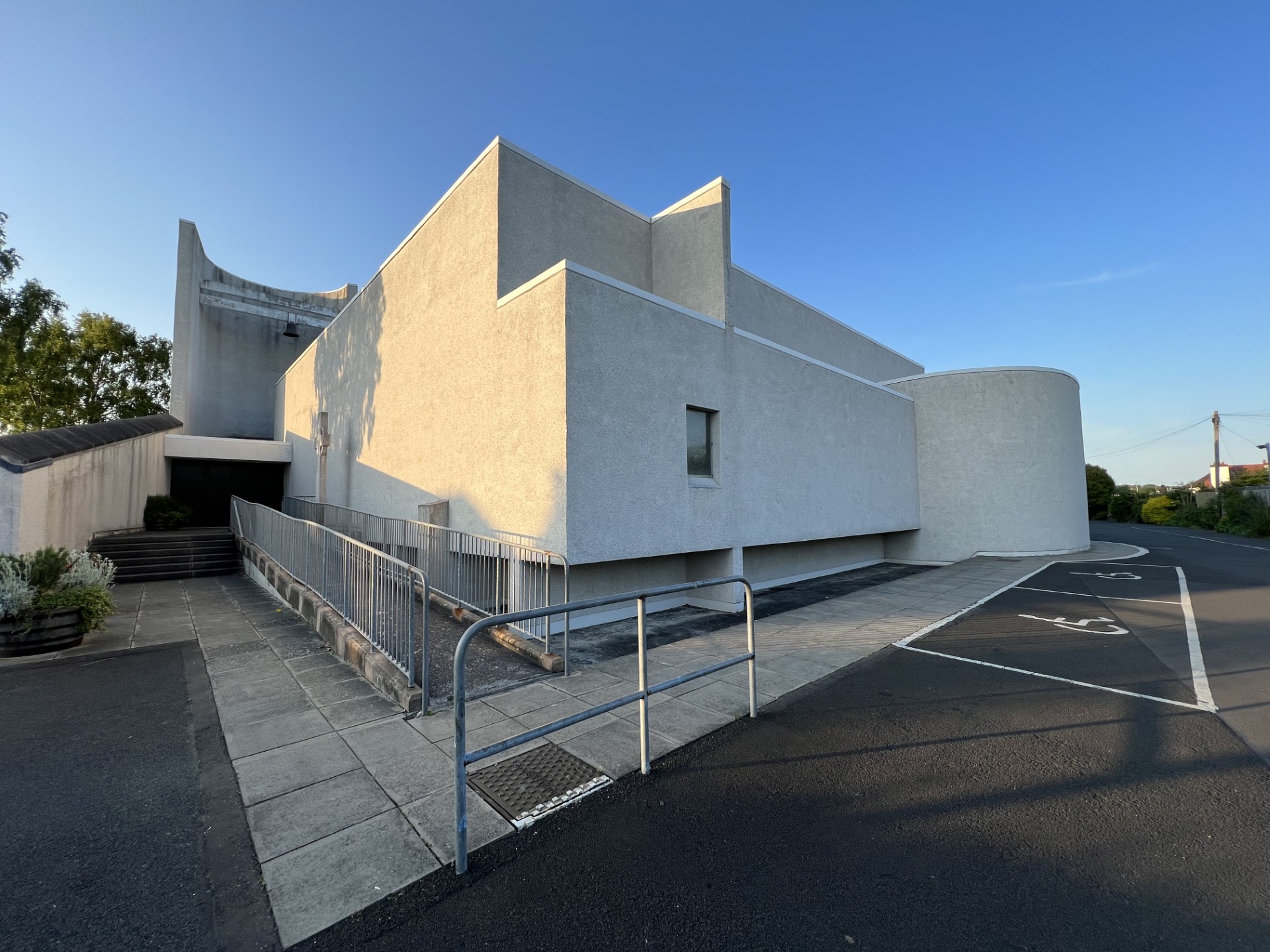
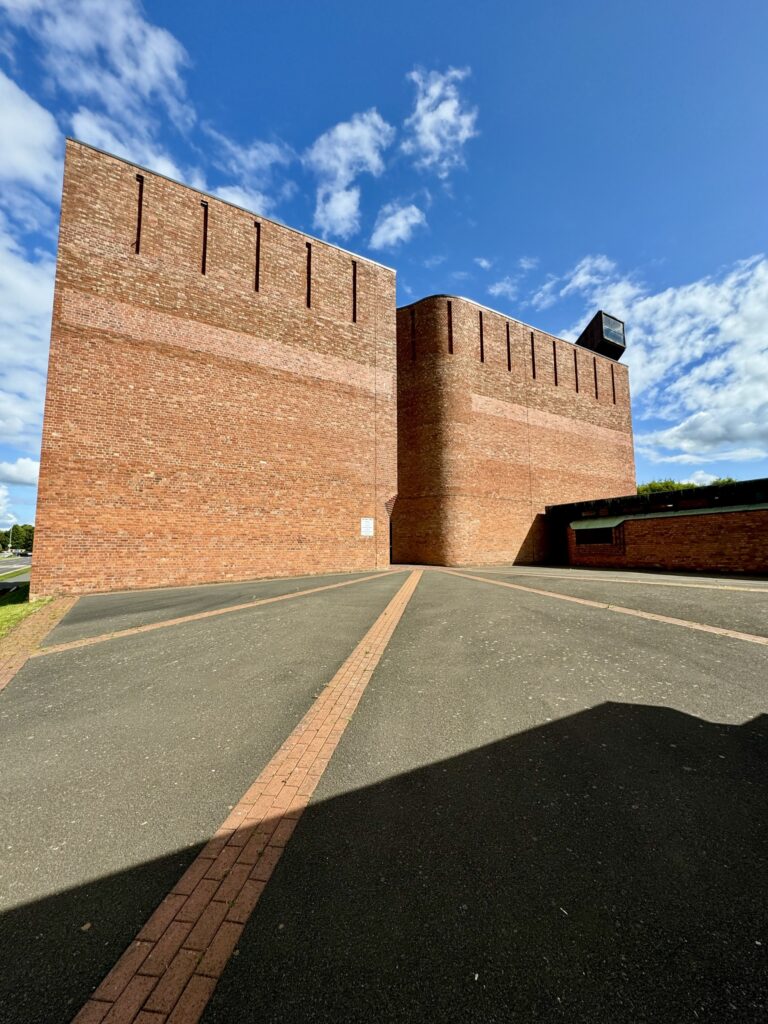
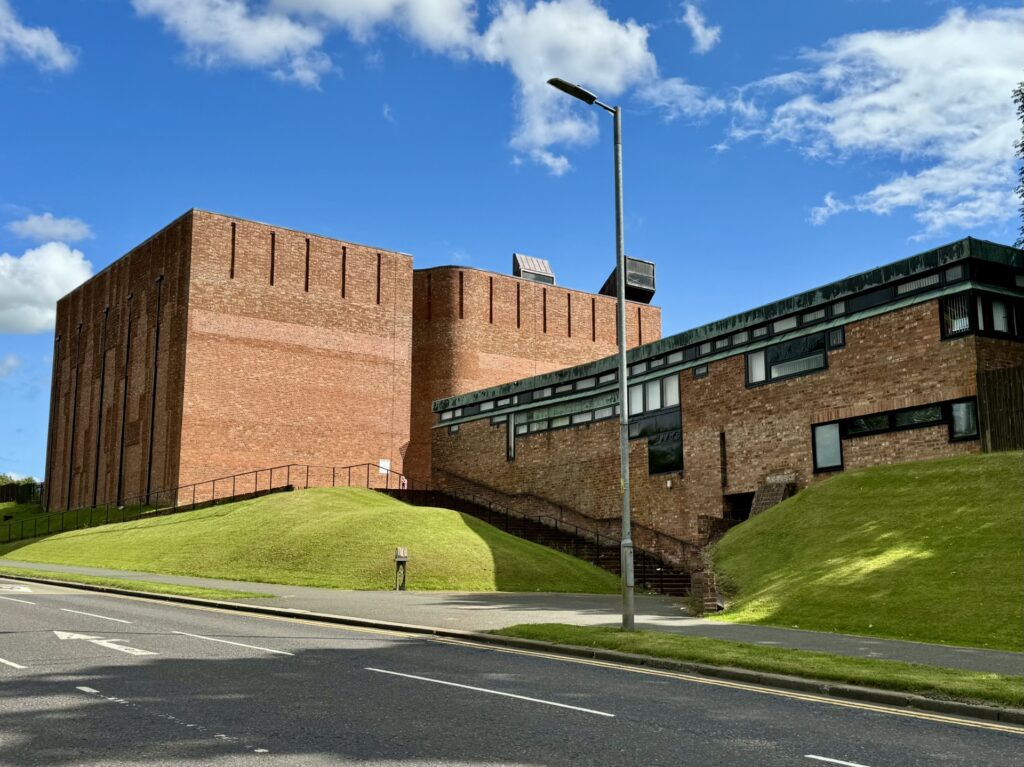
Take St Bride’s in East Kilbride: a gigantic red-brick fortress with barely a window. Or, in sharp contrast, the crisp white curves of Craigsbank Parish Church, which once had its own moat and can feel almost Mediterranean when the sun shines. I was told many of these churches were built without windows, cheaper to construct, and less chance of smashed glass.
St Bride’s Roman Catholic Church, East Kilbride.
The postwar housing boom drove this surge. As people left inner-city slums for spacious new suburbs, churches were needed to serve these communities. At no time before or since in Britain have so many been built so quickly. More than buildings, they are expressions of a historical moment, often hidden within council estates / housing schemes, visible only to those who live nearby.
As I explored them, I discovered both variety and daring. From the early 1950’s through the early 1960s, Scotland produced groundbreaking ecclesiastical architecture. It was a perfect storm: scarce materials, little standard guidance, small budgets, and an urgent demand. Architects were given space to experiment, and experiment they did.
St Bride’s Roman Catholic Church, East Kilbride.St Bride’s Roman Catholic Church, East Kilbride.
St Andrew’s Catholic Church in Livingston is one striking result. Sitting high on its site, its swirling concrete form and angled roof recall Le Corbusier. In Glenrothes, St Paul’s Roman Catholic Church – now Category A listed, was the first major break from the traditional rectangular layout. Designed by Isi Metzstein and Andy MacMillan of Gillespie, Kidd & Coia, it pairs white concrete with jewel-like stained glass. This was their first church, and it set a radical new tone.
What is remarkable is not uniformity but diversity. Architects were encouraged to be bold, and their designs reflect the optimism, urgency, and sometimes desperation of the era. Churches had to be built fast, cheaply, and with modern flair.
Not everyone approved. One priest joked that when he reached the afterlife, he wanted a word with his architect: “They used rubbish materials. And Scotland is no place for flat roofs.” His frustration was understandable. Many churches were built under pressure, with steel shortages, experimental construction, and flat roofs that leaked in the Scottish rain. Some materials have aged badly, but that too is part of their story.
Craigsbank Parish Church, Corstorphine, Edinburgh
Today, half a century on, these churches face new challenges. Declining congregations mean closures, mergers, even demolition. Many lie abandoned or in poor repair, with little statutory protection and patchy listing. Concrete is rarely seen as nostalgic, and these buildings are not always loved.
Yet they remain beautiful in their own way. They capture a society in transition: communities moving from tenements into new estates, forging new identities in rapidly changing landscapes. The architecture reflects that turbulence and aspiration. For me, there is an urgent need to document them, to photograph them, and to argue for their reuse where possible.
Some dismiss Brutalism as ugly. I’d say: look again. These churches are cultural responses, symbols of optimism, change and faith in a new era.
Our thanks to Matt for sharing his reflections on our blog and at our launch symposium. You can find him on Instagram at @brutalbasil