
Guest Post from Dr Georgia Vullinghs
Dr Georgia Vullinghs is Curator of Renaissance and Early Modern History at National Museums Scotland. Her remit covers objects relating to Scotland 1450 -1750. With specialism in Jacobite objects, she is learning ever more about the church and religious material culture of the period.
Textiles are some of the larger-scale, non-architectural items of historical significance relating to Scotland’s churches. These include vestments, furnishings, flags and banners such as the pre-Reformation Fetternear banner. As well as providing devotional inspiration and glorifying God, these textiles carry images and words that represent the church community.
During the armed conflicts of the 17th century, banners were made and carried into battle by the Covenanters. Not strictly ecclesiastical textiles, these large painted cloth flags were a rallying point for the defence of the Scottish Presbyterian church from the 1640s right into the 18th century.
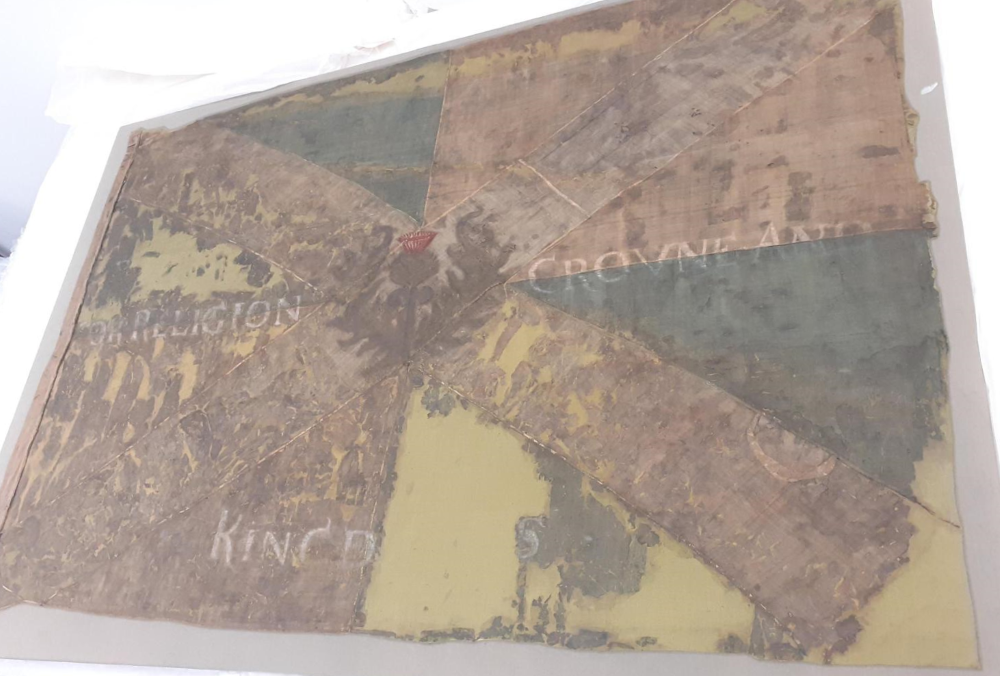
A key feature of ‘Covenanting’ banners is their use of words. Sometimes depicting a book, they emphasise the importance of the word of God as written in the Bible to the Presbyterian church. They also tend to carry distinctly Scottish symbols. One of the earliest, the Garscube flag (H.LF 3) is said to have been carried at the battle of Worcester by the Covenant-Royalist forces against Cromwell in 1651. It is made of silk, the design a saltire painted with the words ‘For Religion Croune [crown] and Kingdoms’ and a large thistle in the centre.
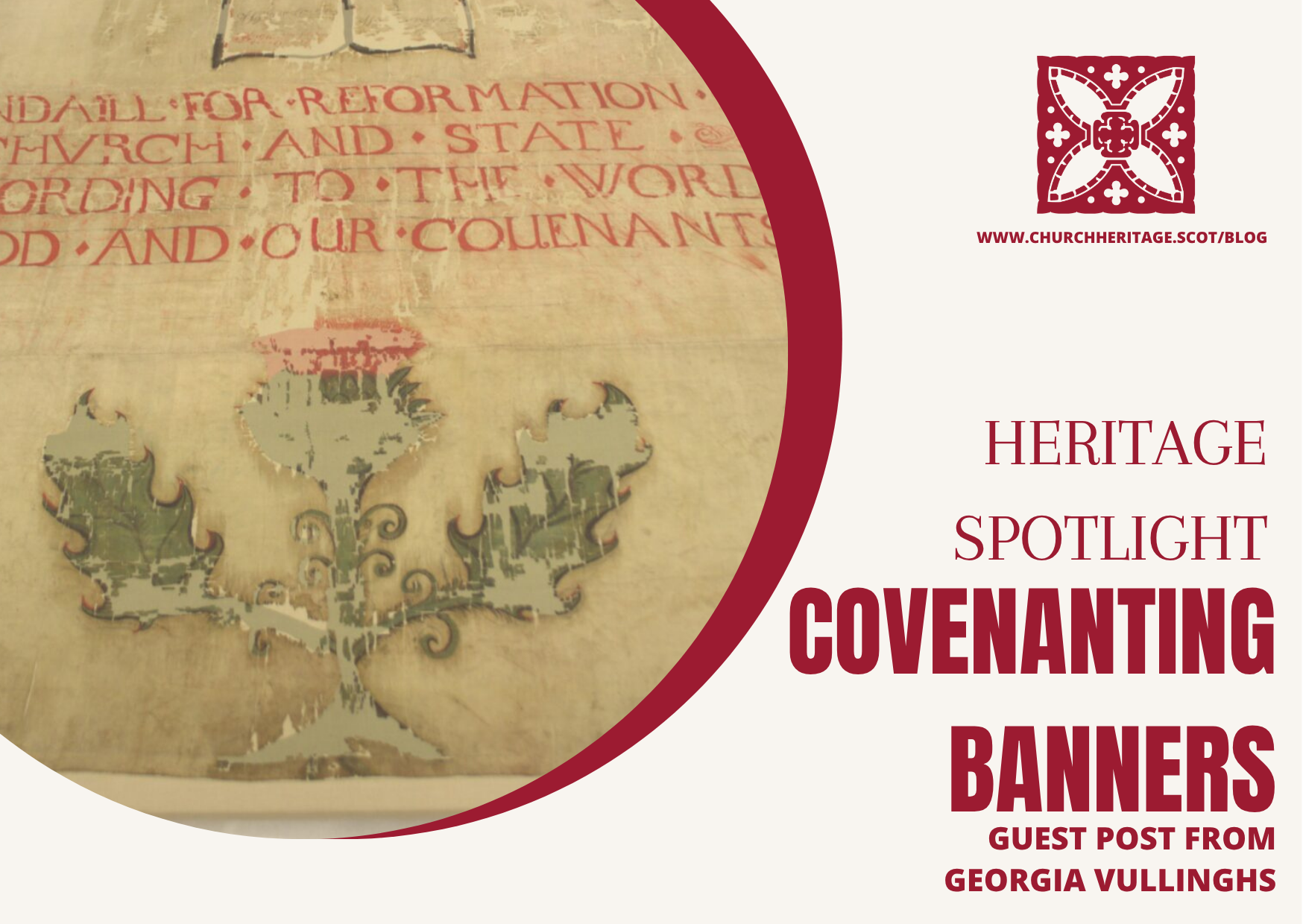
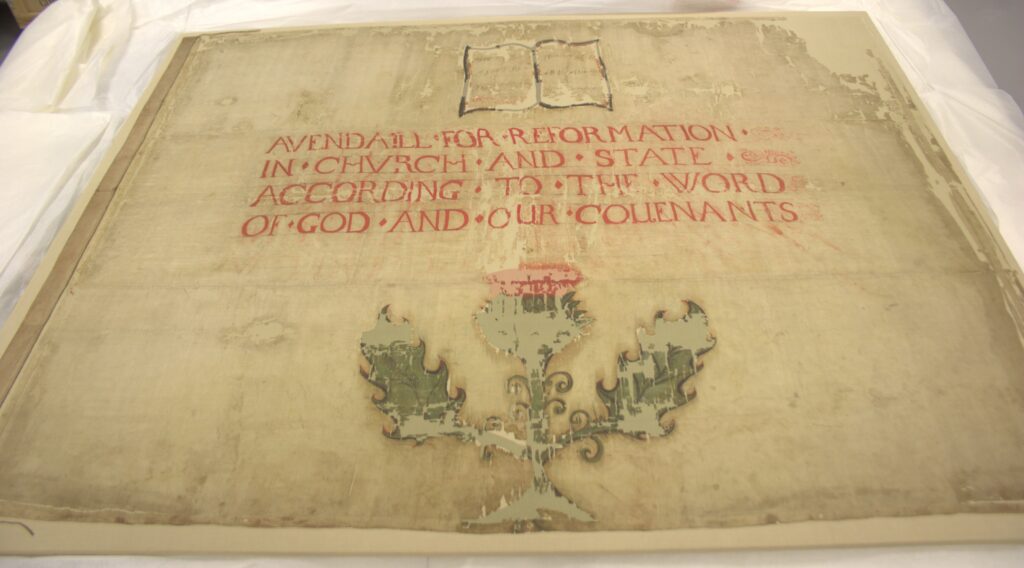
The Avendale banner (H.LF 8) is a key example of how the banners might rally a community around defence of the Covenants and church. Dating to the 1670s period of militant religious dissent, the motto reads: ‘Avendaill For Reformation in Church and State According to the Word of God and Our Covenants’. Avendale had a particularly strong Covenanter tradition. In 1679, a nearby conventicle – an illegal outdoor church meeting – famously turned into what is known as the Battle of Drumclog when the gathered congregation took an armed stand against the forces of John Graham of Claverhouse who had been sent to disperse such meetings (along with making arrests and punishing those captured).
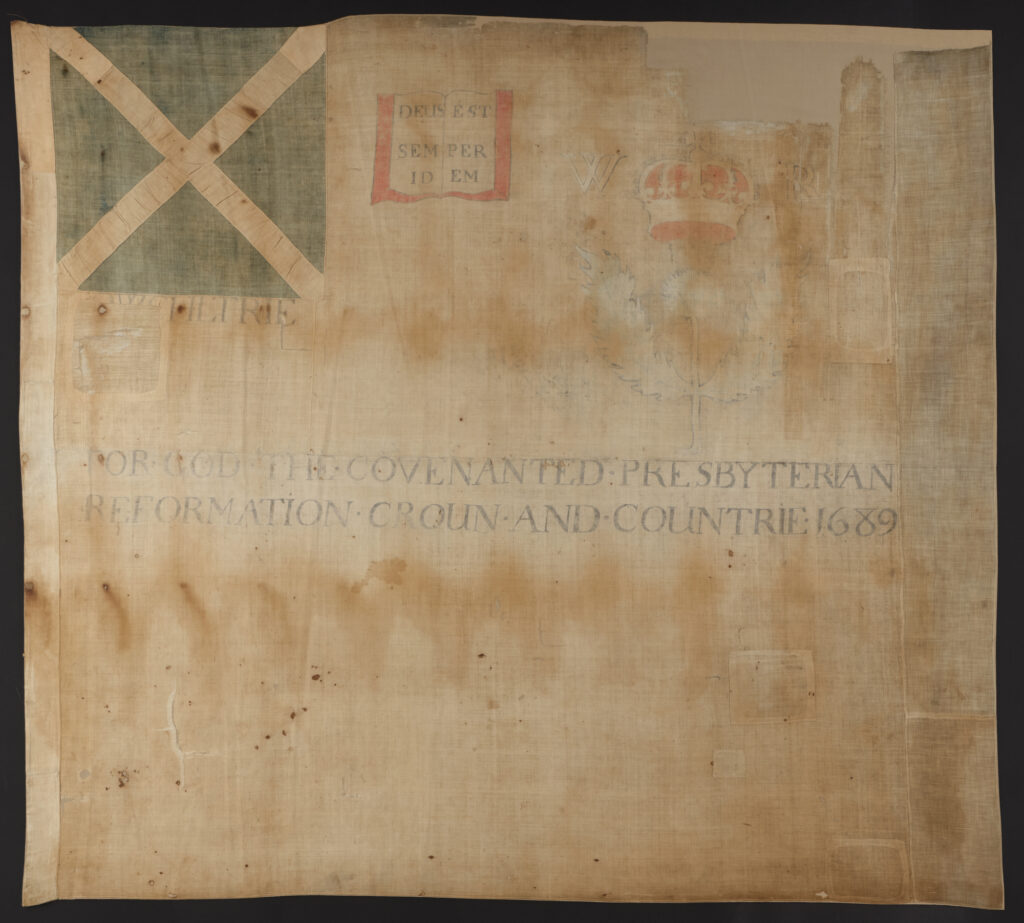
The Ochiltree flag (H.LF 14) demonstrates the legacy of the Covenanting banners and the lasting significance of the covenants to defence of the Presbyterian church into another phase of Scottish political and religious history. Painted with the words ‘For God the Covenanted Presbyterian Reformation Croun and Countrie 1689’, this banner demonstrates Scottish support for William and Mary’s overthrow of the Catholic King James VII. As well as a saltire and book with the motto ‘Deus Est Semper Idem’ (God is unchanging/always the same) the flag depicts a crowned thistle flanked by the letters W R for William Rex. Other flags with similar mottoes are associated with the Jacobite threats of the 1715 and 1745 risings.
Overall, the survival of these banners is remarkable given the circumstances of their use outdoors and in battle. While they belonged outside the walls of church buildings, they are a material legacy of a complex and violent period of Scottish church history, when the practices and powers of the established Presbyterian Church were disputed, threatened, and intertwined with national politics.
Our thanks to Georgia for sharing her reflections on our blog and at our launch symposium.