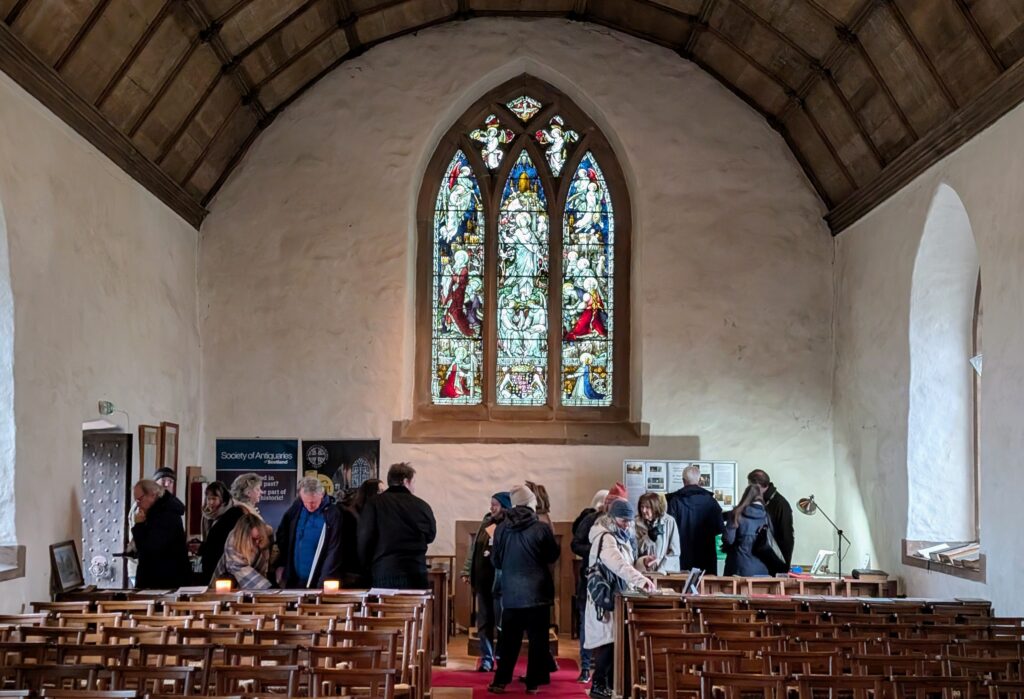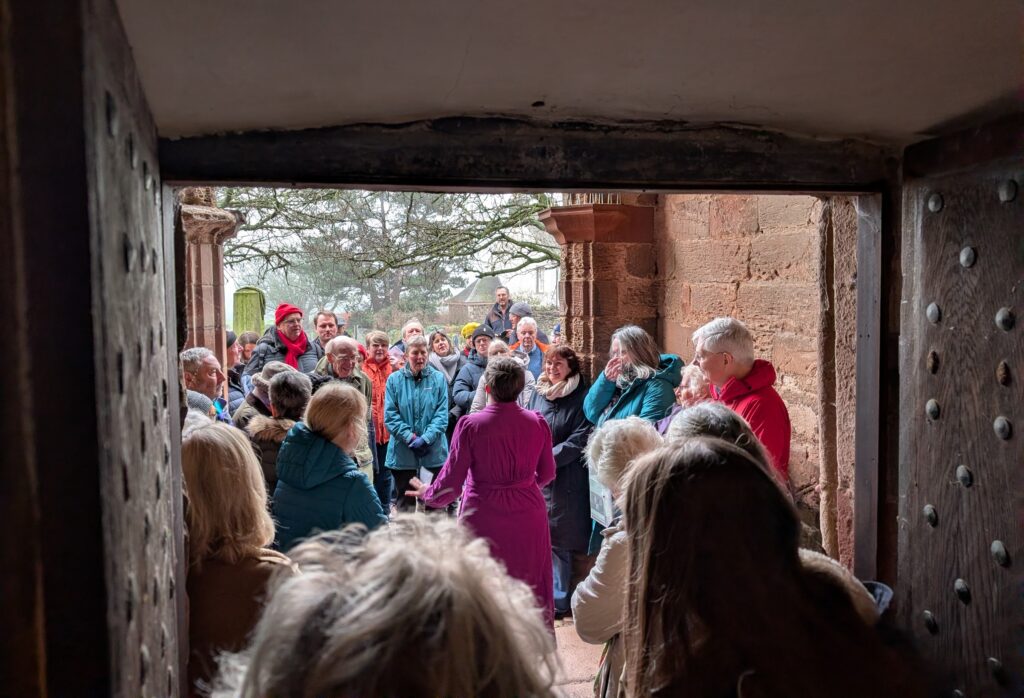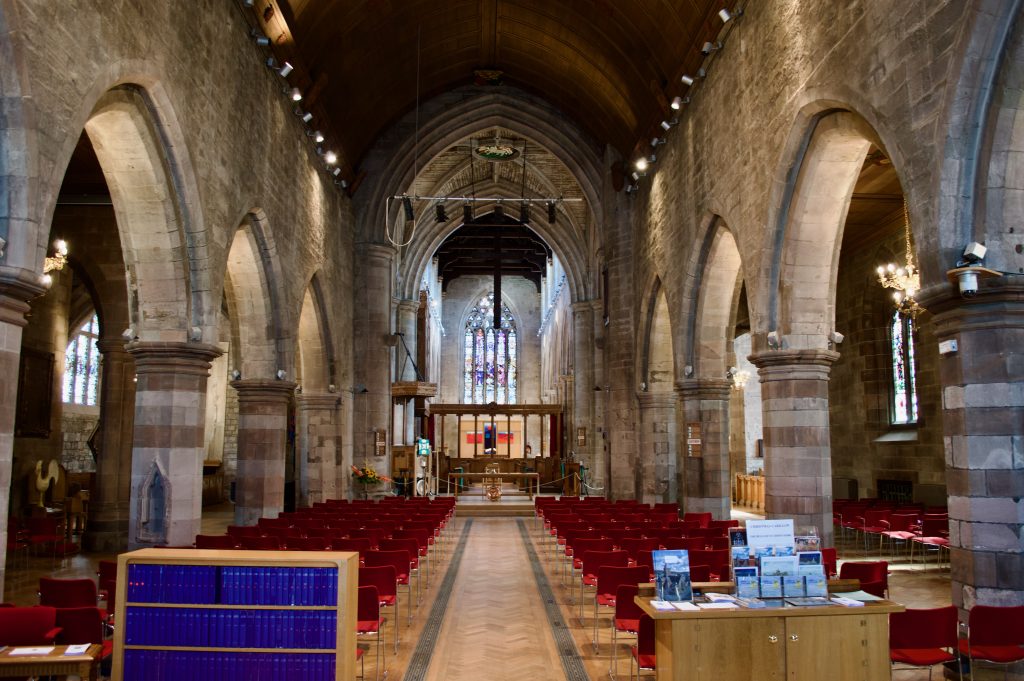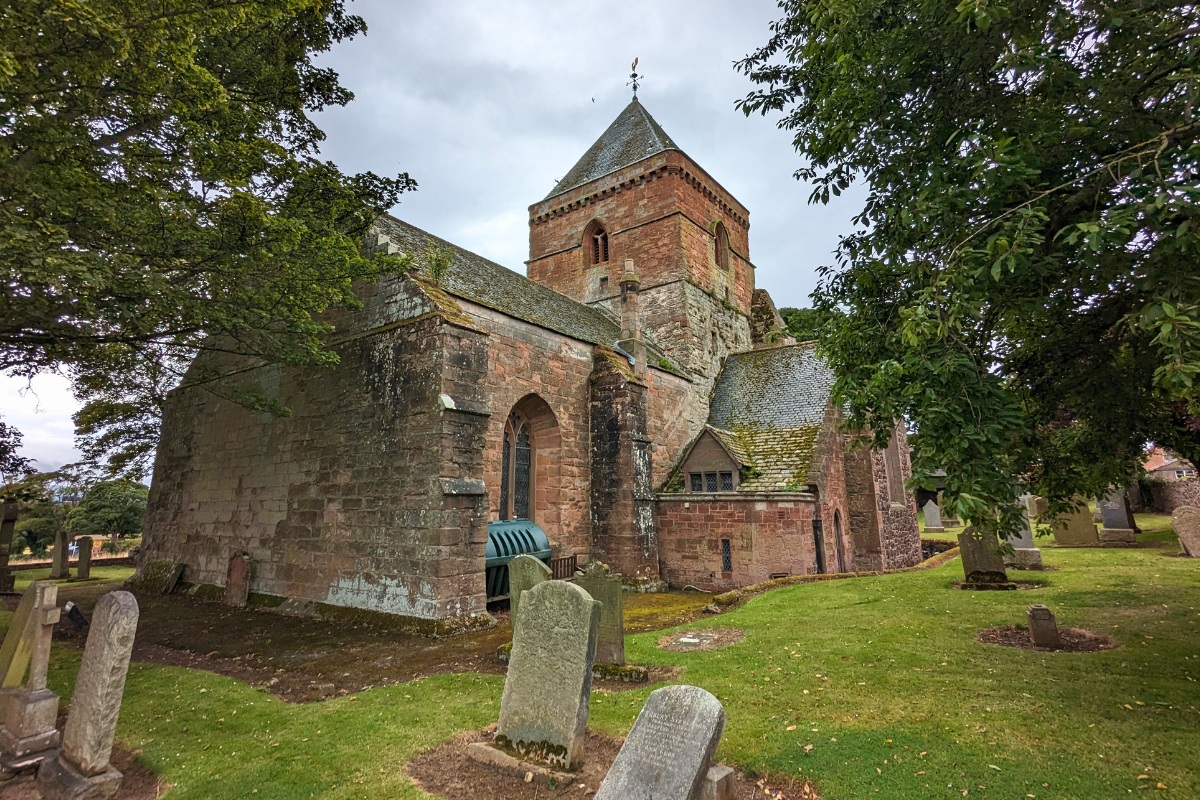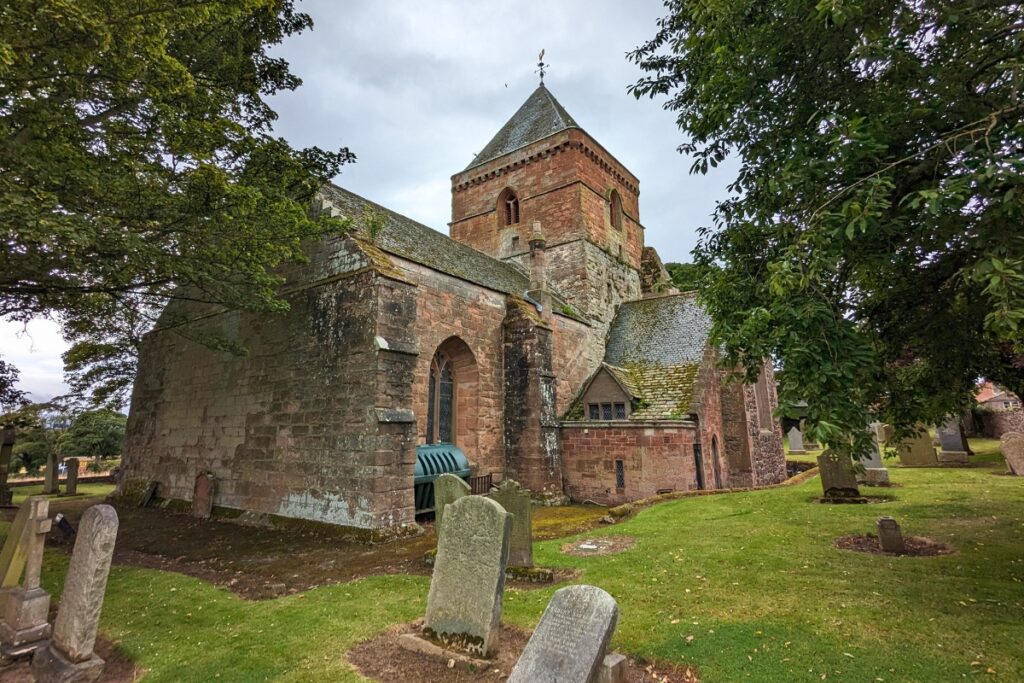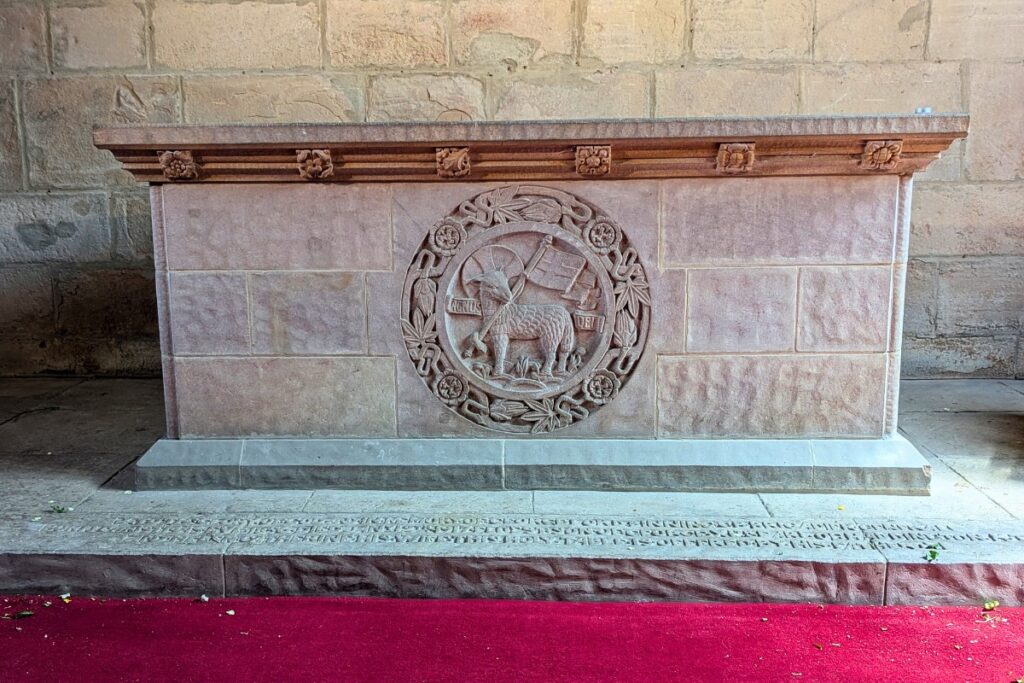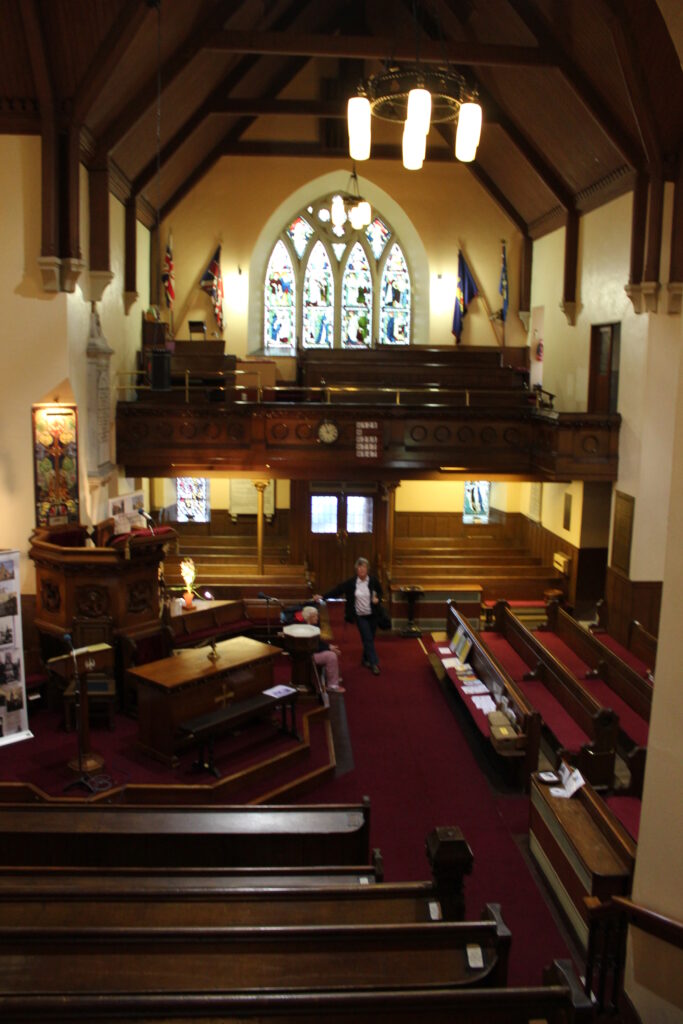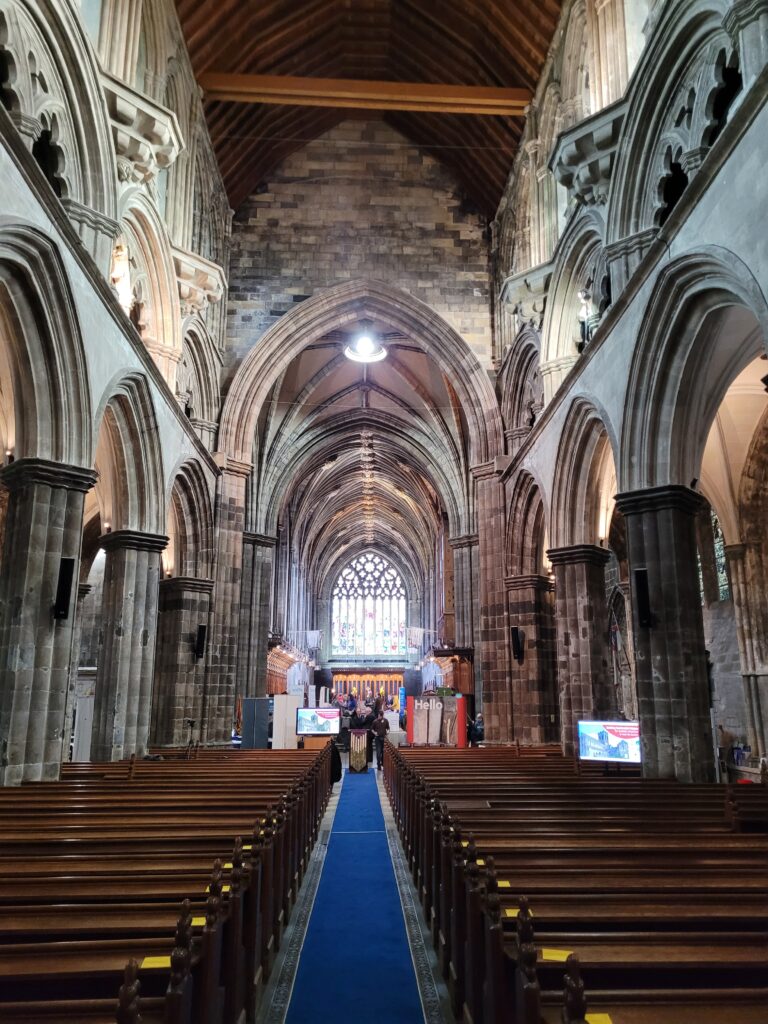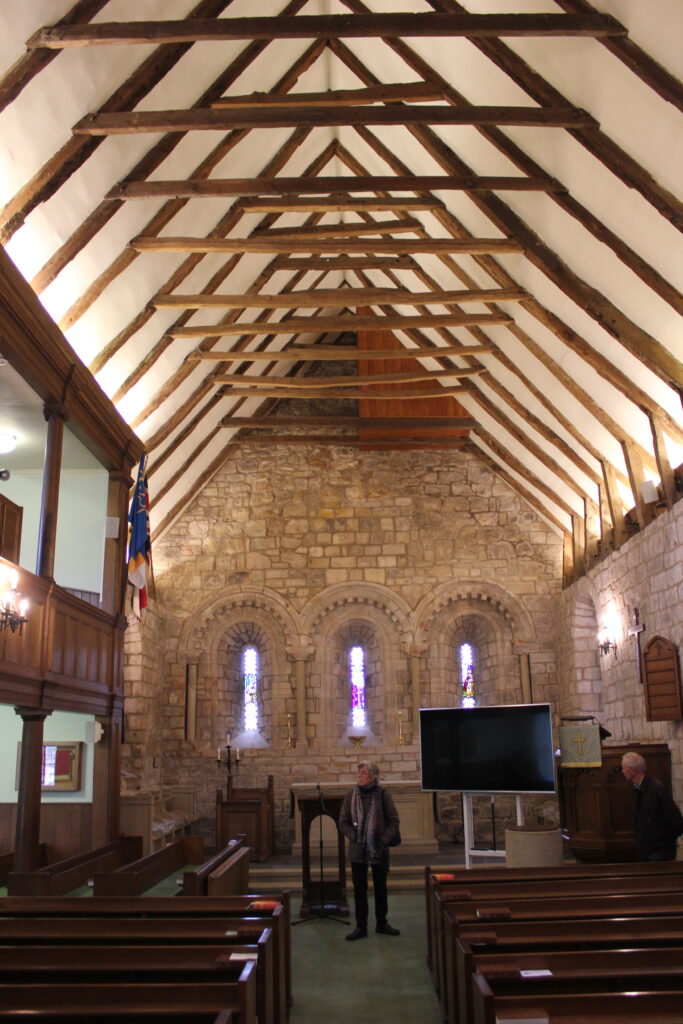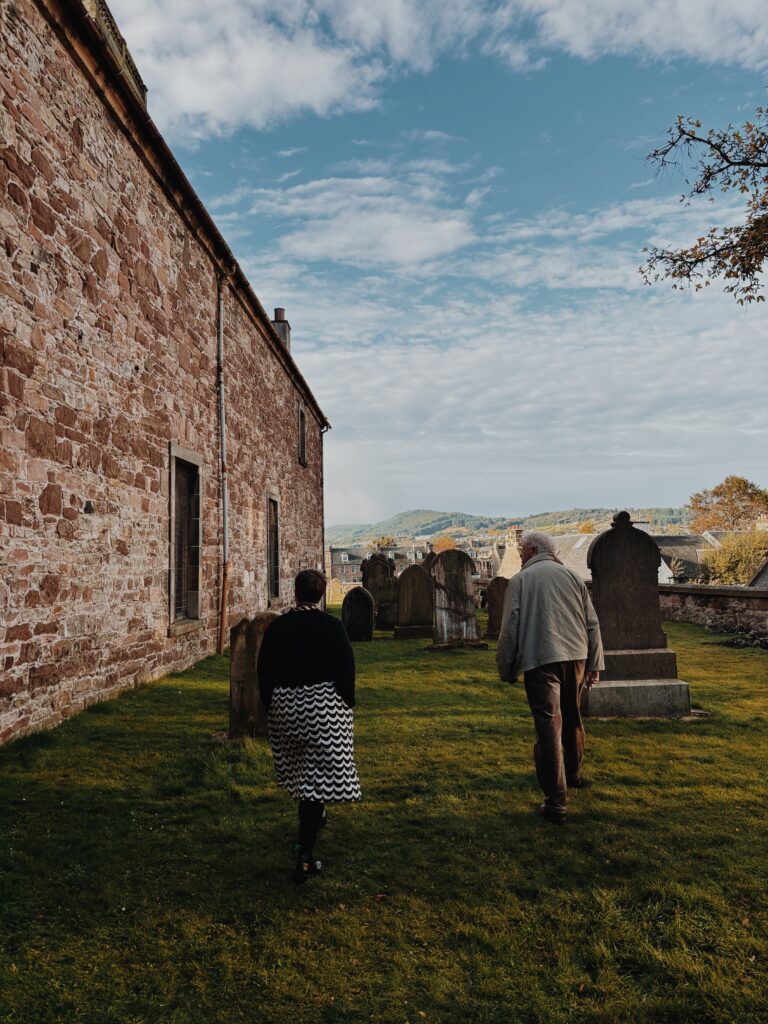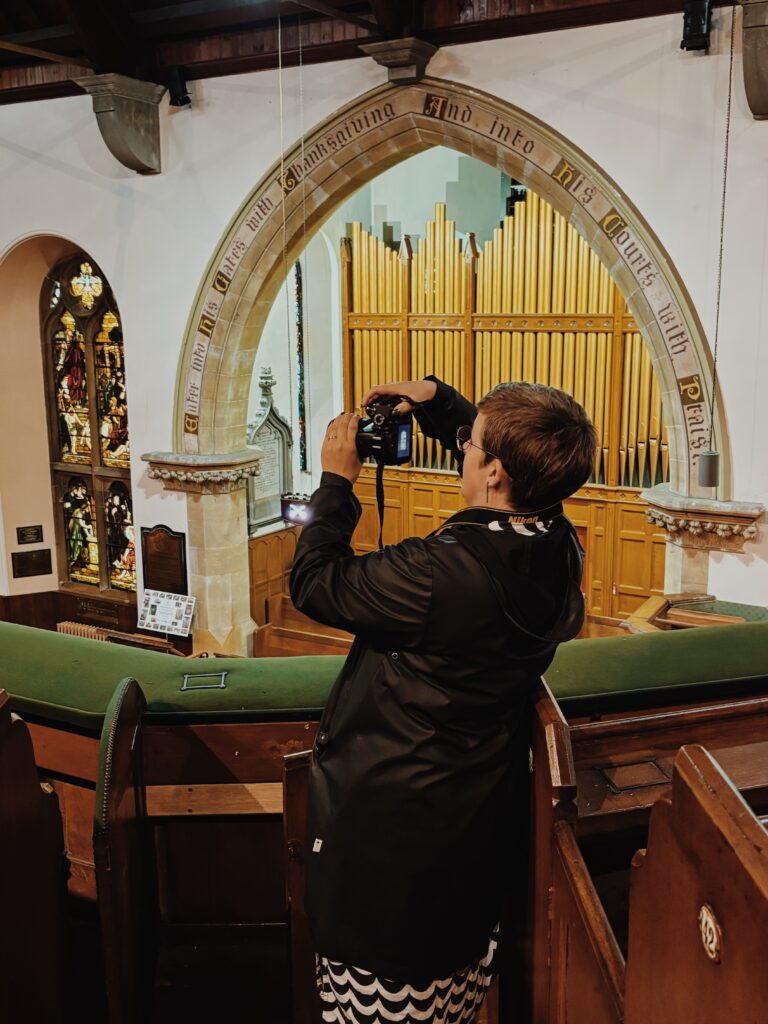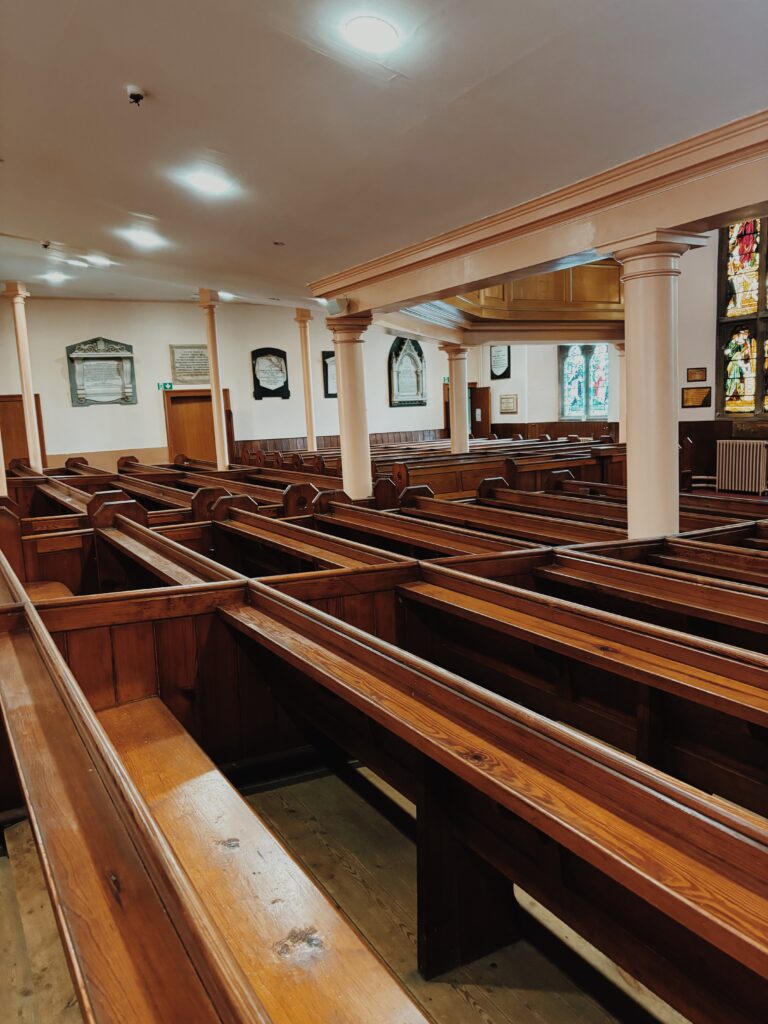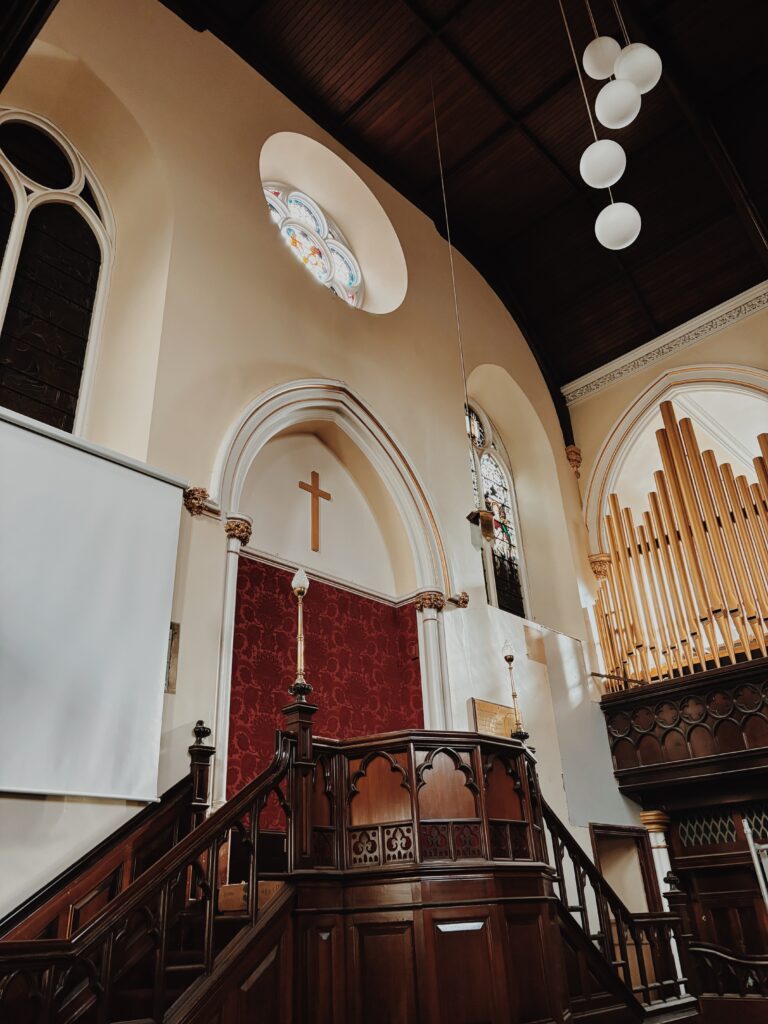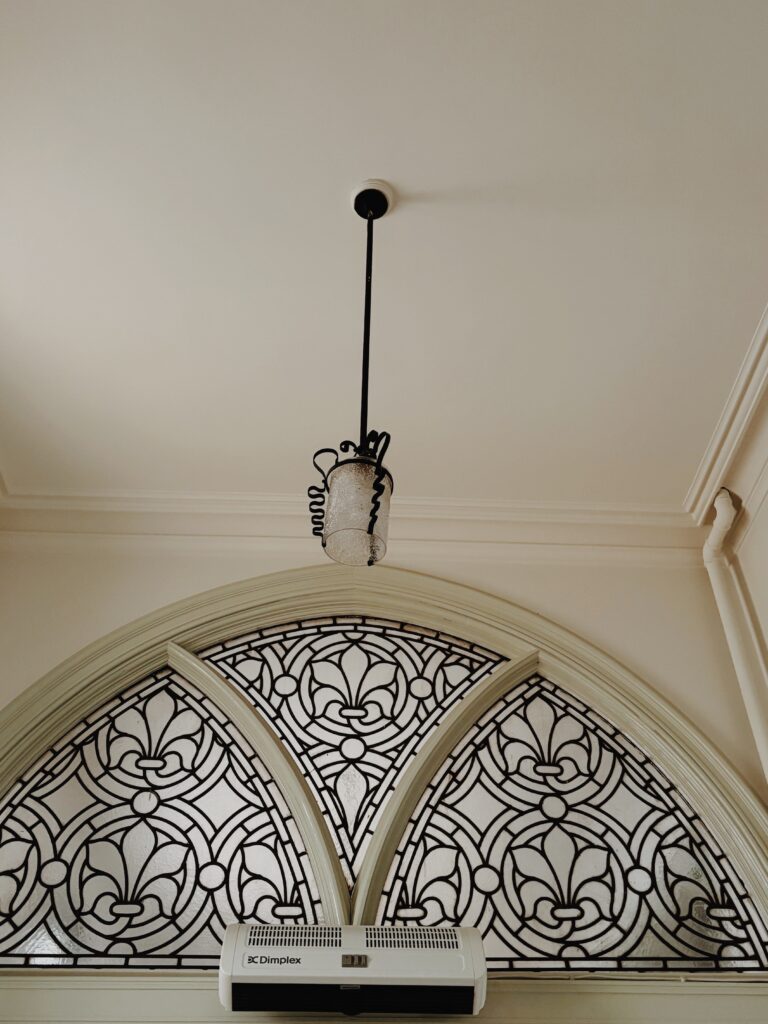
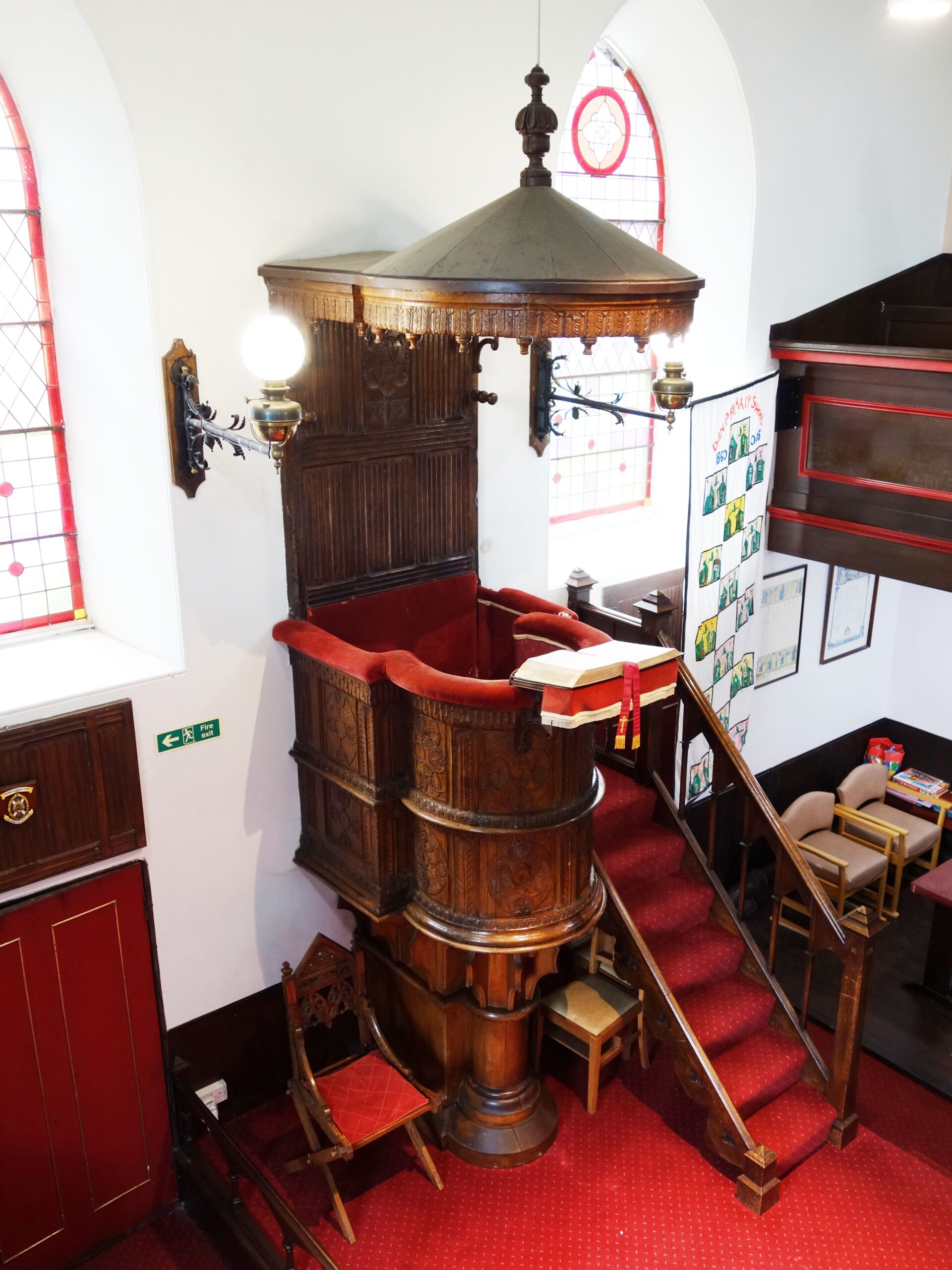
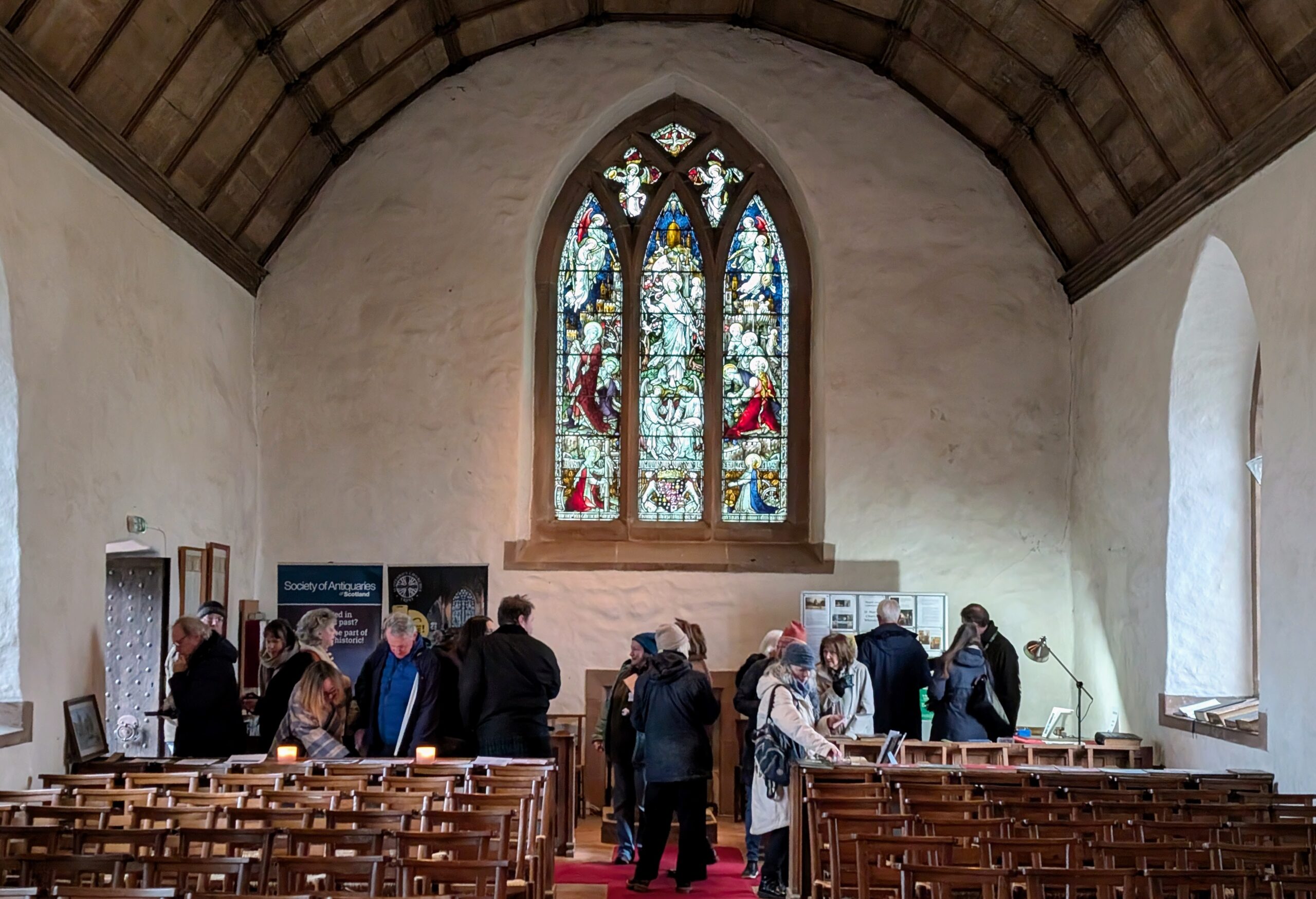
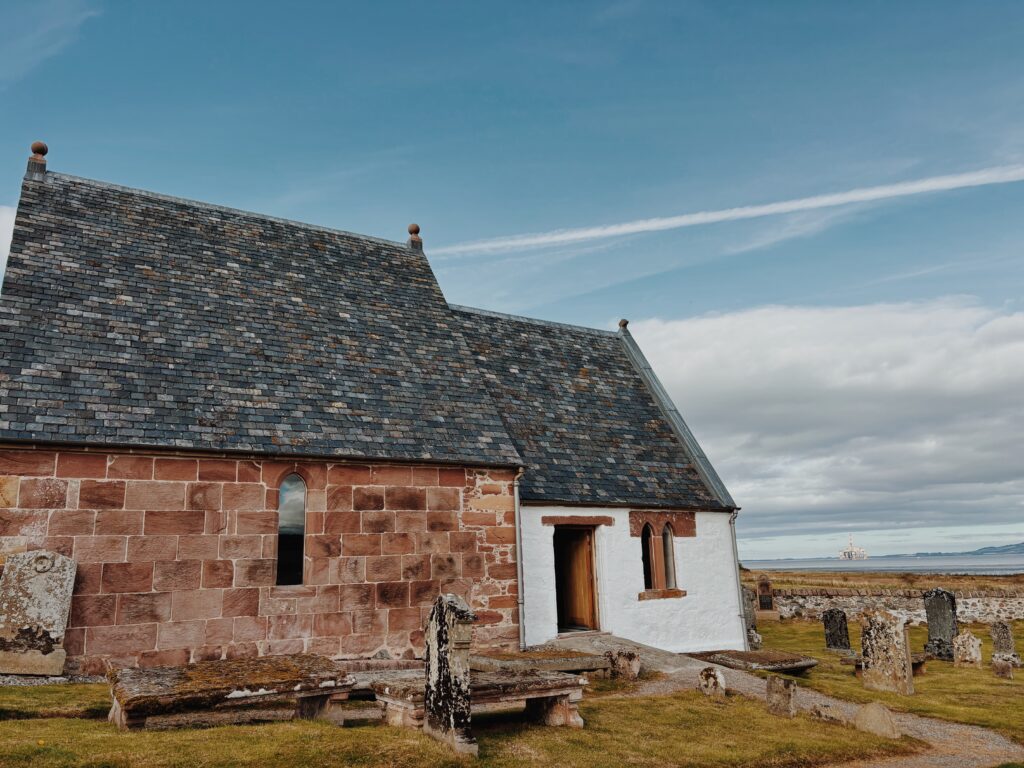
For centuries, St Mary’s Church has been at the heart of Whitekirk’s life as a place of worship, gathering and memory. Now, as part of the Research in Action on Church Heritage (ReACH) project, we’re inviting you to share your stories and reflections to help document its cultural and community significance.
Whether your memories come from worship, local events or everyday encounters, we’d love to hear from you!
(c) Scotland’s Churches Trust
Join our open day
When: 7 February 2026
Time: 11am – 3pm (Drop in)
Where: St Mary’s Church, Whitekirk
What’s Happening?
Short expert-led tours on Whitekirk’s fascinating history will be held at 12.00, 13.00 and 14.00.
Throughout the day visitors can explore the church at their own pace and enjoy organ music.
Share your memories and experiences of Whitekirk
Participatory Mapping Show us which spaces in St Mary’s matter most to you at our interactive mapping station.
Memory Box Contribute in your own way: write, draw, sing, share photos or audio. Your piece will become part of a collective memory capsule.
Oral Histories Have a longer story to tell? Email Emily@socantscot.org to book a 30 minute chat and record your memories.
Speedy Interviews Got a short story or passing encounter? Share it in just 10 minutes!
Why Take Part?
Your contributions will help shape a new, publicly accessible database on Scotland’s church heritage. Together, we’ll capture the social and cultural value of St Mary’s for future generations.
The nearest bus stop is Ladysfield which services the 120 Dunbar – North Berwick
ReACH is a two-year project led by the Society of Antiquaries of Scotland and Scotland’s Churches Trust, funded by the National Lottery Heritage Fund and The Pilgrim Trust.
Dr Georgia Vullinghs is Curator of Renaissance and Early Modern History at National Museums Scotland. Her remit covers objects relating to Scotland 1450 -1750. With specialism in Jacobite objects, she is learning ever more about the church and religious material culture of the period.
Textiles are some of the larger-scale, non-architectural items of historical significance relating to Scotland’s churches. These include vestments, furnishings, flags and banners such as the pre-Reformation Fetternear banner. As well as providing devotional inspiration and glorifying God, these textiles carry images and words that represent the church community.
During the armed conflicts of the 17th century, banners were made and carried into battle by the Covenanters. Not strictly ecclesiastical textiles, these large painted cloth flags were a rallying point for the defence of the Scottish Presbyterian church from the 1640s right into the 18th century.
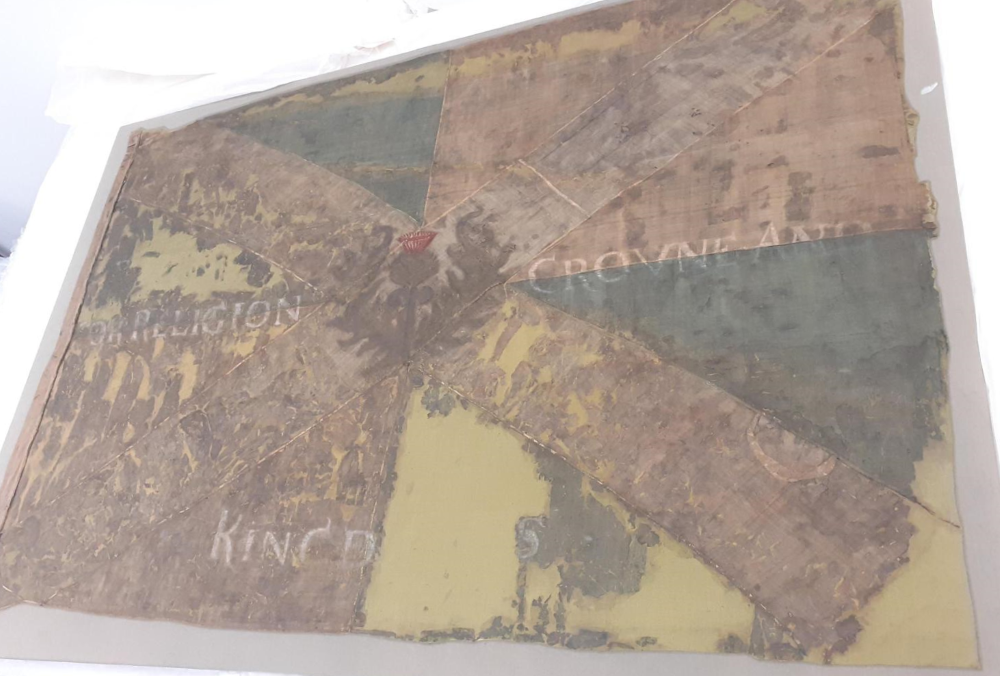
A key feature of ‘Covenanting’ banners is their use of words. Sometimes depicting a book, they emphasise the importance of the word of God as written in the Bible to the Presbyterian church. They also tend to carry distinctly Scottish symbols. One of the earliest, the Garscube flag (H.LF 3) is said to have been carried at the battle of Worcester by the Covenant-Royalist forces against Cromwell in 1651. It is made of silk, the design a saltire painted with the words ‘For Religion Croune [crown] and Kingdoms’ and a large thistle in the centre.
The Garscube flag (H.LF 3)
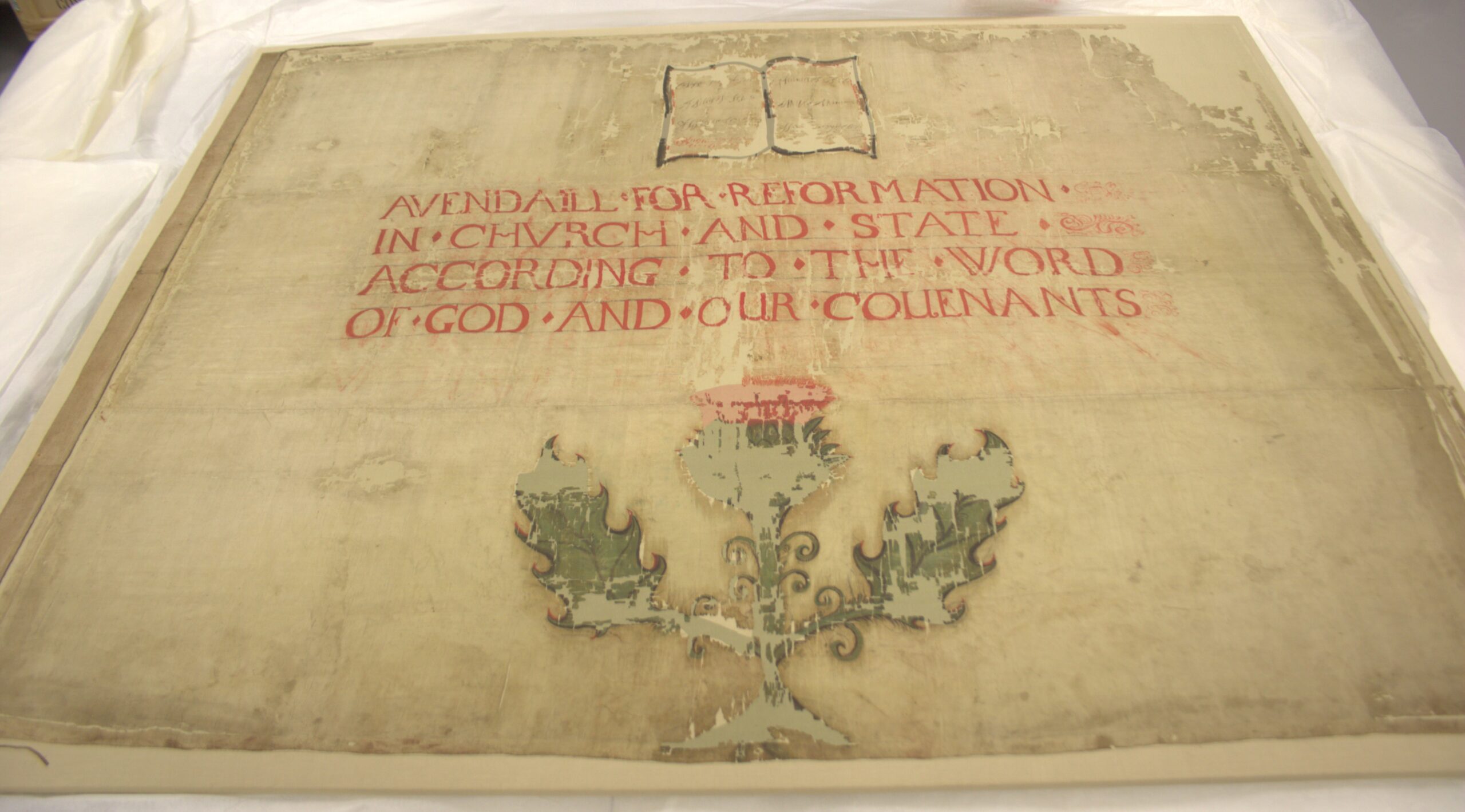
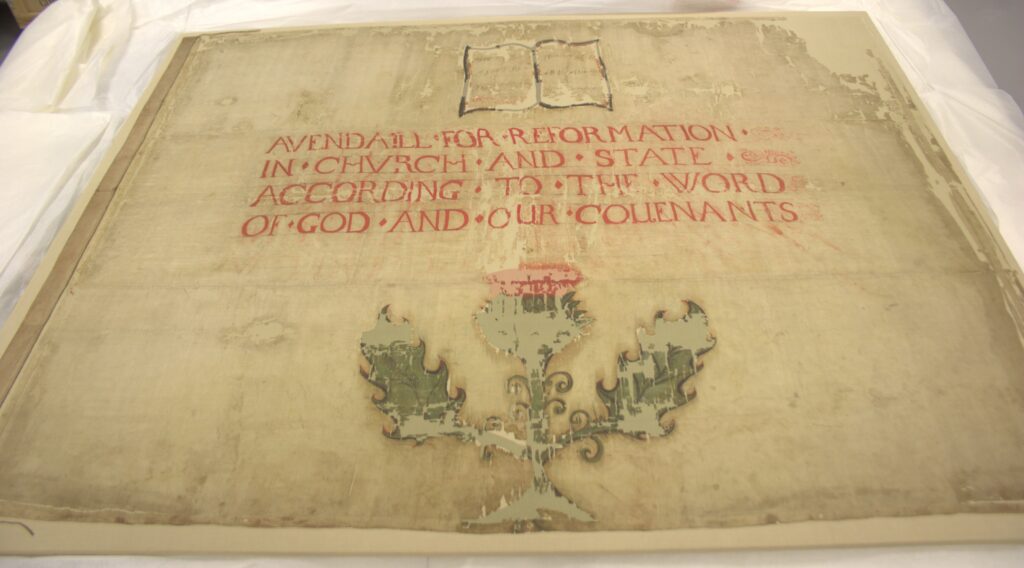
The Avendale banner (H.LF 8) is a key example of how the banners might rally a community around defence of the Covenants and church. Dating to the 1670s period of militant religious dissent, the motto reads: ‘Avendaill For Reformation in Church and State According to the Word of God and Our Covenants’. Avendale had a particularly strong Covenanter tradition. In 1679, a nearby conventicle – an illegal outdoor church meeting – famously turned into what is known as the Battle of Drumclog when the gathered congregation took an armed stand against the forces of John Graham of Claverhouse who had been sent to disperse such meetings (along with making arrests and punishing those captured).
The Avendale banner (H.LF 8)
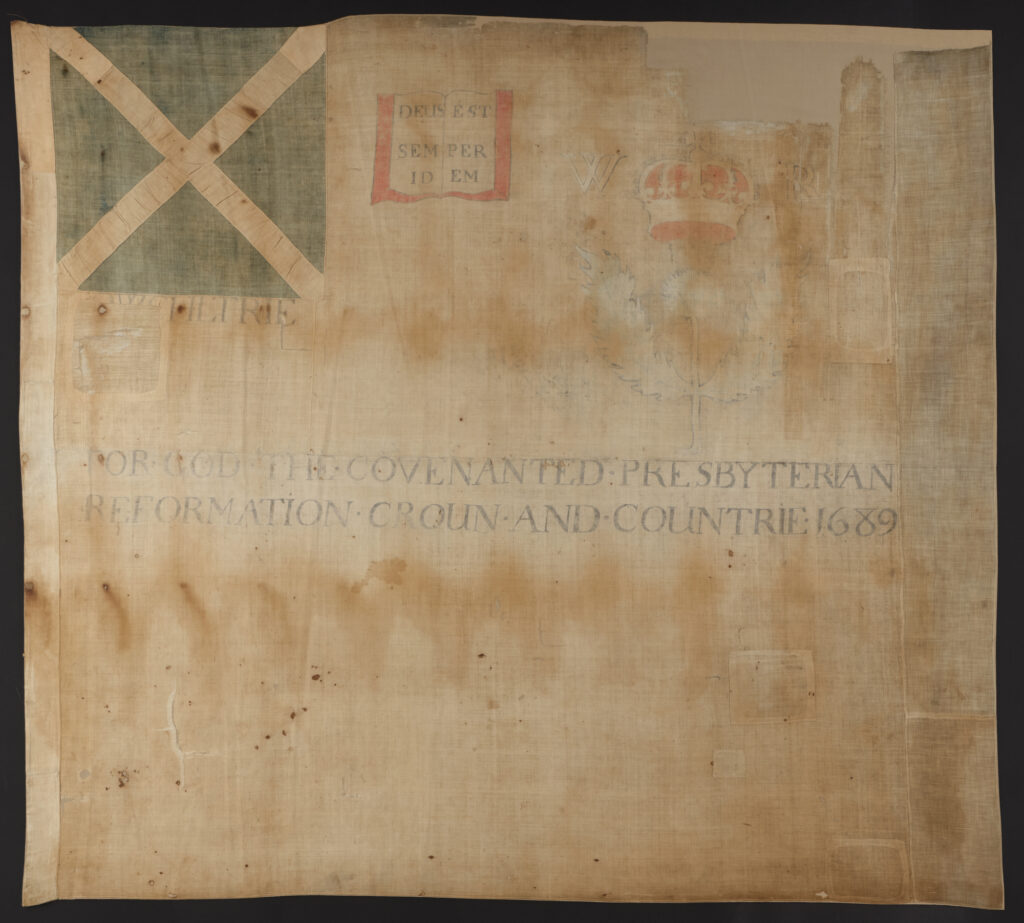
The Ochiltree flag (H.LF 14) demonstrates the legacy of the Covenanting banners and the lasting significance of the covenants to defence of the Presbyterian church into another phase of Scottish political and religious history. Painted with the words ‘For God the Covenanted Presbyterian Reformation Croun and Countrie 1689’, this banner demonstrates Scottish support for William and Mary’s overthrow of the Catholic King James VII. As well as a saltire and book with the motto ‘Deus Est Semper Idem’ (God is unchanging/always the same) the flag depicts a crowned thistle flanked by the letters W R for William Rex. Other flags with similar mottoes are associated with the Jacobite threats of the 1715 and 1745 risings.
The Ochiltree flag (H.LF 14)
Overall, the survival of these banners is remarkable given the circumstances of their use outdoors and in battle. While they belonged outside the walls of church buildings, they are a material legacy of a complex and violent period of Scottish church history, when the practices and powers of the established Presbyterian Church were disputed, threatened, and intertwined with national politics.
Our thanks to Georgia for sharing her reflections on our blog and at our launch symposium.
As fieldwork progresses and the first pilot studies take shape, an equally important strand of the ReACH project is developing quietly in the background: bringing together a robust, accessible and future-proof evidence base for Scotland’s church buildings at risk of closure.
Over the last few weeks, the ReACH team have been laying the foundations of the project database that will ultimately sit at the heart of this website. This work is less visible than a site visit or a public talk, but it is essential for our project aims. Good decisions about the future of church buildings depend on good information, and that starts with clear, consistent and shareable data.
Defining what we record and why
One of our first tasks has been to decide the structure of the dataset itself: the headings, categories and definitions that will underpin how we record churches across Scotland. These decisions matter. They shape what stories can be told, what comparisons can be made, and how easily users – from congregations and community groups to researchers and decision-makers – can find what they need.
We have been refining and testing a structure that captures both tangible heritage (from architectural features to current condition) and social value (including community relationships, activities, memories and local significance). This brings together Scotland’s Churches Trust’s longstanding recording methodology with the emerging needs of the sector.
Painted Fragments from Fowlis Easter (c) Lizzie Swarbrick
Bringing existing knowledge into one place
Alongside creating the framework, we’ve been mapping the sources of data, research and surveys that already exist. Scotland is fortunate to have decades of studies, inventories, architectural records, community projects and specialist research – but much of it is scattered, stored in different formats, or not widely known.
Over the past few weeks, we have had generous and productive conversations with researchers, heritage professionals and volunteers who are keen to collaborate – many of whom are part of our Heritage Action Group. Many are now working alongside us to help identify, review and connect the datasets they hold. Their willingness to share knowledge has reaffirmed something we already suspected: there is a real appetite for a central hub that brings information together while still pointing back to the organisations that created it.
This part of the project is still growing, but the momentum is strong. We are already collating material into the draft database, testing how best to integrate external sources, and exploring how we can signpost to partner resources in ways that are clear and meaningful.
Discussions at the ReACH Launch Symposium in September 2025
Building an accessible digital platform
Ultimately, the value of all this work depends on accessibility. That’s why the ReACH website is being designed not just as a project homepage, but as a long-term digital resource. The database will feed into public-facing pages that allow users to explore Scotland’s church heritage through filters and linked stories.
This will take shape gradually, but the foundations are now firmly underway. As we continue to refine the database, expand our partnerships and test the user experience, we’ll share more updates on progress and opportunities to get involved.
Interior shot of Burntisland Church (c) Lizzie Swarbrick
For now, a huge thank-you to everyone who has already contributed expertise, datasets and enthusiasm – if you know of a dataset that could be linked, then please do get in touch! Together, we’re building something that can support the future of these buildings and the communities connected to them, for years to come.
Update from ReACH Community Officer, Dr Emily Johnston
Prof Cumming has worked as a research scientist for over 40 years in the defence field. He is an Honorary Professor in the University of Edinburgh School of Chemistry.
He has a life-long interest in church architecture and history, particularly Scottish, and this led him to become a Fellow of the Society of Antiquaries of Scotland as well as to membership of other related organisations. He became firstly a supporter and then a Trustee of Scotland’s Churches’ Trust before becoming its Chair in October 2022. This led to his becoming a Trustee of the Scottish Pilgrim Routes Forum. He has lectured on Scottish church architecture to several groups. His work involvements allowed him to visit many churches across Europe and has observed similarities in approach and architecture.
Interest in music is reflected in his support for both the Scottish Chamber Orchestra and the Royal Scottish National Orchestra.
My lifetime interest in churches developed from architecture but grew to include other things such as history, music etc, and how they fit into all parts of life. Churches do not exist in isolation. They reflect the culture and its changes and are part of the community and the nation. In many ways they are interconnected and are hosts for the memory of the people. That means that learning about one building should lead to others so you can see how they are linked! So many sites and places in Scotland need that recognition as they are a part of the whole. They are individual but connected and not just across Scotland.
I have been constantly delighted as I discover more; the churches in Scotland reflect our history and culture and while related to those elsewhere they are distinct. There is common ground but that is limited. In many ways their development is closer to that in other parts of Northern Europe and separate from England. That needs both understanding and publicity, with examples.
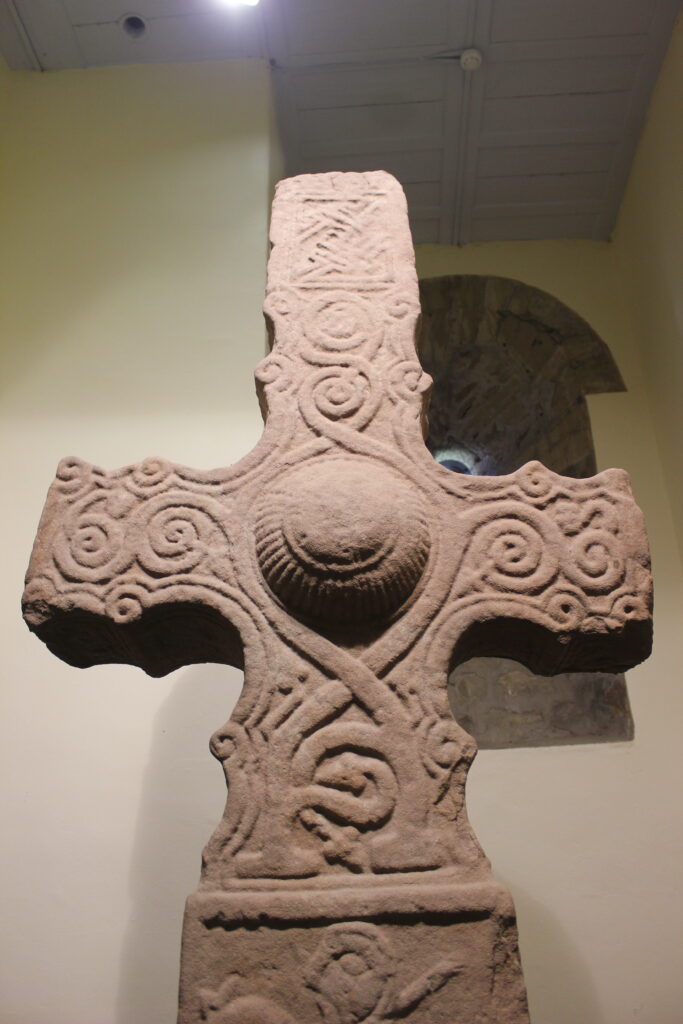
Dupplin Cross, Dunning (c) Adam Cumming
All that is why I am involved in both Scotland’s Churches Trust and the Scottish Pilgrim Routes Forum. It is a way of telling people about what we have and the connections. It is also why I joined Soc Ant and have given talks on the area.
One area of importance across Europe is pilgrimage – moving thoughtfully through the land and the history usually with church buildings as a focus. It was important in Scotland, with Whithorn, Glasgow and Dunfermline amongst the sites. It is another part of the culture and heritage.
Old West Kirk, Greenock (c) Adam Cumming
Pilgrimage was recognised as important by SCT and the need for a unified approach produced SPRF which coordinates an overall approach and certifies routes after assessment. It encourages visits and arranges places to stop with champing and open churches. SPRF like SCT stresses awareness of heritage, the history of the routes and their reasons for existing both now and in the past. I find when you learn how connected things are understanding can grow.
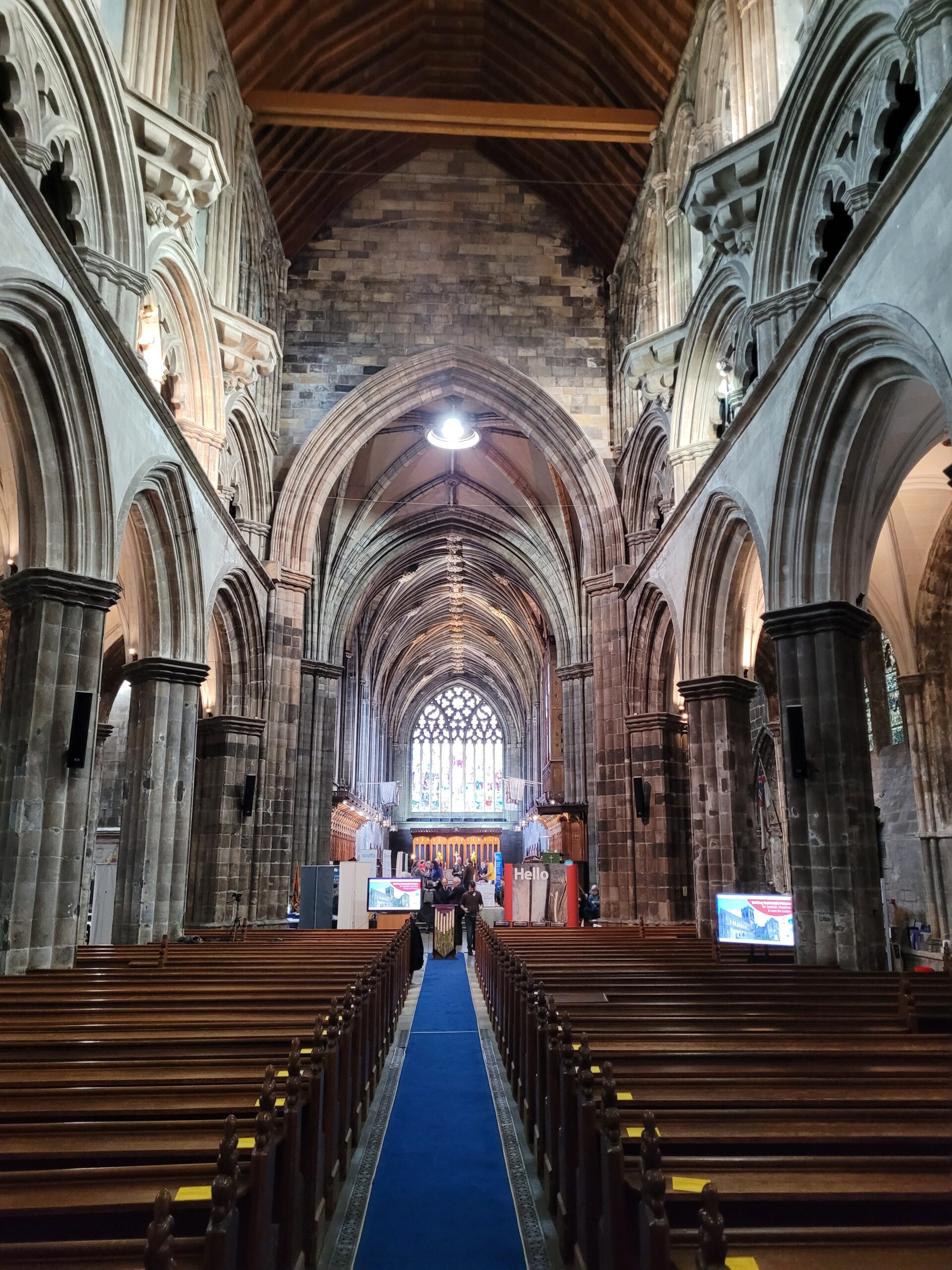
Paisley Abbey (c) Adam Cumming
As routes old and new are developed there are other activities such as the creation of a Fife Pilgrim Route pastor, and links with other similar bodies across Europe. We can support and learn from each other, and it illustrates the connections with Europe!
Symington Kirk (c) Adam Cumming
Ruins form part of this connectedness for they link to living buildings whose contents enrich the pilgrimage and the sense of cultural heritage. They should form part of the network together with the intact buildings. There are always things to discover and new insights, or so I find.
Our thanks to Adam Cumming for sharing his reflections in this post and at our launch event
As we move further into the autumn months, the ReACH team has been continuing to build momentum across our research strands. As well as making progress on our data collection, the past few weeks have also offered valuable opportunities to connect with others working in church heritage across the UK.
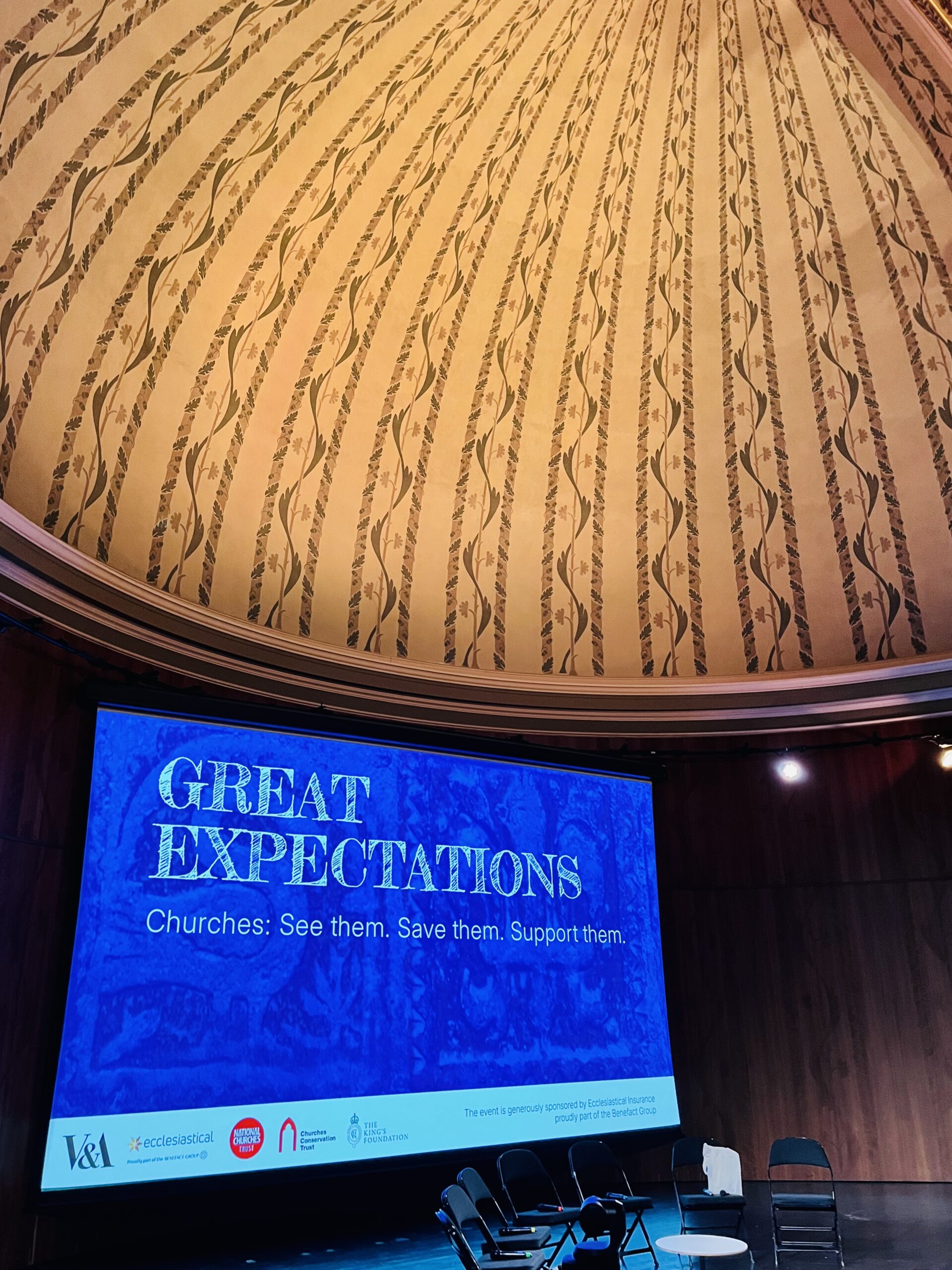
Reflections from the V&A’s Great Expectations Conference
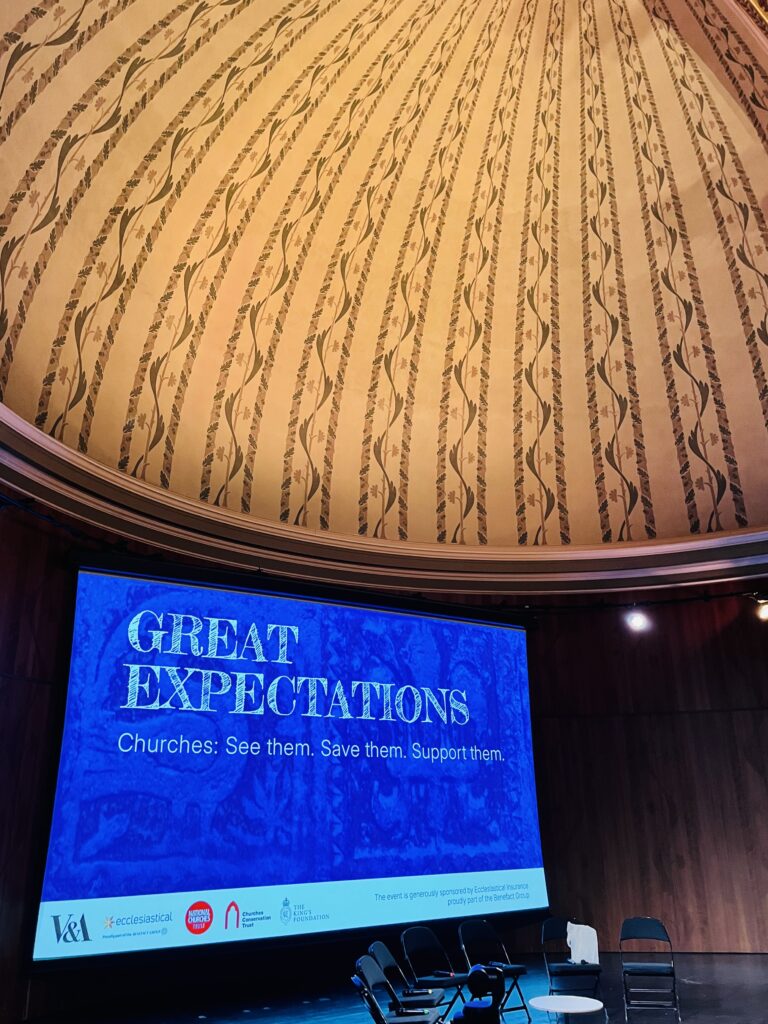
Earlier this month, Lizzie attended the V&A’s Great Expectations: Working with Historic Places of Worship conference in London, with Emily and Helen joining the event online. The day brought together a broad range of voices, from heritage professionals, people working within faith communities, and even some familiar public figures like Hugh Dennis and Rob Rinder, who all reflected on the challenges and opportunities facing historic churches today.
Lizzie’s VIew from the V&A Conference
Much of the discussion echoed themes at the heart of ReACH, including the necessity to understand churches as not only architectural landmarks, but also as places which are layered with memory, meaning and community identity. Many of the speakers shared personal stories and lived experiences which have shaped their connections to these buildings, emphasising that communities lie central to conversations about their future.
It was encouraging to see an alignment with our project aims, and to situate Scotland’s challenges within this wider UK context.
Sharing ReACH at the Historic Religious Buildings Alliance
Following on from her attendance at the V&A event, Lizzie also recently spoke at the Historic Religious Buildings Alliance (HRBA), which introduced the project to a new audience of practitioners, researchers and heritage professionals. The session also generated valuable contacts and potential collaborators, which we look forward to developing as the project progresses.
Progress on Data Collection
Our data collection work continues steadily, and we are currently gathering and consolidating information from national heritage records, archival surveys and church inventories, specialist databases and existing reports (such as those generated by Scotland’s Churches Trust Church Recording Project) and academic research.
This process is helping us to map both the existing knowledge base, as well as the gaps that still need to be explored. This is a critical stage as we begin to shape the structure of our database, which will be publicly accessible and will bring together tangible and intangible heritage information in a single, open resource.
We have also begun engaging with organisations and individuals across the sector to explore data-sharing collaborations. Many people have undertaken excellent recording work in specific areas of church heritage and we aim to bring these efforts together, in order to strengthen the overall picture.
Preparing Our Next Pilot Study
Alongside this work, we are now organising our next pilot study, which will help us to refine our fieldwork approach and test elements of both the heritage recording methodology and our social value surveys. These pilot stages are an important part of ensuring our processes are robust, scalable and useful for the range of communities and buildings that we will be working with across Scotland.
Looking Ahead
In the months ahead, we will be continuing our fieldwork, expanding our data collection and developing the structure of the database. Updates will continue to be shared here on our website, as well as across our social media channels.
We’re also pleased to share that our first Heritage Action Group meeting will take place in January – date to be confirmed. This session will focus on early findings, opportunities for collaboration and ways that the group can help shape the development of the ReACH database and fieldwork priorities.
Full details and registration will be circulated shortly.
—
If you are working on Scotland’s church heritage and would like to connect with us – or if you have existing data that you’d be able to share – we would be delighted to hear from you!
Be sure to sign up to our Heritage Action Group Mailing List if your work touches upon church buildings, their contents, or their social and cultural value, and you’d like to be a part of our growing network.
In late September, the Research in Action on Church Heritage (ReACH) team travelled north to Inverness, combining a visit to the Highland Archaeology Festival Conference with an opportunity to explore historic churches and meet the people who care for them. Across visits to Old High Church, East Church Inverness, Kirkmichael and East Church Cromarty, we encountered different approaches to preserving and reimagining Scotland’s church heritage: from community ownership and Gaelic culture to long-term conservation and interpretation.
Old High Church, Inverness
Our first stop was Old High Church, one of the city’s most recognisable landmarks which overlooks the River Ness. The site itself has a long history and is believed to be where St Columba converted King Brude of the Picts in 565AD. It has had a constant visual and spiritual presence, as well as associations with the Jacobite Rising with the clock tower acting as prison for Jacobite prisoners. Now, the churchyard welcomes fans of the Outlander book series and TV show, bringing the site to a whole new audience.
We were warmly welcomed by Chris, member of the community board who recently have purchased the church. Chris generously gave his time to show us around the church and share the story of the building’s recent move into community ownership and providing valuable connections amongst the local community – as well as where to find the best bowl of soup after a cold autumn morning. Inside, we were able to explore the historic interiors, photographing architectural details, including the stained glass, memorials and even the graffiti on pews. Exploring the church in this way gave us a real sense of how the space has evolved through use and repair.
From the pulpit and pews to the marble flooring and stained glass, the church offered an intricate record of its congregation’s history and craftsmanship. We poked into the nooks and crannies and looked closely at the layers of the building’s fabric, spotting phases of building work on the exterior walls.
Our visit also included conversations with local business owners and community members, who spoke about the value of the church to Inverness’s identity. Many shared personal memories of services, concerts, or simply the familiarity of seeing the spire rising over the city. Each conversation and reflection highlighted how deeply embedded Old High is in local life, not only as a historic religious site but as part of the city’s collective story.
Brief chats with visitors and tourists in the graveyard revealed the multiple ways people connect to such a place, from its Jacobite history and links to Outlander, to interests in graveyards or the quiet appeal of a peaceful green space in the city centre. These encounters demonstrated how church heritage continues to attract and inspire visitors for many different reasons.
East Church, Inverness
The following day we visited East Church, where we were welcomed by Murto who kindly gave us access and a guided tour whilst construction work is still underway. It was fascinating to see the space mid-transformation, with the scaffolding in place and the plans beginning to take shape.
The project to redevelop East Church as a Gaelic culture centre is inspiring. Its vision is to create a living hub for Gaelic language, music and community led by Culturlann Inbhir Nis.
Whilst this new use of the building requires the transformation of the space, it still maintains a deep respect for the building’s architectural and spiritual heritage, which previously led service in Gaelic. The plans are clearly well thought through and balance new uses with the conservation of historic features and once completed it will serve as a core for an active Gaelic community. Walking through the church with Murto, we could easily imagine the life that will return to the building: with Gaelic Pslam singing, conversations and events. It’s a powerful example of how heritage spaces can be adapted to sustain both cultural continuity and community relevance.
Kirkmichael, Dingwall
From Inverness, we travelled across the Black Isle to Kirkmichael, where we were warmly welcomed by Jim Mackay of the Kirkmichael Trust. Jim went out of his way to meet us, show us around and even invited us for a cup of tea.
Listening to Jim talk about the Trust’s long-term work was deeply inspiring. His detailed knowledge of the church’s restoration and conservation, from structural repairs to interpretive design, reflects years of dedication. It was fascinating to hear how the church has changed over time and how it continues to be actively maintained, cared for and visited by tourists and locals. It was clear that the volunteers have taken time to research the history of each grave marker, learning techniques on how best to conserve the different types of stone, and how to enhance visitors experience to the site. With calm blue skies for our visit, we were able to experience the peace and tranquillity of the site for ourselves and understand why some have developed such an attachment to this place.
East Church, Cromarty
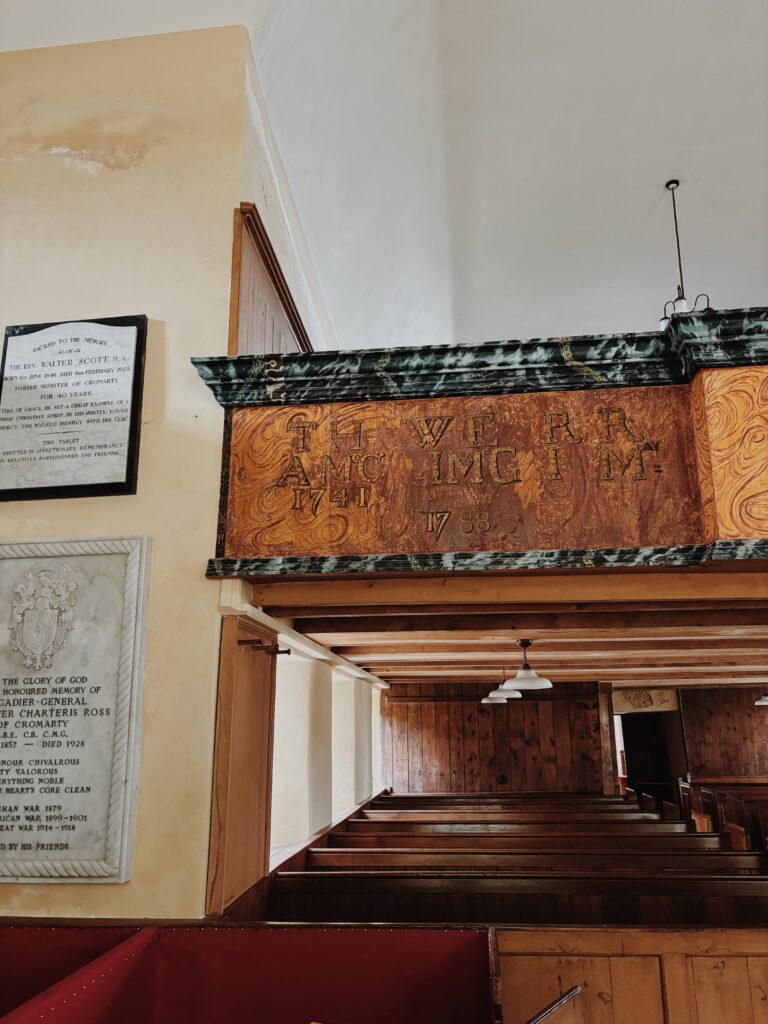
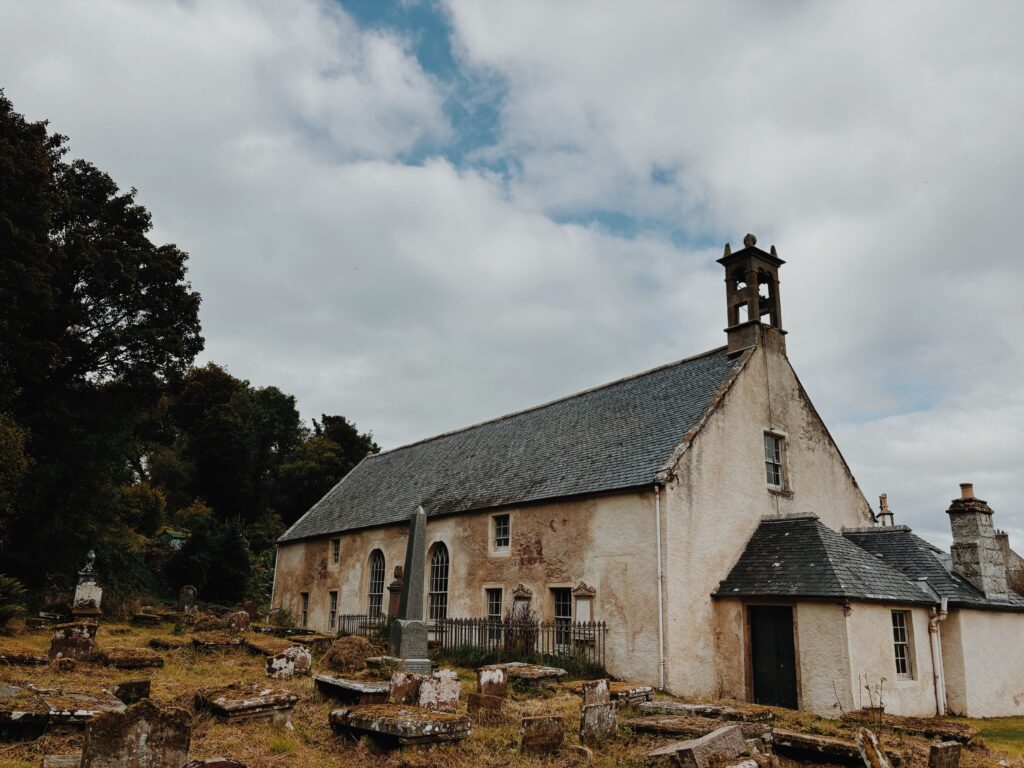
Our final stop was the East Church in Cromarty, a striking building with a rich layered history. The church is in the ownership of Historic Churches Scotland and was featured on BBC’s ‘Restoration Village’ in 2006. In 2007, it won a grant from the National Lottery Heritage Fund which has helped to preserve the building, as well as develop interpretation for those visiting the church.
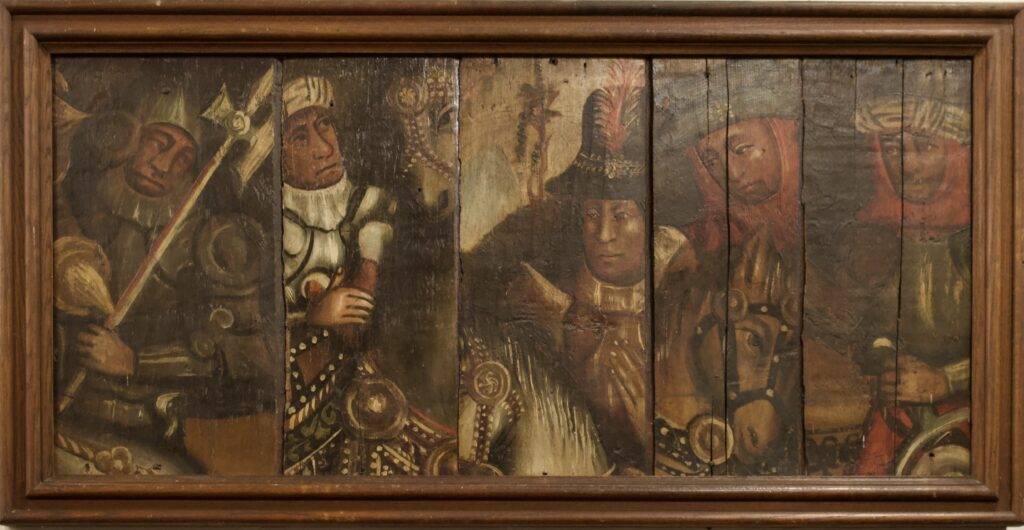
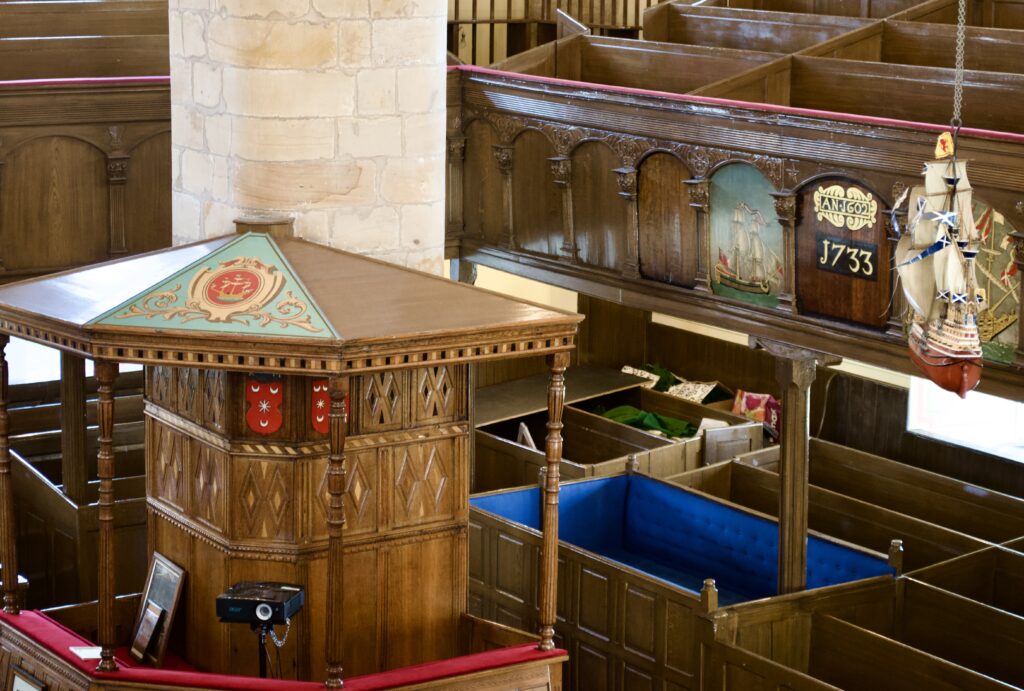
Interpretation panels guide visitors through the story of the church, its architecture and the people who shaped it. The presentation blends historical narrative with visual details, drawing out characteristics such as beautifully painted pew panels.
The East Church stands as an example of how interpretation can bring heritage to life and help guide visitor to key areas of interest.
Reflections
Our Inverness and Black Isle fieldwork offered us a vivid picture of church heritage in transition: from buildings seeking new uses to communities rediscovering old ones. Each site told its own story and spoke to us in different ways.
We left with hundreds of photographs, field notes, and, most importantly, a sense of gratitude for the generosity of everyone who shared their time and insights with us. Special thanks to Chris and Maureen at Old High, Murto at East Church Inverness, and Jim at Kirkmichael, for your openness and hospitality.
We’re excited to bring our learning from these field visits to the project and apply them as we move forward in our data collection and case studies.
Matthew Dransfield, under the name @BrutalBasil, documents post-war modernist and brutalist architecture, from churches and swimming pools to pubs and housing schemes. He is passionate about photographing buildings before they are gone. His book Modernist Churches of Scotland was produced in partnership with The Modernist Society. His work has been published widely, including in The Guardian.
Churches are more than concrete, brick and glass and none more so than those created in postwar Scotland. In a relatively short span of time, Modernist architecture blossomed in ecclesiastical buildings across the Central Belt and beyond.
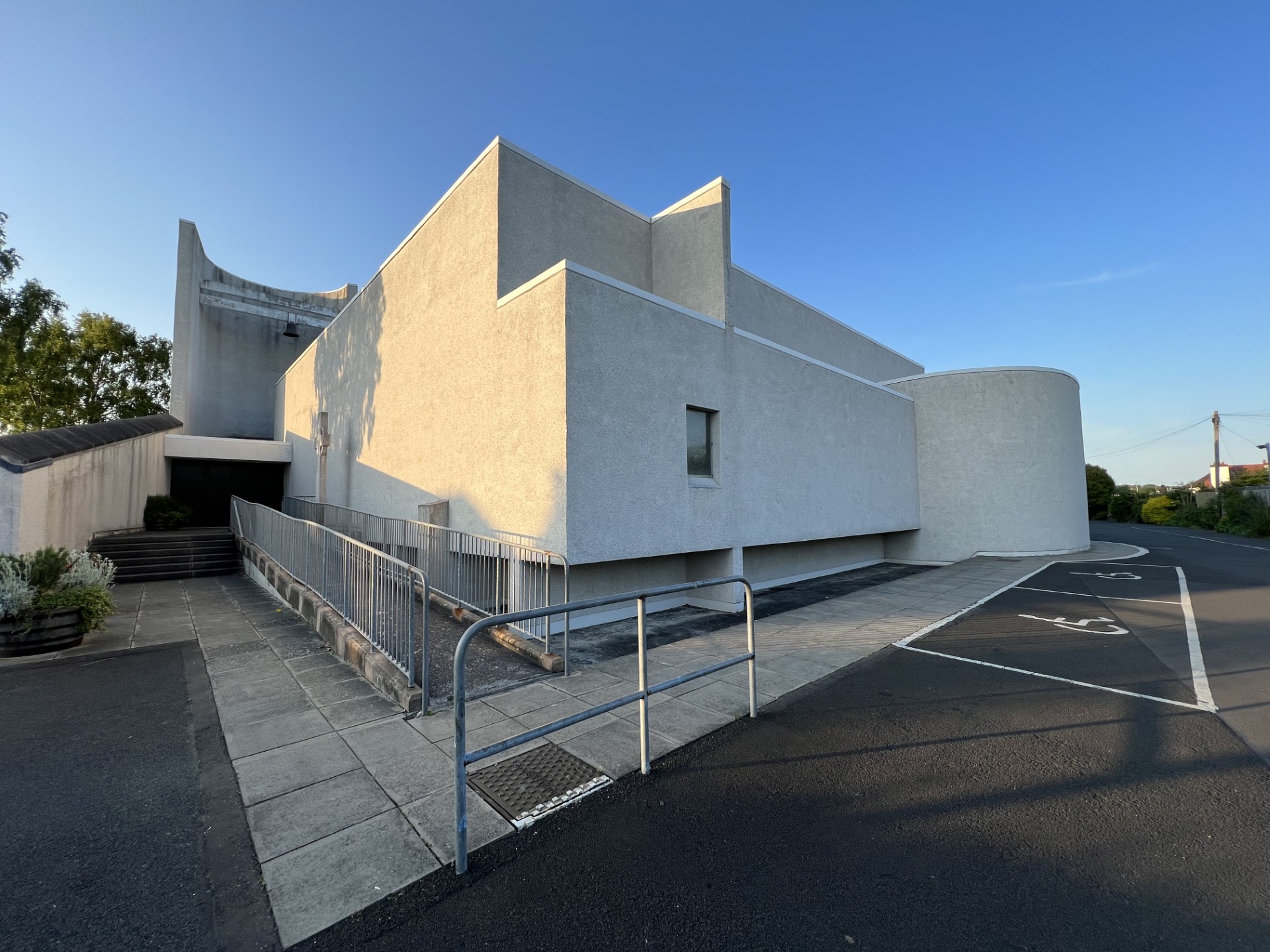
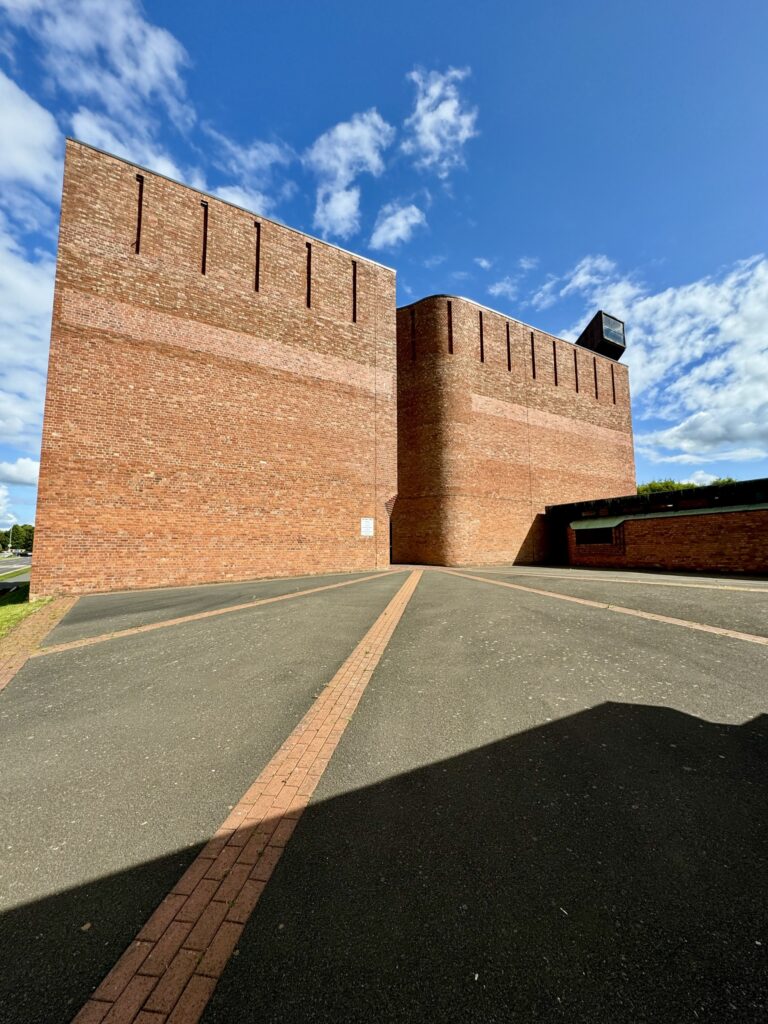
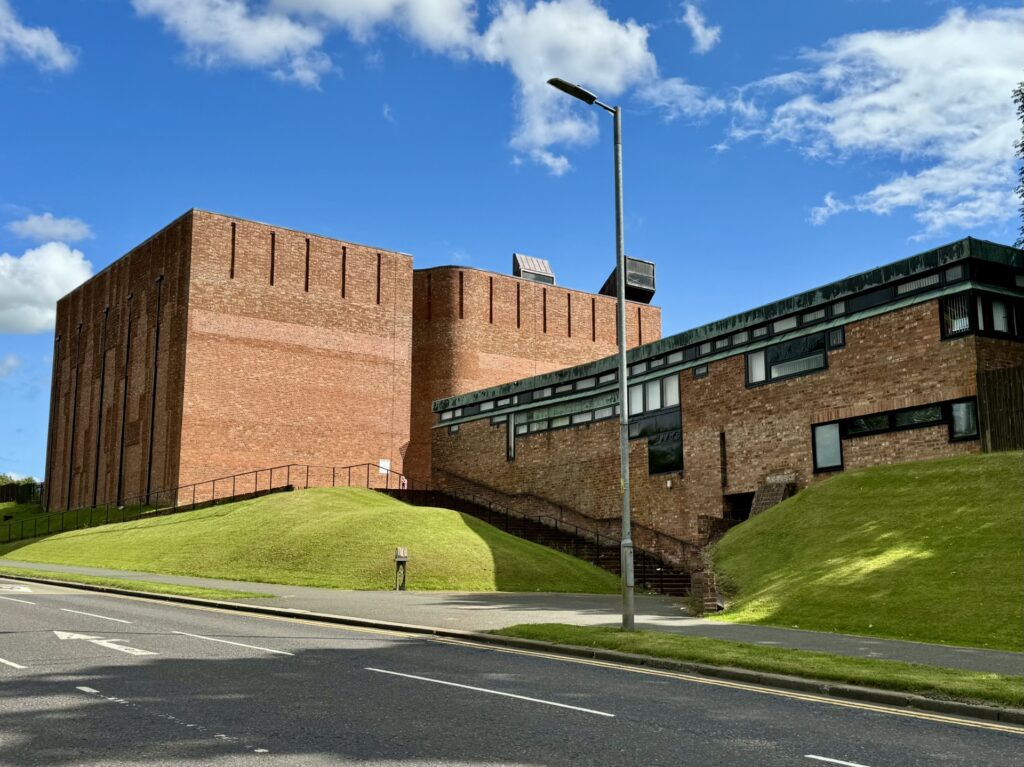
Take St Bride’s in East Kilbride: a gigantic red-brick fortress with barely a window. Or, in sharp contrast, the crisp white curves of Craigsbank Parish Church, which once had its own moat and can feel almost Mediterranean when the sun shines. I was told many of these churches were built without windows, cheaper to construct, and less chance of smashed glass.
St Bride’s Roman Catholic Church, East Kilbride.
The postwar housing boom drove this surge. As people left inner-city slums for spacious new suburbs, churches were needed to serve these communities. At no time before or since in Britain have so many been built so quickly. More than buildings, they are expressions of a historical moment, often hidden within council estates / housing schemes, visible only to those who live nearby.
As I explored them, I discovered both variety and daring. From the early 1950’s through the early 1960s, Scotland produced groundbreaking ecclesiastical architecture. It was a perfect storm: scarce materials, little standard guidance, small budgets, and an urgent demand. Architects were given space to experiment, and experiment they did.
St Bride’s Roman Catholic Church, East Kilbride.St Bride’s Roman Catholic Church, East Kilbride.
St Andrew’s Catholic Church in Livingston is one striking result. Sitting high on its site, its swirling concrete form and angled roof recall Le Corbusier. In Glenrothes, St Paul’s Roman Catholic Church – now Category A listed, was the first major break from the traditional rectangular layout. Designed by Isi Metzstein and Andy MacMillan of Gillespie, Kidd & Coia, it pairs white concrete with jewel-like stained glass. This was their first church, and it set a radical new tone.
What is remarkable is not uniformity but diversity. Architects were encouraged to be bold, and their designs reflect the optimism, urgency, and sometimes desperation of the era. Churches had to be built fast, cheaply, and with modern flair.
Not everyone approved. One priest joked that when he reached the afterlife, he wanted a word with his architect: “They used rubbish materials. And Scotland is no place for flat roofs.” His frustration was understandable. Many churches were built under pressure, with steel shortages, experimental construction, and flat roofs that leaked in the Scottish rain. Some materials have aged badly, but that too is part of their story.
Craigsbank Parish Church, Corstorphine, Edinburgh
Today, half a century on, these churches face new challenges. Declining congregations mean closures, mergers, even demolition. Many lie abandoned or in poor repair, with little statutory protection and patchy listing. Concrete is rarely seen as nostalgic, and these buildings are not always loved.
Yet they remain beautiful in their own way. They capture a society in transition: communities moving from tenements into new estates, forging new identities in rapidly changing landscapes. The architecture reflects that turbulence and aspiration. For me, there is an urgent need to document them, to photograph them, and to argue for their reuse where possible.
Some dismiss Brutalism as ugly. I’d say: look again. These churches are cultural responses, symbols of optimism, change and faith in a new era.
Our thanks to Matt for sharing his reflections on our blog and at our launch symposium. You can find him on Instagram at @brutalbasil
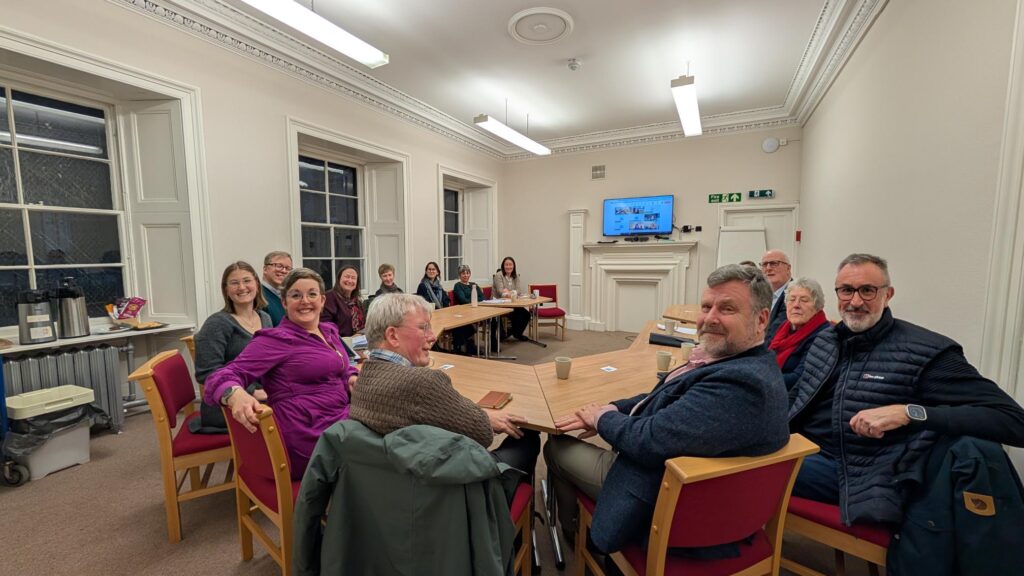
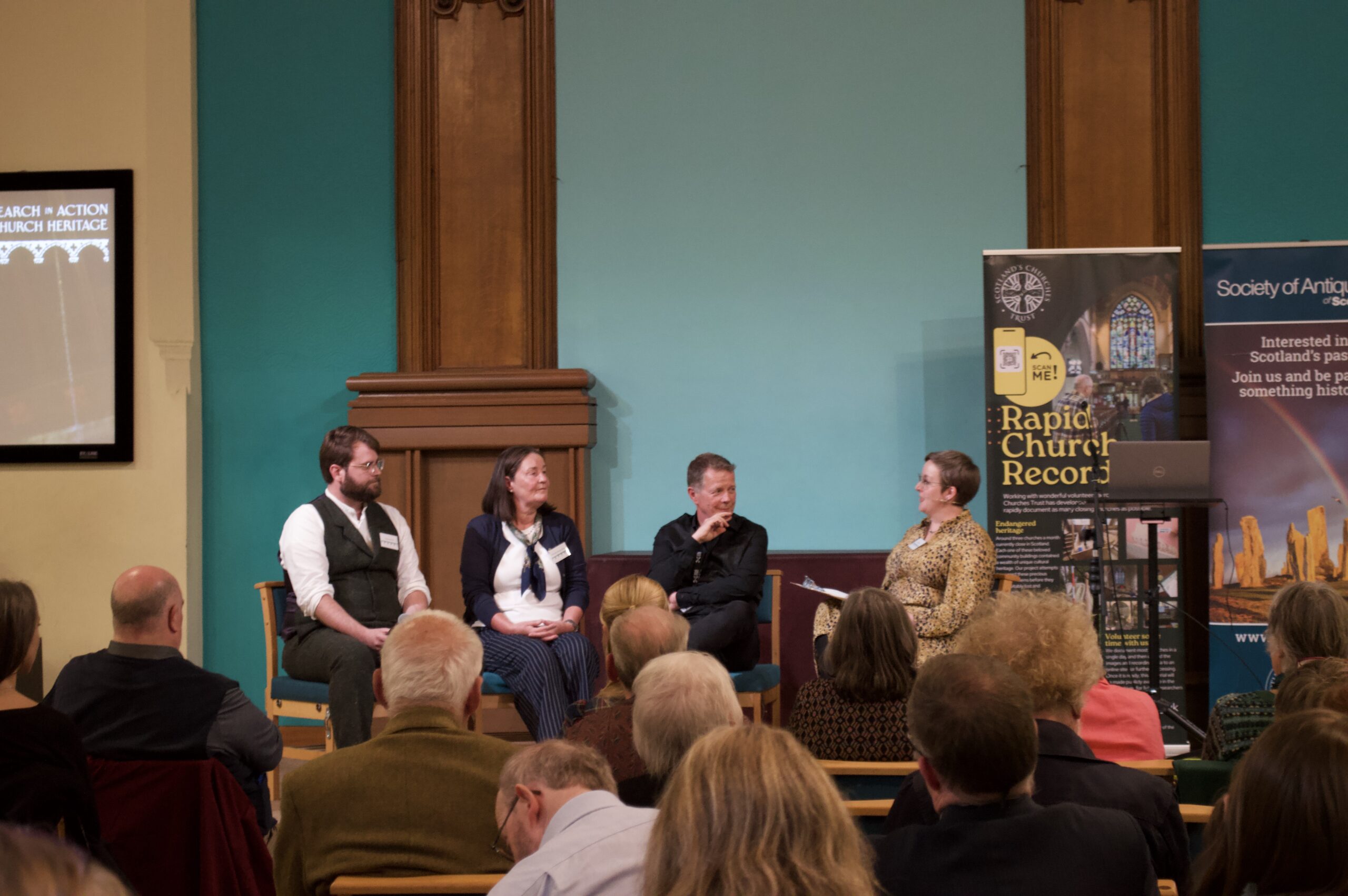
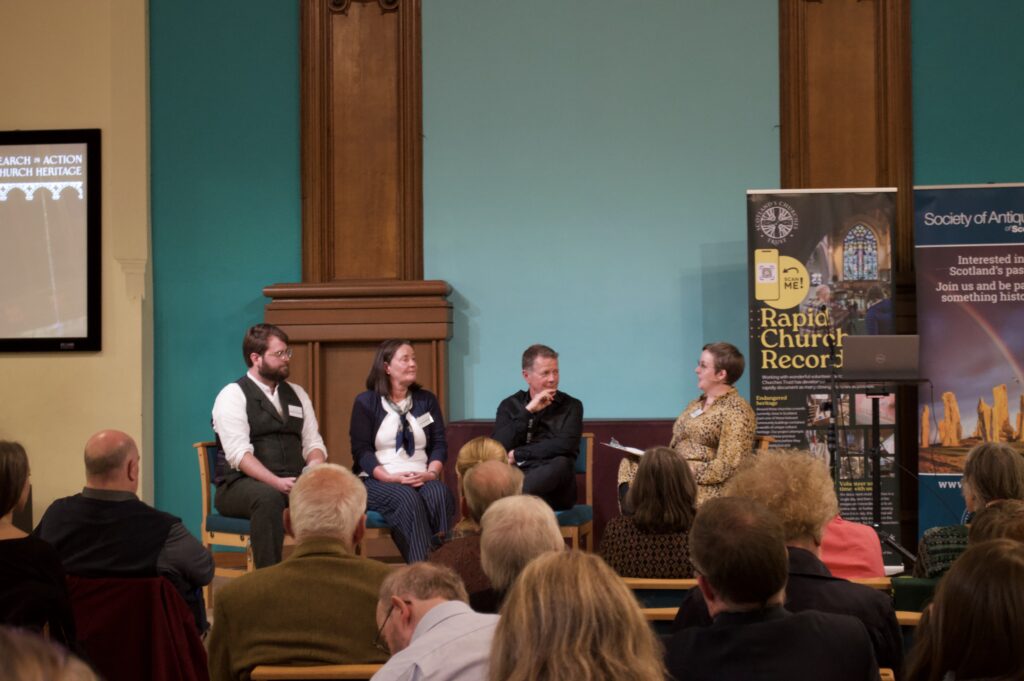
In September, we were delighted to welcome around 80 attendees both in person and online to the launch symposium for Research in Action on Church Heritage. It was a fantastic afternoon of talks, discussion and connection, and a wonderful way to share this project.
Exploring Churches Through Objects and Stories
The symposium opened with a series of 20 lightning talks, each offering a snapshot of material culture from Scotland’s churches. From fonts to heraldry, stained glass to covenant banners, each of our expert speakers showed how the physical fabric of a church can give us insights into the history of a congregation and community.
In the second part of the afternoon, Lizzie hosted a roundtable discussion with Craig Stanford (HES), Victoria Collison-Owen (Historic Churches Scotland) and Richard Oram (University of Stirling), which drew out some of the challenges which face people and church buildings – looking to the past, present and future.
“The crisis in ecclesiastical churches often intersects with crises in our society in troubling ways” – Bess Rhodes
The symposium was valuable for the conversations that it sparked, and the coffee breaks and drinks reception were filled with lively conversations. We hope that many attendees have created important new connections that will continue beyond the event.
“It’s not just about the buildings; it’s about the people” – Richard Oram
The symposium also marked the launch of the Action Group, a network for those interested in shaping the future of Scotland’s churches. The Action Group functions as a network of friendly experts, who can share their knowledge on different aspects of church heritage, and support congregations, communities and churches in times of transition.
“It’s hard to take a national approach when all of these buildings are unique” – Craig Stanford
We also unveiled our new project website, which will be a hub for updates, reflections and shared resources. We will be continually updating the website with project news, events and the forthcoming database.
Next Steps for Research in Action on Church Heritage
The symposium was just the beginning. Through upcoming fieldwork, contributions from our Action Group and working with communities, we will continue to explore how Scotland’s church heritage can be understood, valued and sustained for the future.
Thank you to all who joined us, whether in Edinburgh or online – we’re excited to continue our work and see where it takes us next!
At the end of August, Lizzie, Helen and Emily joined colleagues from across Scotland at the Places of Worship Forum: Planning Forward Event – a chance to share ideas, learn from experiences and talk about the future of church heritage.
The event was hosted by Built Environment Scotland (BEFS) and brought together community groups, heritage organisations and researchers to discuss the challenges and opportunities facing Scotland’s places of worship. The day was designed for collaboration and honest conversation, in the fantastic space of The Pyramid at Anderston.
The Pyramid at Anderston building
The day began with short talks from key projects which have already begun to tackle some of the issues of closing churches. Alongside Craig Stanford (HES), Harry Whitmore (DTAS) and our own Lizzie Swarbrick and DJ Johnston-Smith presented on the ‘Research in Action on Church Heritage’ project, sharing our project aims with the group of attendees. Together, these talks gave a strategic overview of the sector and showed the different ways people are working towards sustainable solutions.
The impressive interior of the Pyramid at Anderston
Before an excellent buffet lunch, we split into breakout groups to explore “common problems for unique buildings”. These thematic discussion groups explored issues such as:
Changes of land use for church land and graveyards
Challenges around materiality and interiors
Ecclesiastical exemption
Adapting of places of worship for new uses
Our project team divided ourselves across the groups so that we could be a part of as many conversations as possible. It was motivating to hear such a variety of perspectives and experiences come together around shared challenges.
Lizzie and DJ introducing the project
After lunch, these group sharing and blue-skying exercises were then effectively summarised by the breakout group facilitators, which led us into lively discussions amongst all the attendees about ways forward and potential collaborations.
For us, one of the most valuable parts of the day was meeting people who are directly involved in saving church heritage and supporting congregations through times of transition. These conversations are already shaping how we design our research, to ensure that it is useful in practice.
We’re excited to keep building these connections, and to continue the conversation at our own symposium on Thursday. Our event will focus more closely on the heritage features of churches, with lightning talks and round-table discussions. We’d love to see many of you there – for more information click here!