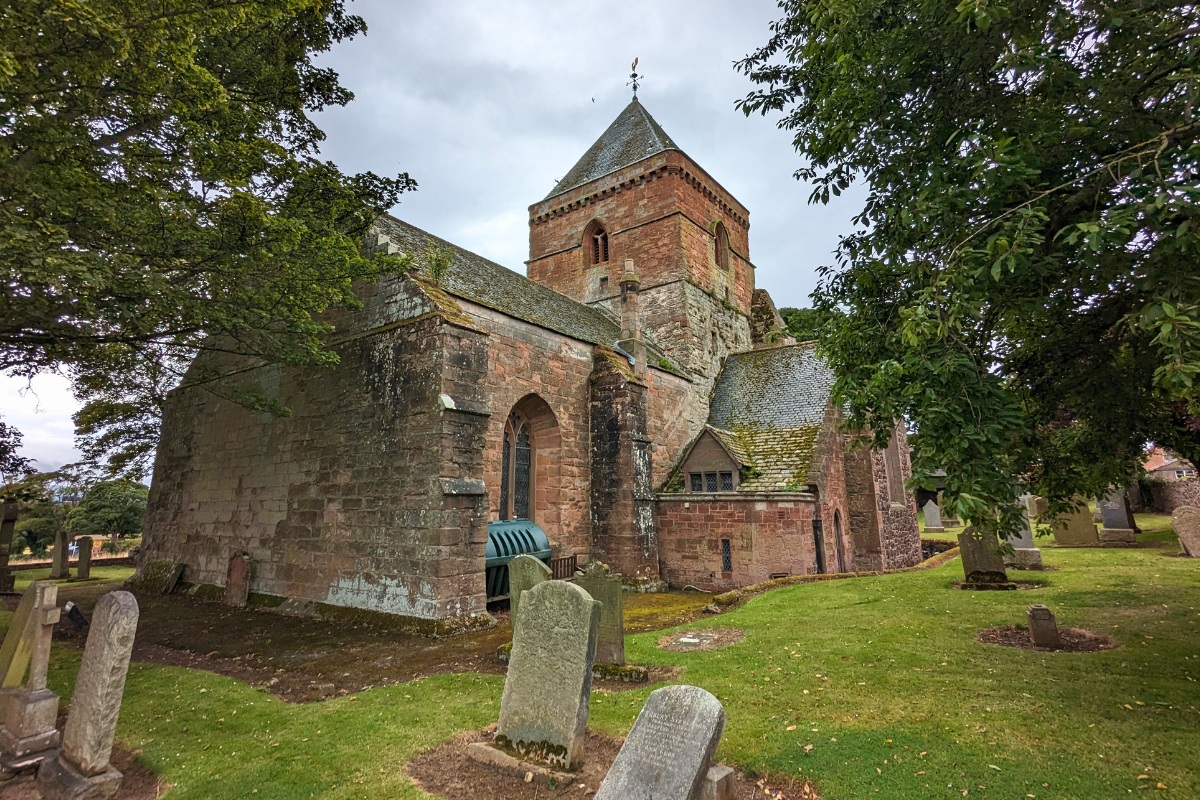
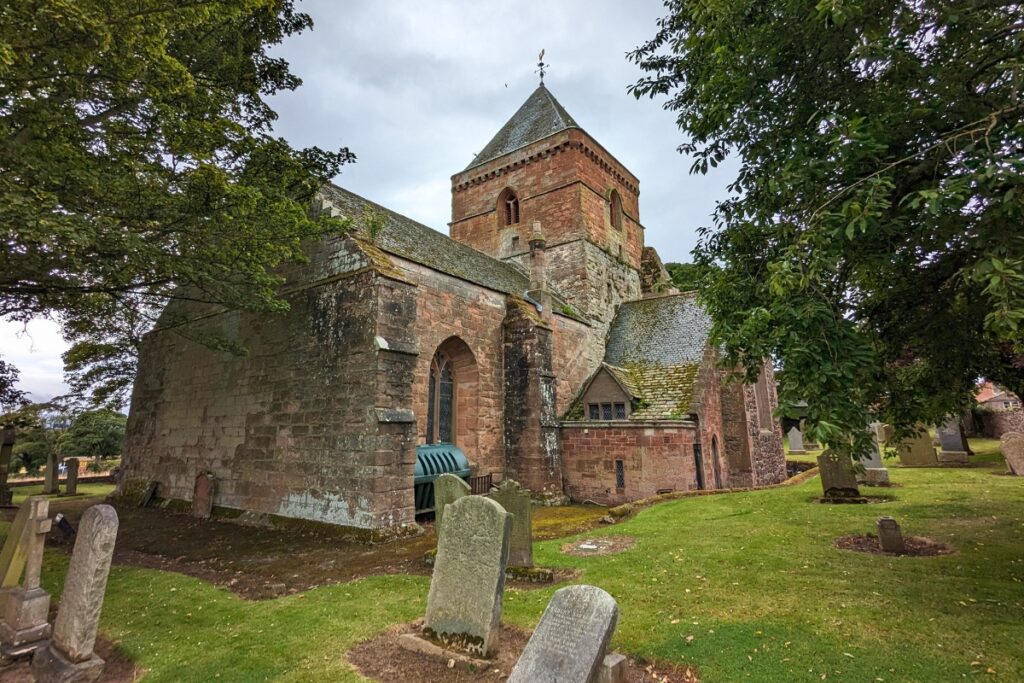
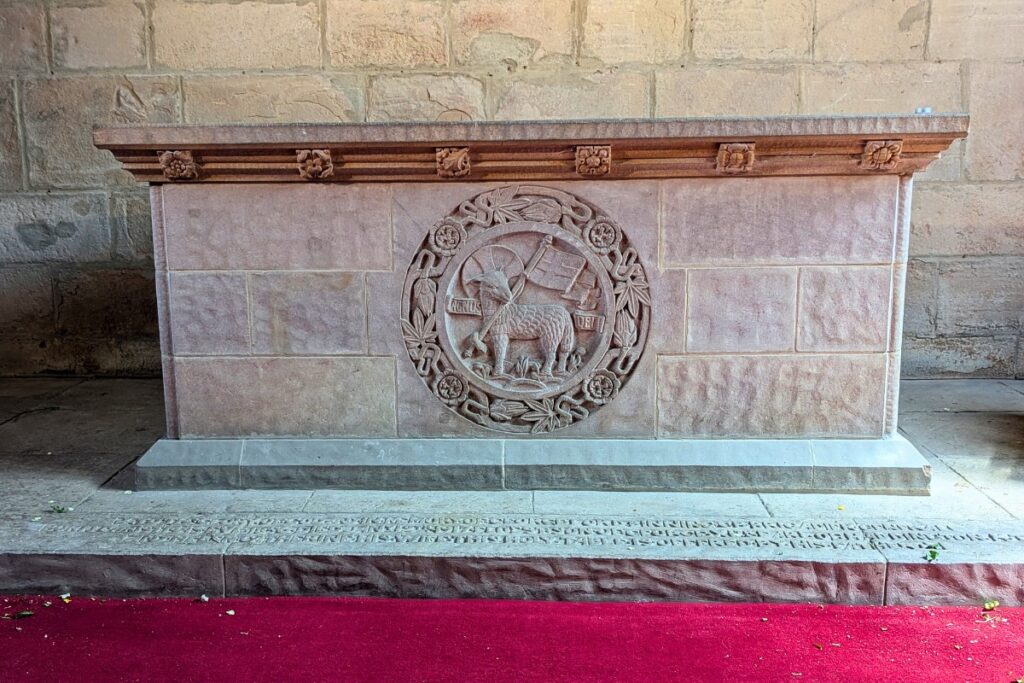
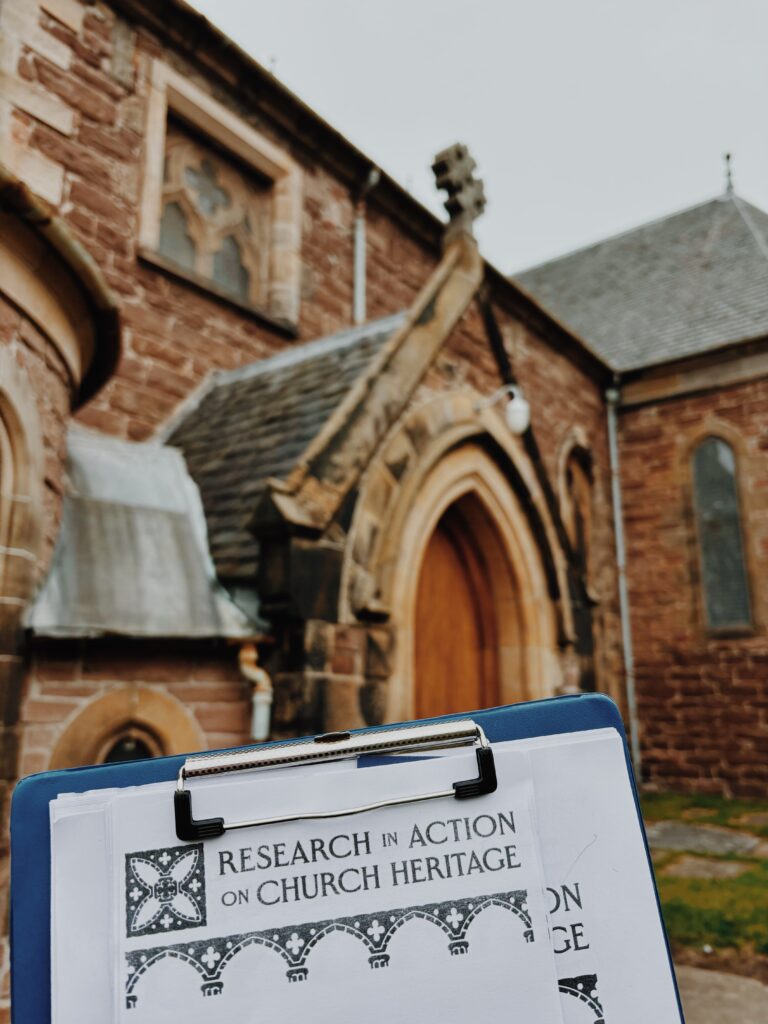
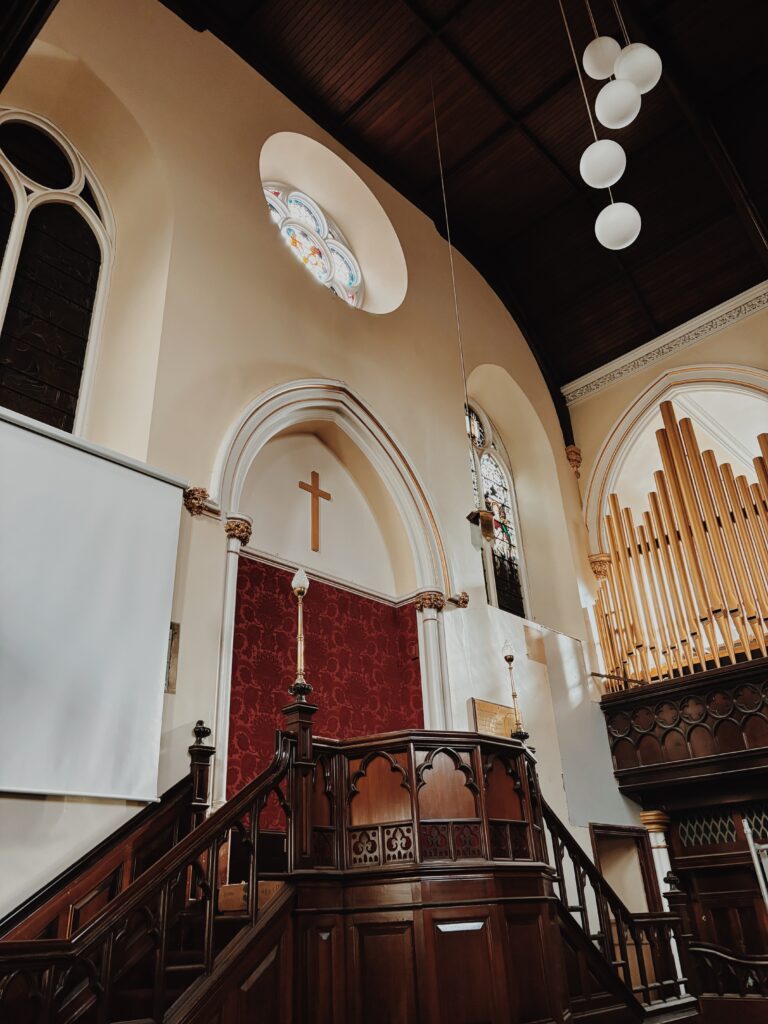
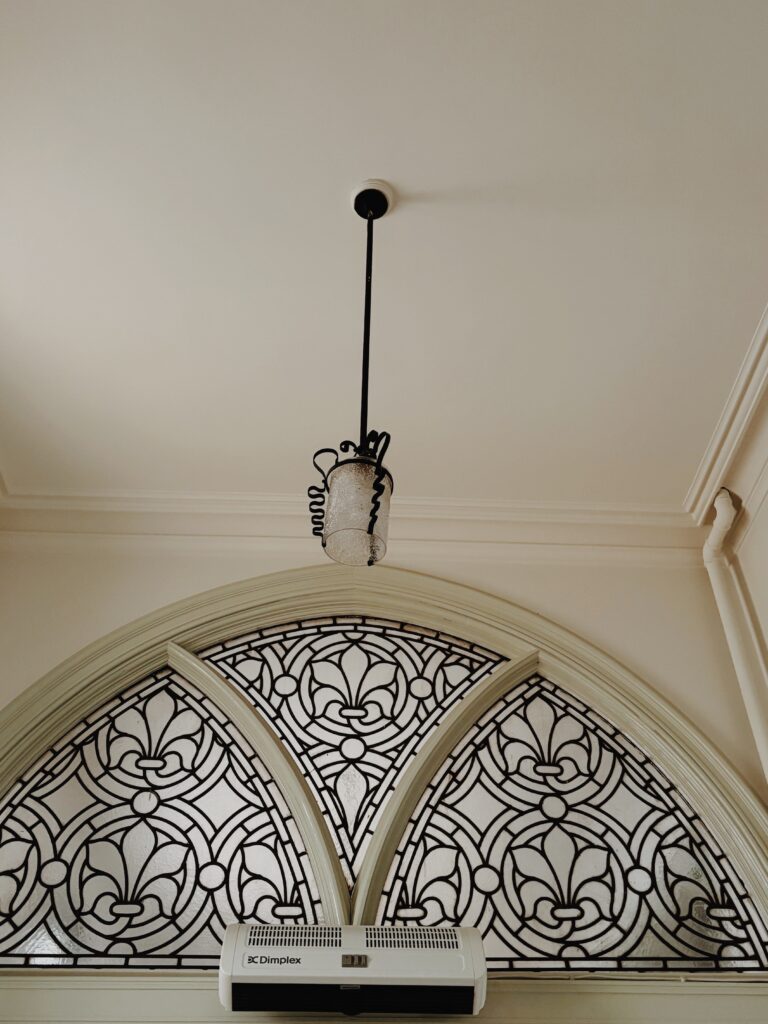
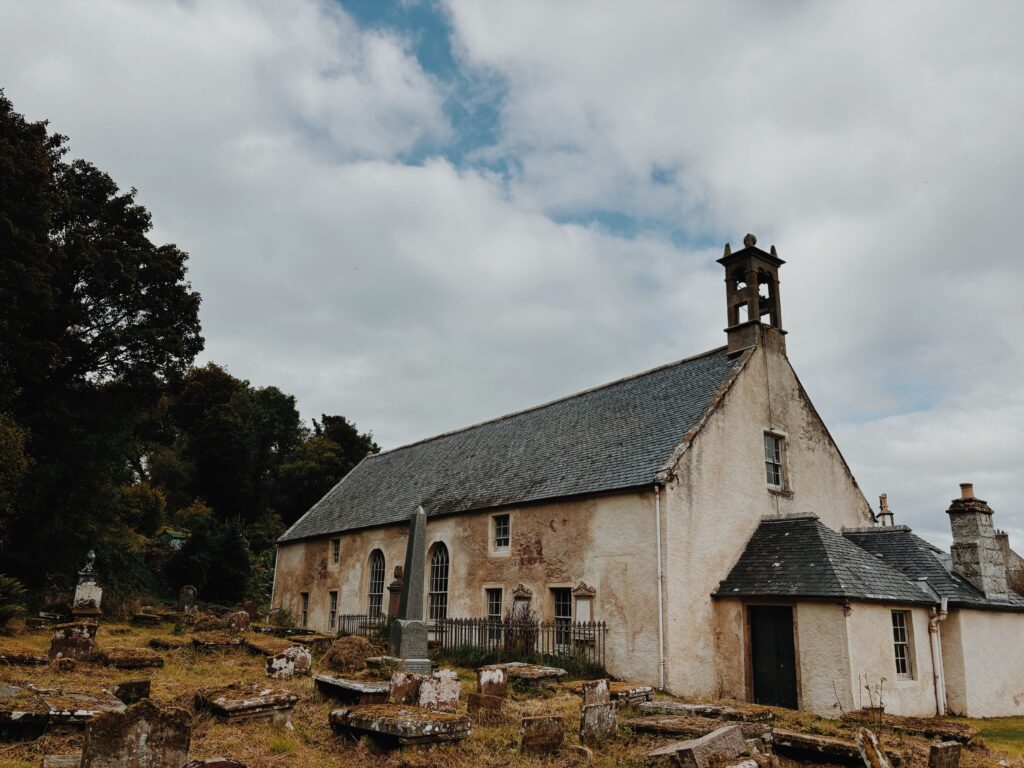
For centuries, St Mary’s Church has been at the heart of Whitekirk’s life as a place of worship, gathering and memory. Now, as part of the Research in Action on Church Heritage (ReACH) project, we’re inviting you to share your stories and reflections to help document its cultural and community significance.
Whether your memories come from worship, local events or everyday encounters, we’d love to hear from you!
(c) Scotland’s Churches Trust
Join our open day
When: 7 February 2026
Time: 11am – 3pm (Drop in)
Where: St Mary’s Church, Whitekirk
What’s Happening?
Short expert-led tours on Whitekirk’s fascinating history will be held at 12.00, 13.00 and 14.00.
Throughout the day visitors can explore the church at their own pace and enjoy organ music.
Share your memories and experiences of Whitekirk
Participatory Mapping Show us which spaces in St Mary’s matter most to you at our interactive mapping station.
Memory Box Contribute in your own way: write, draw, sing, share photos or audio. Your piece will become part of a collective memory capsule.
Oral Histories Have a longer story to tell? Email Emily@socantscot.org to book a 30 minute chat and record your memories.
Speedy Interviews Got a short story or passing encounter? Share it in just 10 minutes!
Why Take Part?
Your contributions will help shape a new, publicly accessible database on Scotland’s church heritage. Together, we’ll capture the social and cultural value of St Mary’s for future generations.
The nearest bus stop is Ladysfield which services the 120 Dunbar – North Berwick
ReACH is a two-year project led by the Society of Antiquaries of Scotland and Scotland’s Churches Trust, funded by the National Lottery Heritage Fund and The Pilgrim Trust.
In late September, the Research in Action on Church Heritage (ReACH) team travelled north to Inverness, combining a visit to the Highland Archaeology Festival Conference with an opportunity to explore historic churches and meet the people who care for them. Across visits to Old High Church, East Church Inverness, Kirkmichael and East Church Cromarty, we encountered different approaches to preserving and reimagining Scotland’s church heritage: from community ownership and Gaelic culture to long-term conservation and interpretation.
Old High Church, Inverness
Our first stop was Old High Church, one of the city’s most recognisable landmarks which overlooks the River Ness. The site itself has a long history and is believed to be where St Columba converted King Brude of the Picts in 565AD. It has had a constant visual and spiritual presence, as well as associations with the Jacobite Rising with the clock tower acting as prison for Jacobite prisoners. Now, the churchyard welcomes fans of the Outlander book series and TV show, bringing the site to a whole new audience.
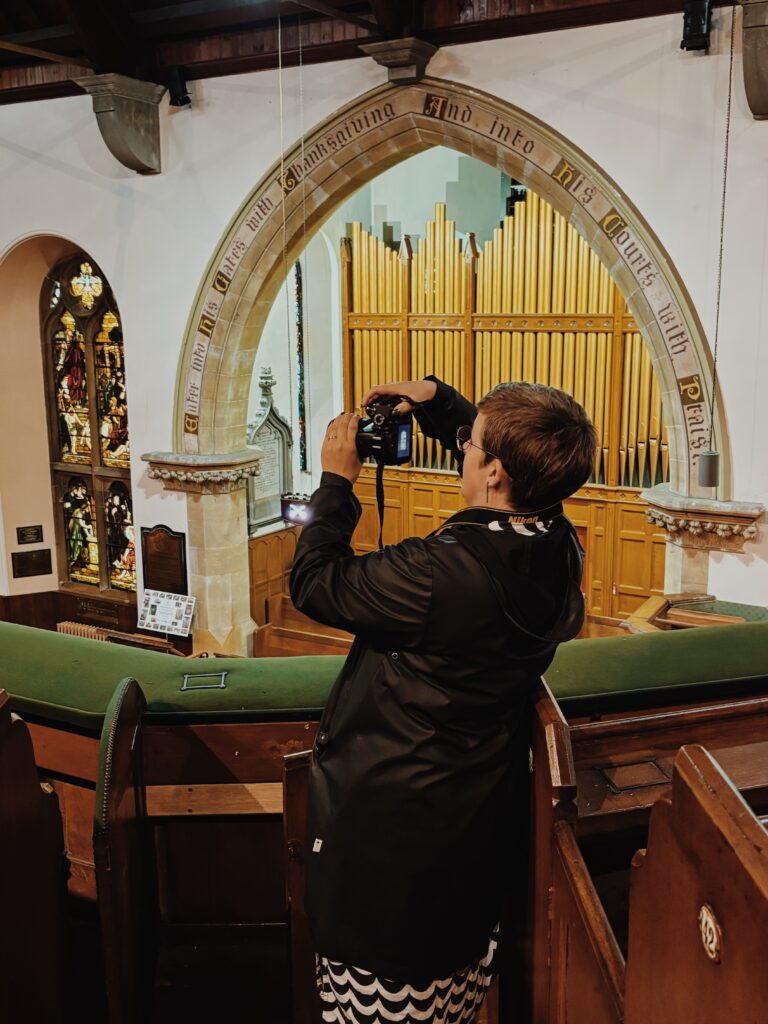
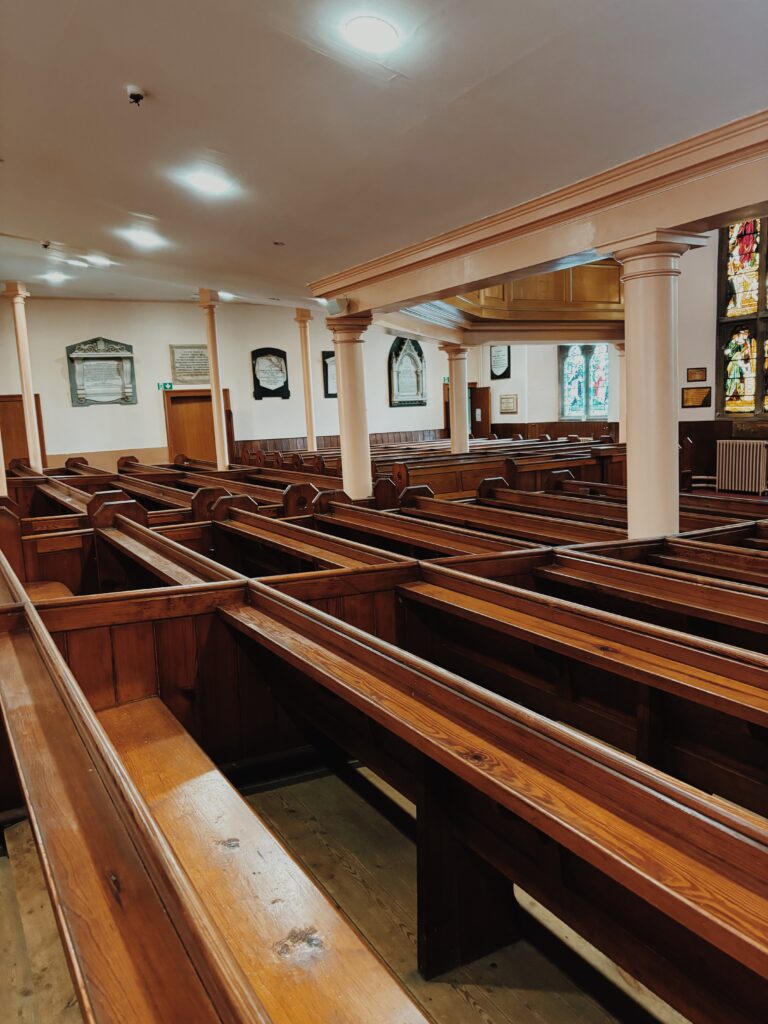
We were warmly welcomed by Chris, member of the community board who recently have purchased the church. Chris generously gave his time to show us around the church and share the story of the building’s recent move into community ownership and providing valuable connections amongst the local community – as well as where to find the best bowl of soup after a cold autumn morning. Inside, we were able to explore the historic interiors, photographing architectural details, including the stained glass, memorials and even the graffiti on pews. Exploring the church in this way gave us a real sense of how the space has evolved through use and repair.
From the pulpit and pews to the marble flooring and stained glass, the church offered an intricate record of its congregation’s history and craftsmanship. We poked into the nooks and crannies and looked closely at the layers of the building’s fabric, spotting phases of building work on the exterior walls.
Our visit also included conversations with local business owners and community members, who spoke about the value of the church to Inverness’s identity. Many shared personal memories of services, concerts, or simply the familiarity of seeing the spire rising over the city. Each conversation and reflection highlighted how deeply embedded Old High is in local life, not only as a historic religious site but as part of the city’s collective story.
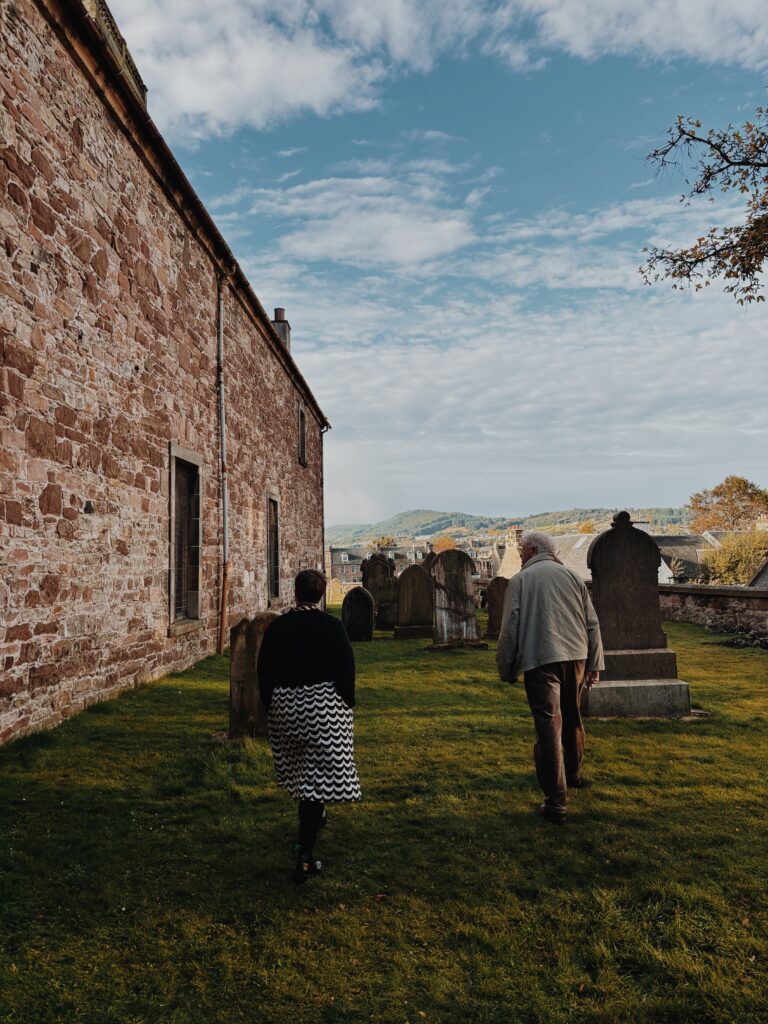
Brief chats with visitors and tourists in the graveyard revealed the multiple ways people connect to such a place, from its Jacobite history and links to Outlander, to interests in graveyards or the quiet appeal of a peaceful green space in the city centre. These encounters demonstrated how church heritage continues to attract and inspire visitors for many different reasons.
East Church, Inverness
The following day we visited East Church, where we were welcomed by Murto who kindly gave us access and a guided tour whilst construction work is still underway. It was fascinating to see the space mid-transformation, with the scaffolding in place and the plans beginning to take shape.
The project to redevelop East Church as a Gaelic culture centre is inspiring. Its vision is to create a living hub for Gaelic language, music and community led by Culturlann Inbhir Nis.
Whilst this new use of the building requires the transformation of the space, it still maintains a deep respect for the building’s architectural and spiritual heritage, which previously led service in Gaelic. The plans are clearly well thought through and balance new uses with the conservation of historic features and once completed it will serve as a core for an active Gaelic community. Walking through the church with Murto, we could easily imagine the life that will return to the building: with Gaelic Pslam singing, conversations and events. It’s a powerful example of how heritage spaces can be adapted to sustain both cultural continuity and community relevance.
Kirkmichael, Dingwall
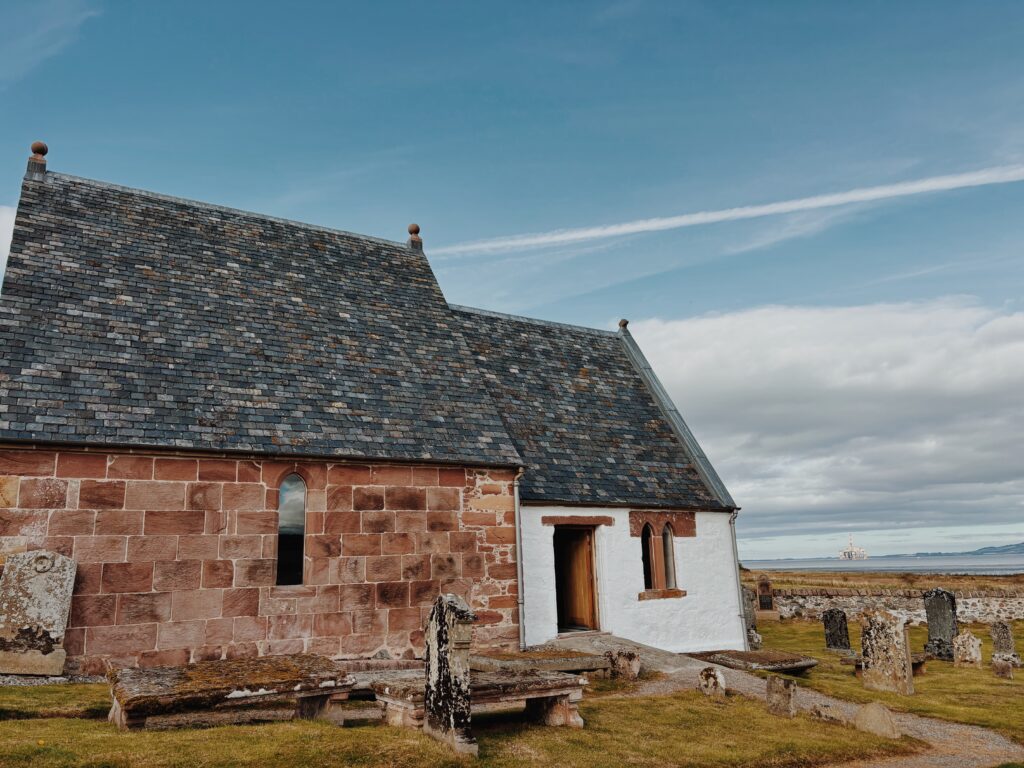
From Inverness, we travelled across the Black Isle to Kirkmichael, where we were warmly welcomed by Jim Mackay of the Kirkmichael Trust. Jim went out of his way to meet us, show us around and even invited us for a cup of tea.
Listening to Jim talk about the Trust’s long-term work was deeply inspiring. His detailed knowledge of the church’s restoration and conservation, from structural repairs to interpretive design, reflects years of dedication. It was fascinating to hear how the church has changed over time and how it continues to be actively maintained, cared for and visited by tourists and locals. It was clear that the volunteers have taken time to research the history of each grave marker, learning techniques on how best to conserve the different types of stone, and how to enhance visitors experience to the site. With calm blue skies for our visit, we were able to experience the peace and tranquillity of the site for ourselves and understand why some have developed such an attachment to this place.
East Church, Cromarty
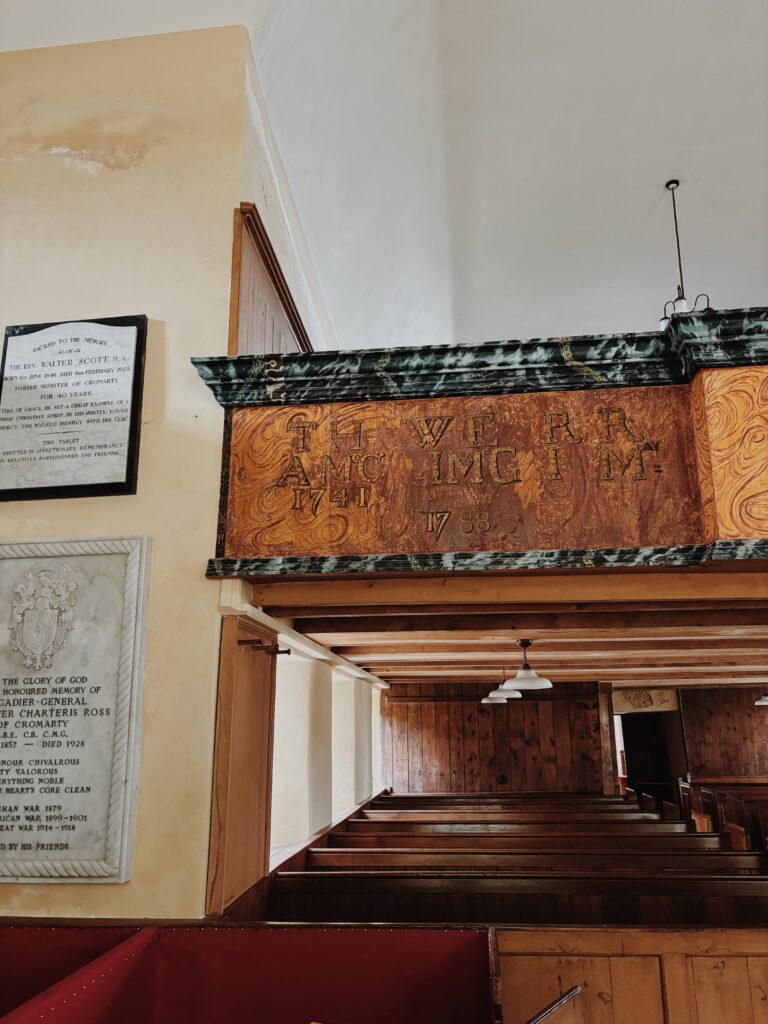
Our final stop was the East Church in Cromarty, a striking building with a rich layered history. The church is in the ownership of Historic Churches Scotland and was featured on BBC’s ‘Restoration Village’ in 2006. In 2007, it won a grant from the National Lottery Heritage Fund which has helped to preserve the building, as well as develop interpretation for those visiting the church.
Interpretation panels guide visitors through the story of the church, its architecture and the people who shaped it. The presentation blends historical narrative with visual details, drawing out characteristics such as beautifully painted pew panels.
The East Church stands as an example of how interpretation can bring heritage to life and help guide visitor to key areas of interest.
Reflections
Our Inverness and Black Isle fieldwork offered us a vivid picture of church heritage in transition: from buildings seeking new uses to communities rediscovering old ones. Each site told its own story and spoke to us in different ways.
We left with hundreds of photographs, field notes, and, most importantly, a sense of gratitude for the generosity of everyone who shared their time and insights with us. Special thanks to Chris and Maureen at Old High, Murto at East Church Inverness, and Jim at Kirkmichael, for your openness and hospitality.
We’re excited to bring our learning from these field visits to the project and apply them as we move forward in our data collection and case studies.