
Guest Post by Dr Lizzie Swarbrick and Dr Mark Hall
St John the Baptist’s parish church in the centre of Perth is famous for having been the crucible of the Reformation in Scotland. It was here on the 10th of May 1559 that John Knox and others gave sermons to the populace which erupted the day after into a thorough, violent, and widespread destruction and looting of religious buildings in Perth. Knox wrote that, in the parish church itself, ‘the whole multitude cast stones, and laid hands on the said tabernacle, and on all other monuments of idolatry.’1 The ‘monuments’ in question were things which we might now call religious heritage – art and artefacts of all kinds – which were against Protestant doctrines. We know that images of Christ and the saints and liturgical items were particularly targeted in Scotland. However, in St John’s, Perth, the very heart of the Scottish Protestant Reformation, there are a few things which survived the attention of iconoclastic mobs.
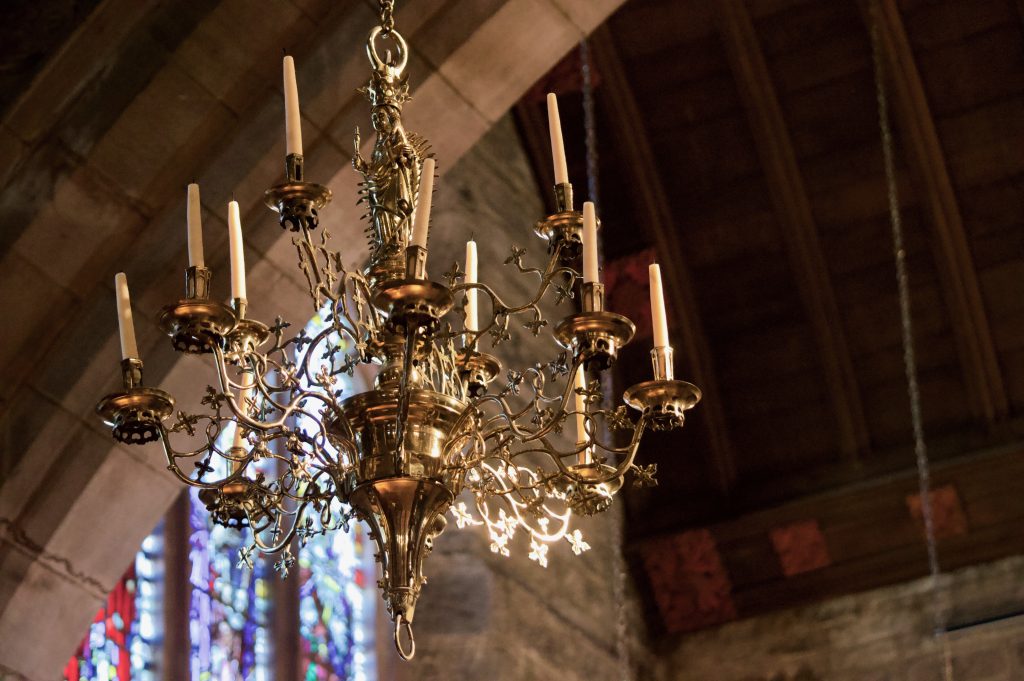
One of these tantalising traces of Scotland’s Pre-Reformation material culture, and perhaps the most spectacular, survives as a gilded brass chandelier, its elements made in the late Fifteenth Century in Flanders. Whilst we now know that this is a composite chandelier, refashioned into a single chandelier probably in the 18th century (see below) when it came to antiquarian attention in the late 18th century, it was understood as the example made for (or purchased by) the skinner or the shoemaker incorporation for their patronage of side altars within St John’s (typical practice of medieval trade and craft incorporations). It now hangs above the north transept, but it may have been made for a chapel dedicated to the Virgin Mary further east.2 This glittering light source has twelve branching brackets (complete with leaves) with cups for candles, a mouth of a lion holding a ring (which would have been used to lower and raise the chandelier when the candles needed replacing) and, at its centre, an image of the Beata Maria in Sole, the Virgin and Child wreathed in a fiery sunburst.
This imagery was particularly popular in Scotland, where it was quickly adopted after its original emergence in Rome in the 1470s-80s when it was linked to the devotion to the rosary.3 On the St John’s chandelier we can see the Virgin Mary, crowned as Queen of Heaven, holding the infant Christ and a sceptre, standing on a crescent moon, and with the sun’s rays shooting out from her mantle. She appears as she is described in the Book of Revelation 12:1: ‘a woman clothed with the sun, and the moon under her feet, and on her head a crown of twelve stars’. This is not the Mary of a cute Nativity scene with a wee donkey, but Mary as she would appear at the Apocalypse, where her role was to entreat Christ, her son, to show mercy to us sinful humans as we rise from our graves at the Last Judgement.
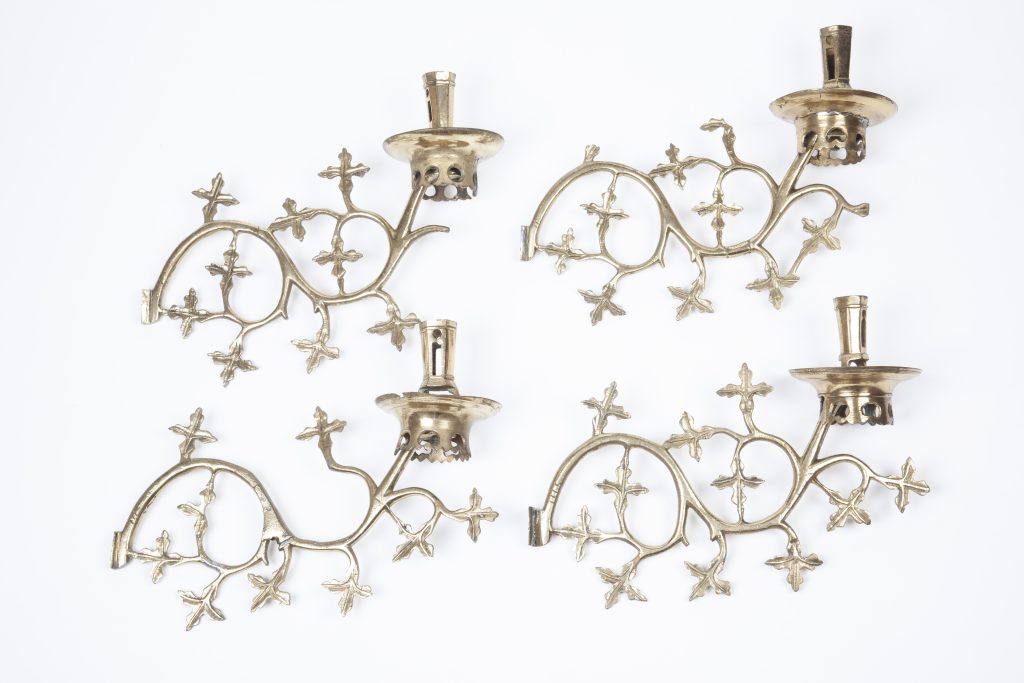
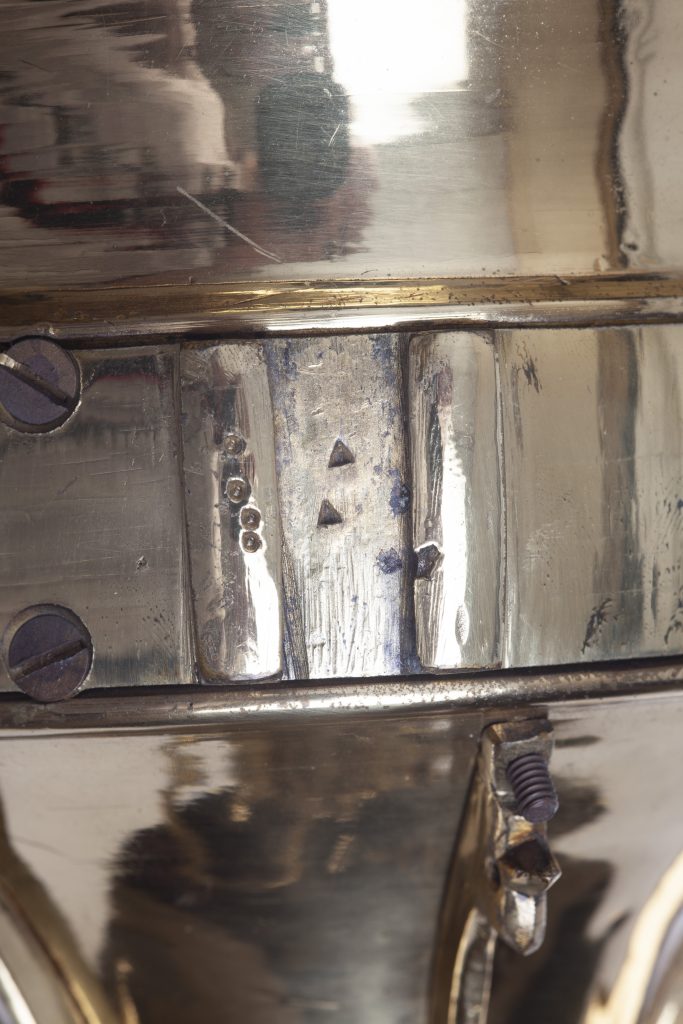
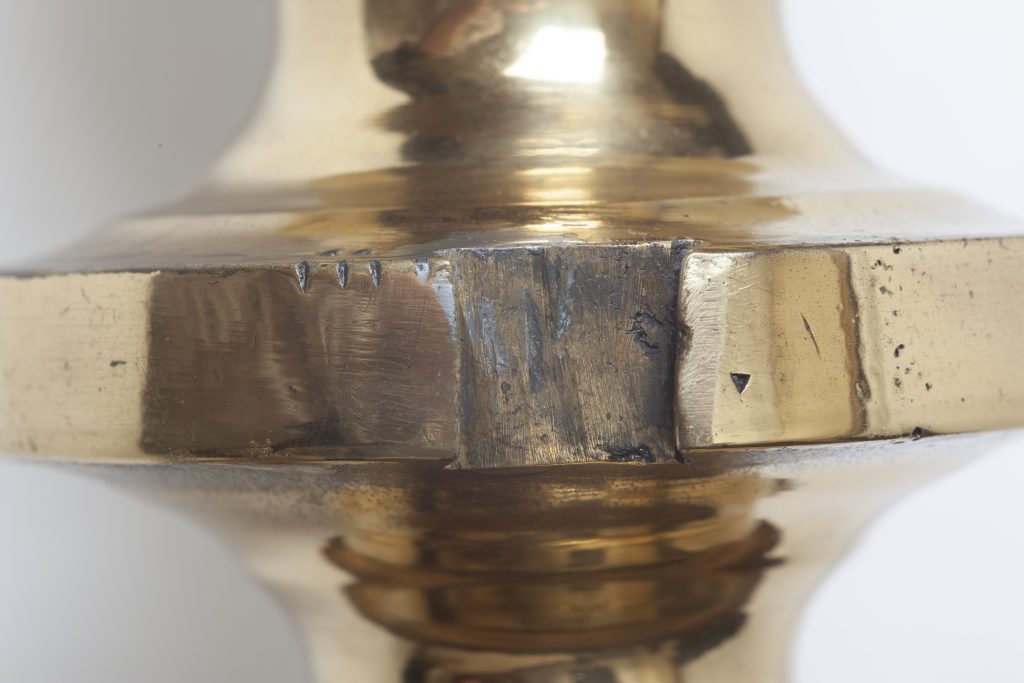
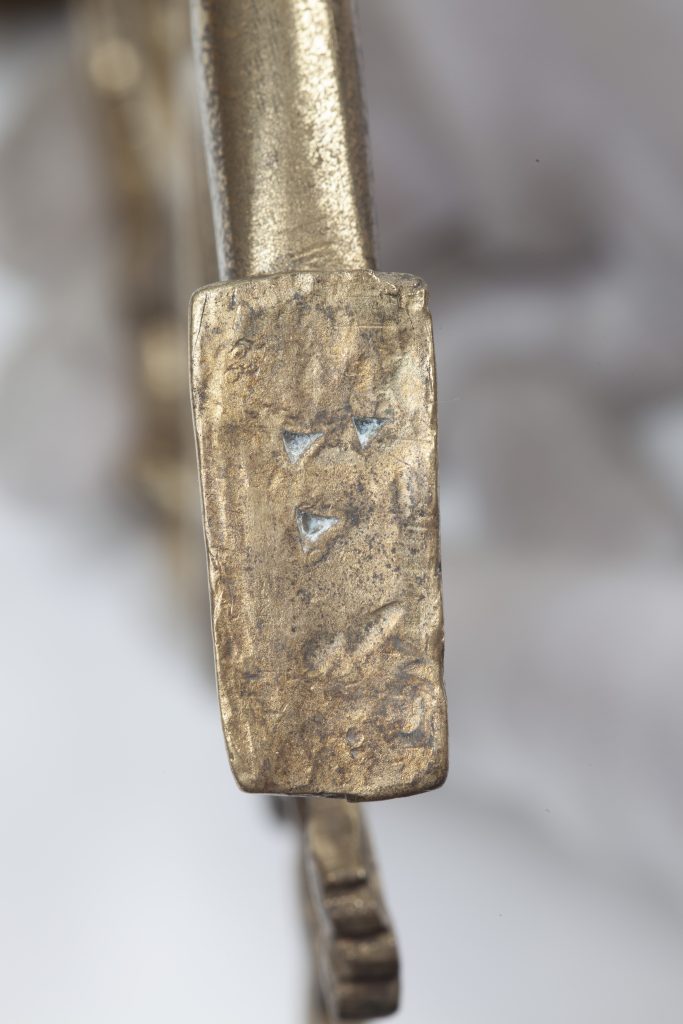
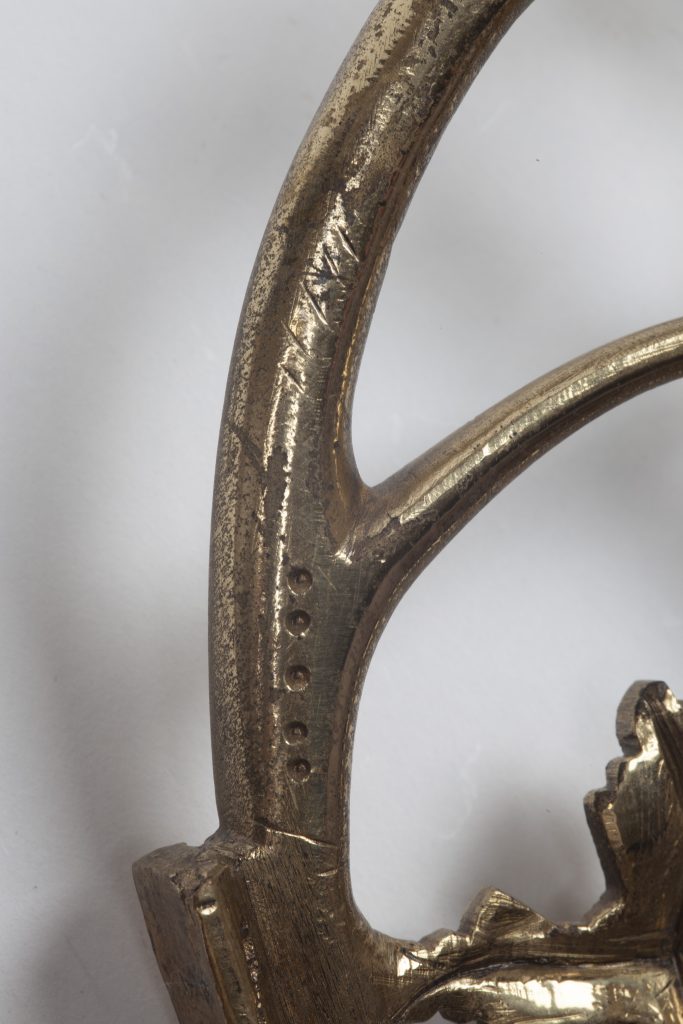
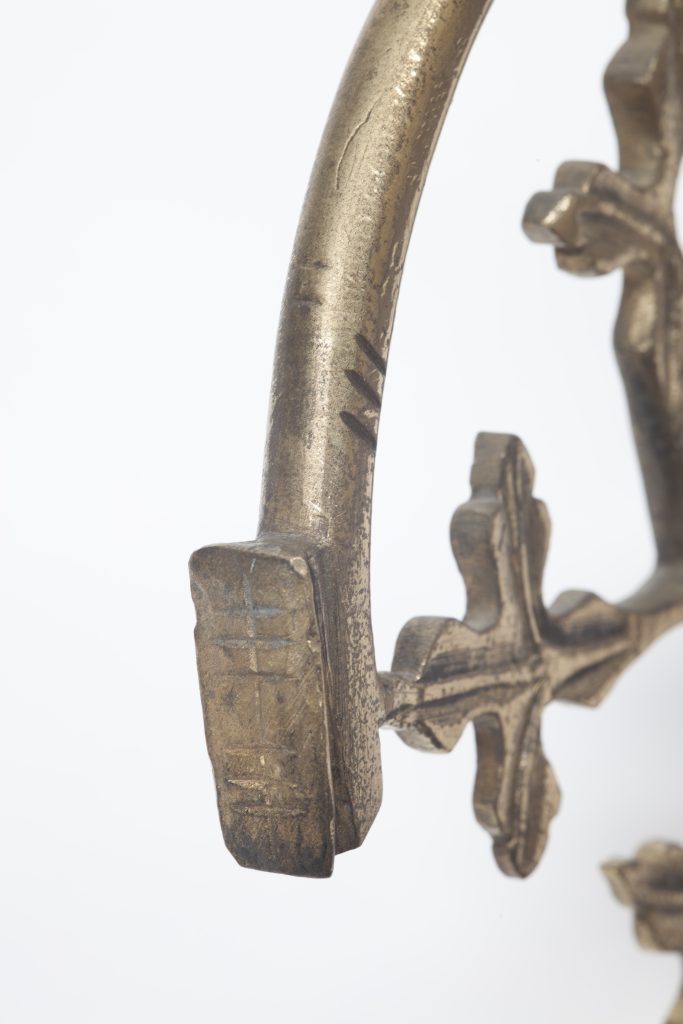
Though it still adorns the church for which it was made, the chandelier was purchased by the Perth Literary and Antiquarian Society in 1812.4 It is now part of the collections of the Society’s successor body, Perth Museum. It still hangs in the Kirk, where (apart from occasional inclusions in exhibitions elsewhere) the chandelier has been on loan since the 1920s after Robert Lorimer completed his restoration of the church interior. In 2010, the museum conducted a technical analysis of the chandelier, following its inclusion in the exhibition celebrating 800 years of Perth’s history. The museum’s analysis revealed that it is, in fact, a composite of several chandeliers, reconstructed from the remnants of various parts of chandeliers which survived the iconoclastic zeal of Reformers. This sort of collaboration between the Museum and the Kirk could serve as a model for the potential ways that heritage bodies and denominations could work together to protect church treasures.
St John’s in Perth is cared for by the Church of Scotland. In 2025, St John’s was awarded a major grant from the National Lottery Heritage Fund, and it has been named as one of the Church of Scotland’s ‘Signature Churches’, a list of what it considers to be its most important properties. It certainly seems that the future of St John’s is as an active church within the Church of Scotland. Even if something were to happen to the church, the magnificent chandelier would be returned to the Museum, so the chandelier is absolutely safe. Both the church and the chandelier would be less significant were they ever to be separated because they add meaning to each other, which is why it’s so brilliant that the museum and the church work together to care for this important work of medieval art.
Within the Church of Scotland, the General Trustees own the church building with all its fixtures and fittings (though the congregation are responsible for its maintenance and insurance), and the congregation own furnishings and movable items within the church (except for communion ware, which was sold to Perth Museum with the aid of National Heritage Lottery funding). So, when a church is closed, there’s often a lot of questions around who owns what, and what should be done with the contents of a building. The Church of Scotland’s own guidance states that ‘The Church has been criticised in the past for cavalier treatment of movable items in church buildings’ before advising that congregations should conduct inventories and then clear the church of items prior to sale.5 Given the scale and rapidity of church closures at the moment, it’s difficult in practice for any denomination to look into every nook and cranny of a building, and even harder to access expert knowledge which could guide those responsible about what is historically significant.
Here at ReACH, we’re not saying that there are things like the magnificent St John’s chandelier in every closing church, but there certainly are innumerable objects which have played a part in people’s faith and sense of community. Some items might be nationally important, and others might hold significant memories for individuals. The church surveys by volunteers from Scotland’s Churches Trust have recorded all manner of things, from memorial plaques to hymn books with humorous sketches of locals. Also, because Scottish churches are understudied, there may be historic treasures lurking in a cupboard or forgotten on a dusty shelf. In some cases, those responsible for a church are extremely knowledgeable about the wonders they care for, but in other cases, people simply don’t know the significance of what they have. ReACH is currently bringing together data from all kinds of sources to build a record of the heritage of Scotland’s closing churches. By using this, people involved in heritage and communities caring for it can get a better understanding of what’s out there, and how important it is. All of these things are part of our shared heritage as a nation, and it’s crucial that we understand what we have before things are dispersed.
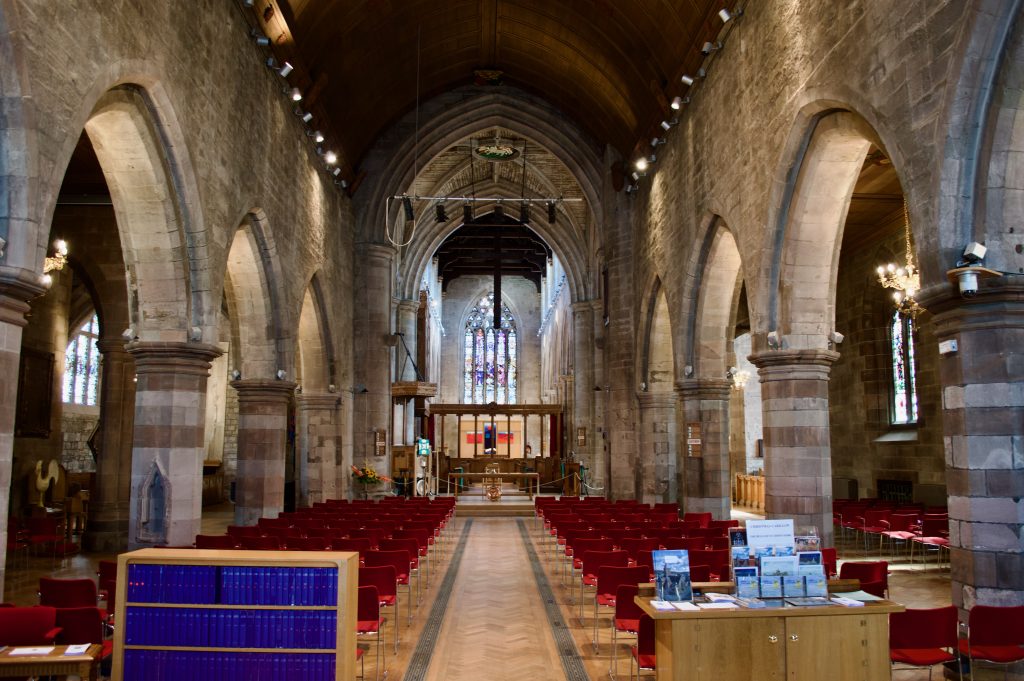
When the chandelier was first installed, the parishioners of St John’s in Perth would have gazed up at the glittering vision of the Virgin Mary and Christ Child, surrounded by candles which flickered and blazed, animating the holy figures. They may have been dazzled by the beautiful Virgin in the sun and felt moved to pray to her, they might have been made fearful for the Last Judgement, or perhaps they would have just been impressed by the shining gold – proud of the richness of their burgh’s church. Thanks to Perth Museum and St John’s Kirk, you can still go and look up at this gilded apparition, just as people did in the Fifteenth and Sixteenth Centuries. Why not make a visit? Bring a friend and listen to the guides there about how much they love their church. St John’s and its chandelier have a brilliant past and a bright future. Other churches, and the items within them, may not be so lucky, unless we all act on behalf of our shared heritage.
Our thanks to Lizzie Swarbrick and Mark Hall for their thoughtful contribution to our Heritage Spotlight series
Leave a Reply