We’d be delighted to hold a short oral history with you to share your stories, memories and experiences.
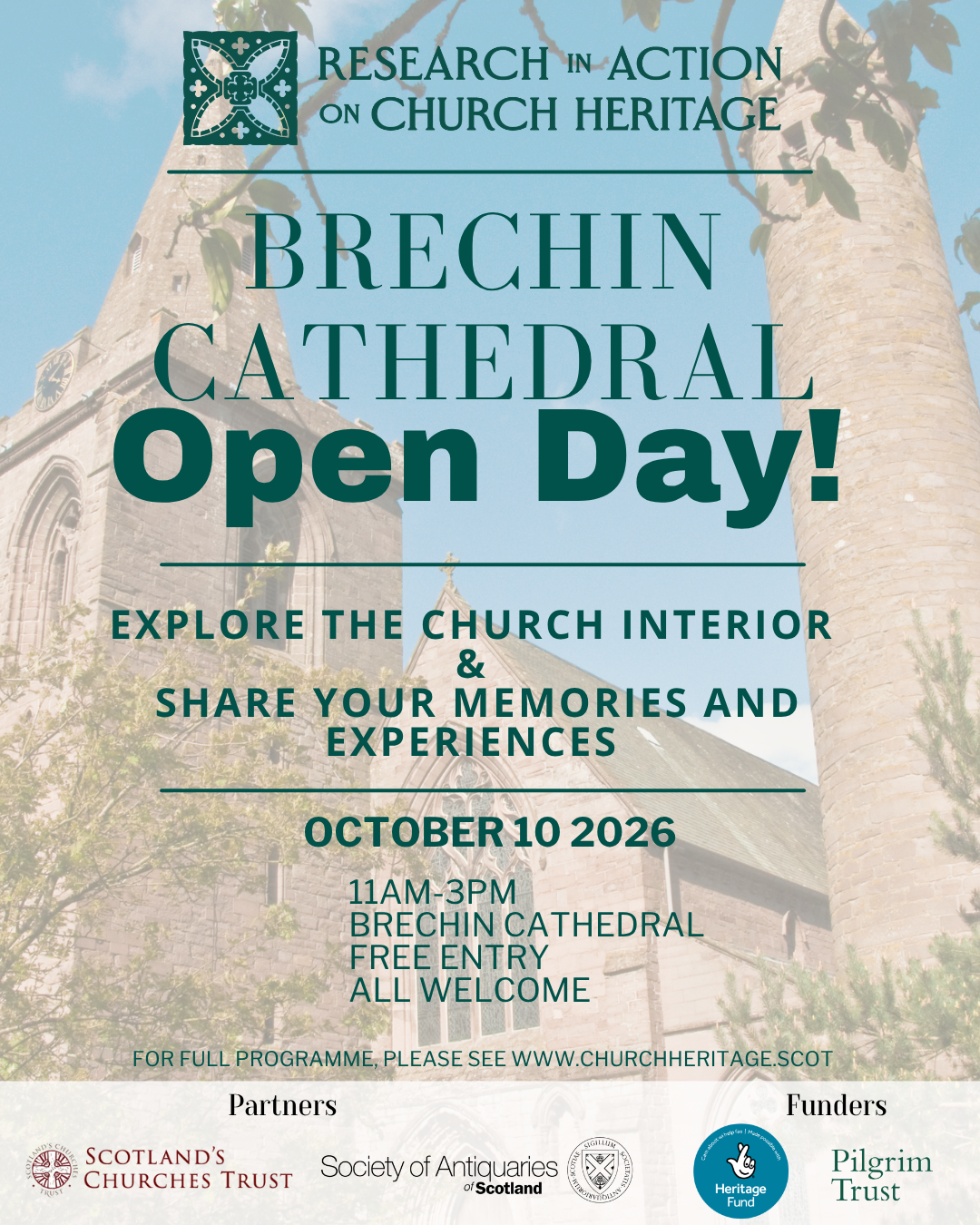
There will be opportunities to share your memories in the church on 10th October.
You can register your interest by contacting emily@socantscot.org
Map your Memories
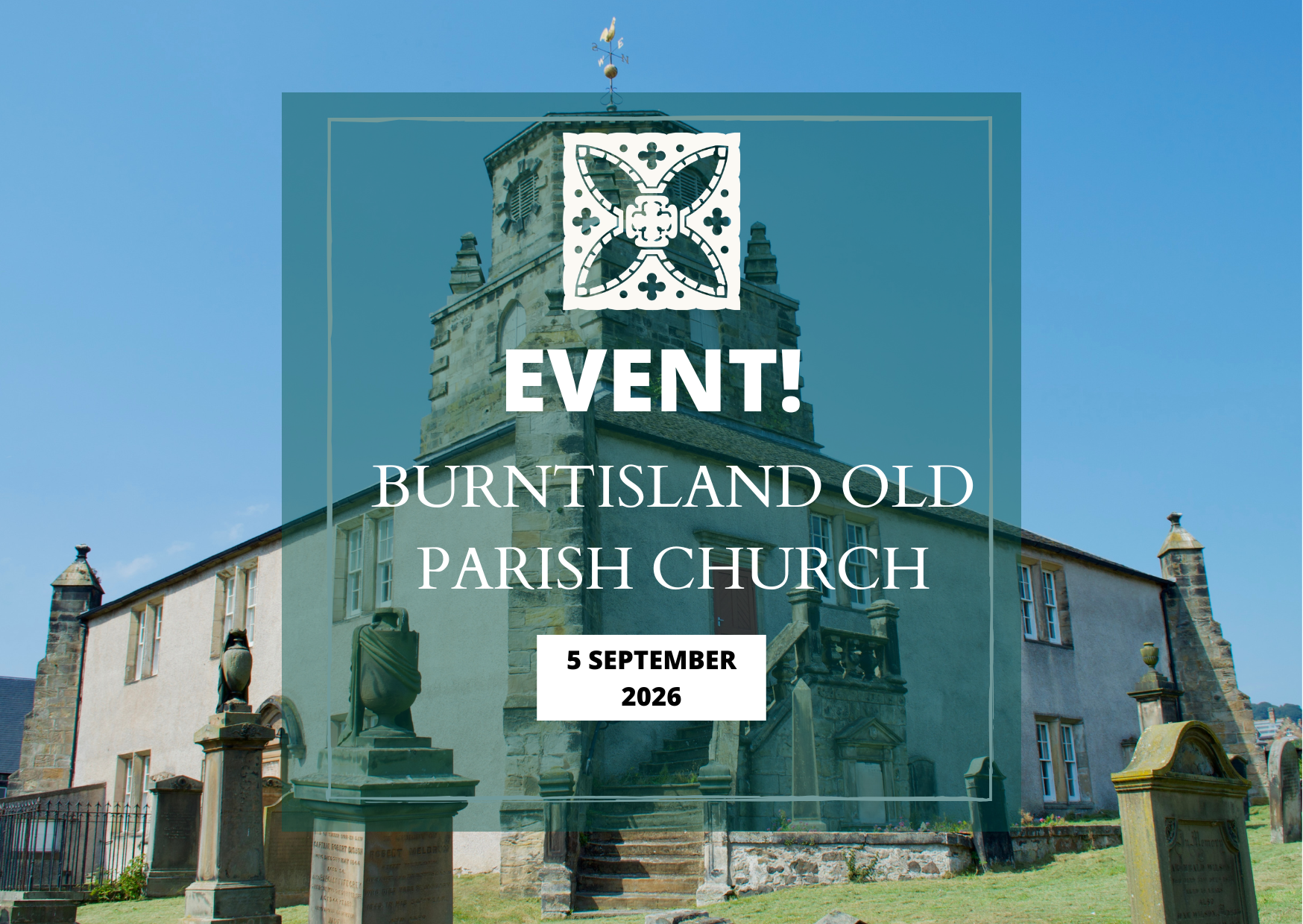
Help us understand how people have experience Burntisland Old Parish Church by sharing memories connected to different parts of the building. Explore a plan of the church and add your own stories, favourite places and memories.
Why Take Part?
Come along and help us celebrate and preserve the story of Brechin Cathedral and its place within the wider history of the town. We’re inviting local residents, former congregation members, families and visitors to share their memories, photographs, documents and stories, helping us create a lasting community archive for future generations.
Whether your connection is through worship, weddings, baptisms, community events, music, friendships or family history, every memory contributes to a richer picture of the church’s role in Brechin life. Join us to explore the building, meet others with shared connections, and play a part in recording and safeguarding the history, heritage and voices that make Brechin Cathedral so special.
About Brechin Cathedral
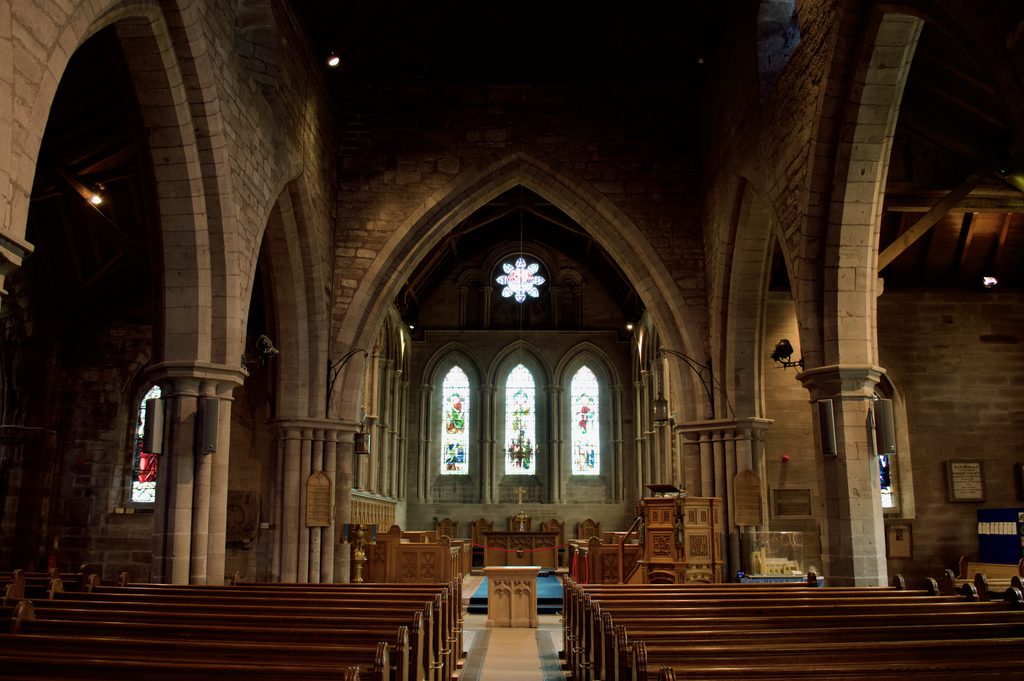
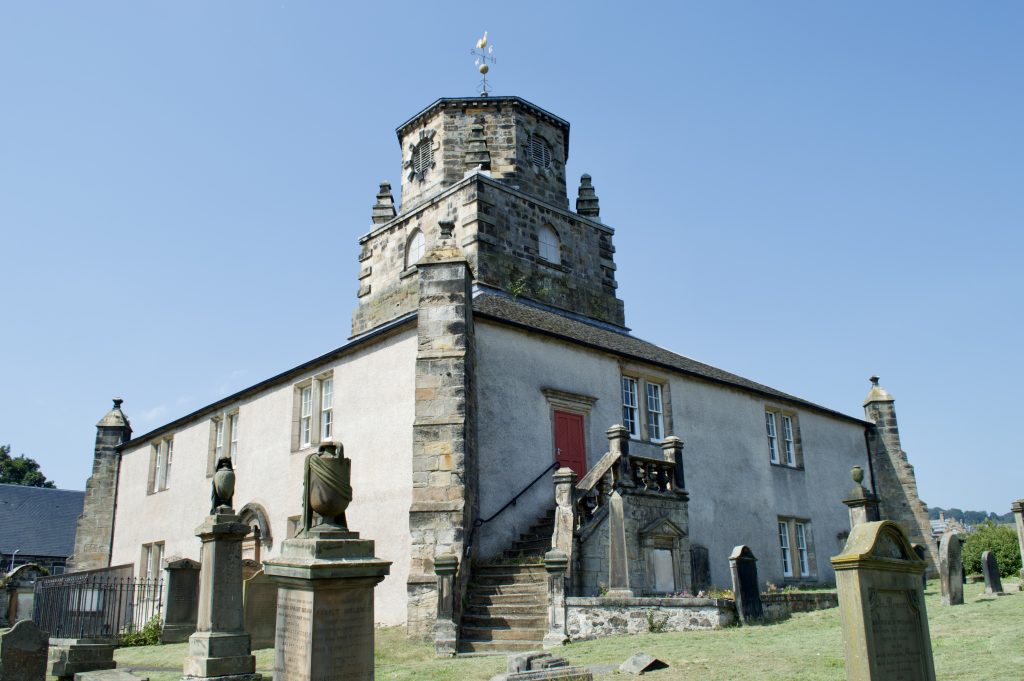
Brechin Cathedral dates back to the 13th century, with a Christian presence on the site stretching even further into the early medieval period. The cathedral is best known for its Round Tower, built around AD 1000 and one of only two surviving Irish-style round towers in Scotland. The cathedral retains elements of its medieval structure, including parts of the nave, choir and western tower, and contains a collection of historic stone carvings and stained glass.
(c) Lizzie Swarbrick
Accessibility
How to find Brechin Cathedral
Address: Brechin Cathedral, Church Street, Brechin, Angus, DD9 6EU
ReACH is a two-year project led by the Society of Antiquaries of Scotland and Scotland’s Churches Trust, funded by the National Lottery Heritage Fund and The Pilgrim Trust.
We’d be delighted to hold a short oral history with you to share your stories, memories and experiences.
There will be opportunities to share your memories in the church on Friday 4th September and from 10-11 and 3-4 on Saturday 5th September.
You can register your interest by contacting emily@socantscot.org
Map your Memories
Help us understand how people have experience Burntisland Old Parish Church by sharing memories connected to different parts of the building. Explore a plan of the church and add your own stories, favourite places and memories.
Why Take Part?
Come along and help us celebrate and preserve the story of Burntisland Parish Church and its place within the wider history of the town. We’re inviting local residents, former congregation members, families and visitors to share their memories, photographs, documents and stories, helping us create a lasting community archive for future generations.
Whether your connection is through worship, weddings, baptisms, community events, music, friendships or family history, every memory contributes to a richer picture of the church’s role in Burntisland life. Join us to explore the building, meet others with shared connections, and play a part in recording and safeguarding the history, heritage and voices that make Burntisland Parish Church so special.
About Burntisland Old Parish Church
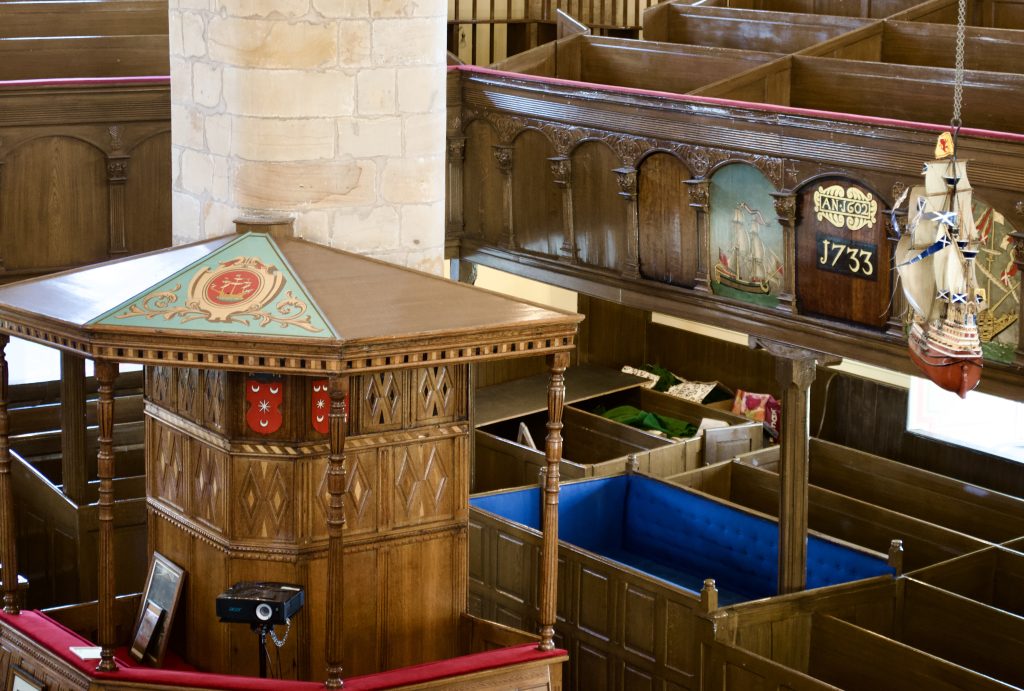
Burntisland Parish Church is one of the earliest churches built in Scotland after the Reformation, constructed between 1592 and 1596. Its unique square design, with worshippers seated on all four sides around a central pulpit and communion table, reflects the changing style of worship introduced in the post-Reformation Church. In 1601, the General Assembly of the Church of Scotland met here in the presence of King James VI and approved a new translation of the Bible, which later became the King James Bible. The church is also renowned for its striking interior, featuring painted woodwork, an ornate plaster ceiling, and maritime treasures including a model of the Great Michael, King James IV’s famous warship. Since 2024, the congregation has been united with Kinghorn Parish Church.
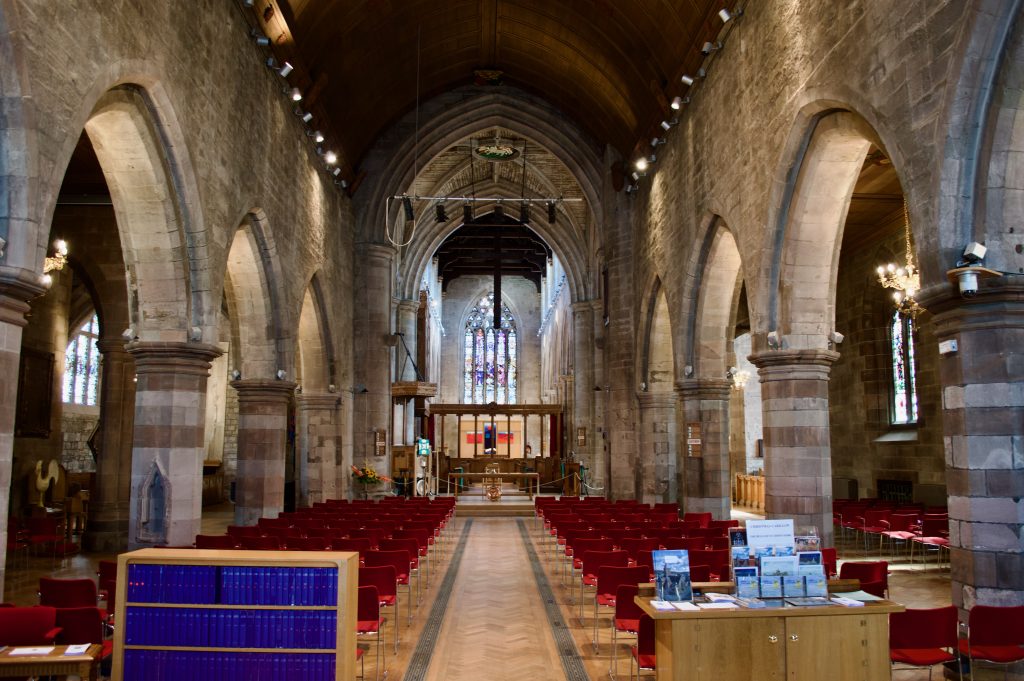
Interior of Burntisland Parish Church (c) Lizzie Swarbrick
Accessibility
There is step free access to the church, and wheel chairs and buggies can access the church. The passage way into the church is narrow and had uneven flooring.
How to find Burntisland Old Parish Church
Address: East Leven St, Burntisland KY3 9DH
ReACH is a two-year project led by the Society of Antiquaries of Scotland and Scotland’s Churches Trust, funded by the National Lottery Heritage Fund and The Pilgrim Trust.
We’d be delighted to hold a short oral history with you to share your stories, memories and experiences.
There will be opportunities to share your memories in the church on Friday 25th September and from 10-11 and 3-4 on Saturday 26th September.
You can register your interest by contacting emily@socantscot.org
Map your Memories
Help us understand how people have experience Burntisland Old Parish Church by sharing memories connected to different parts of the building. Explore a plan of the church and add your own stories, favourite places and memories.
Why Take Part?
Come along and be part of Portnahaven’s story! Whether you have fond memories of attending services, family connections to the church, or stories of village life through the years, we’d love to hear them. The open day is a chance to explore this historic building, meet others from the community, and help preserve the memories, heritage and traditions that make Portnahaven Church such a special place.
About Portnahaven Church
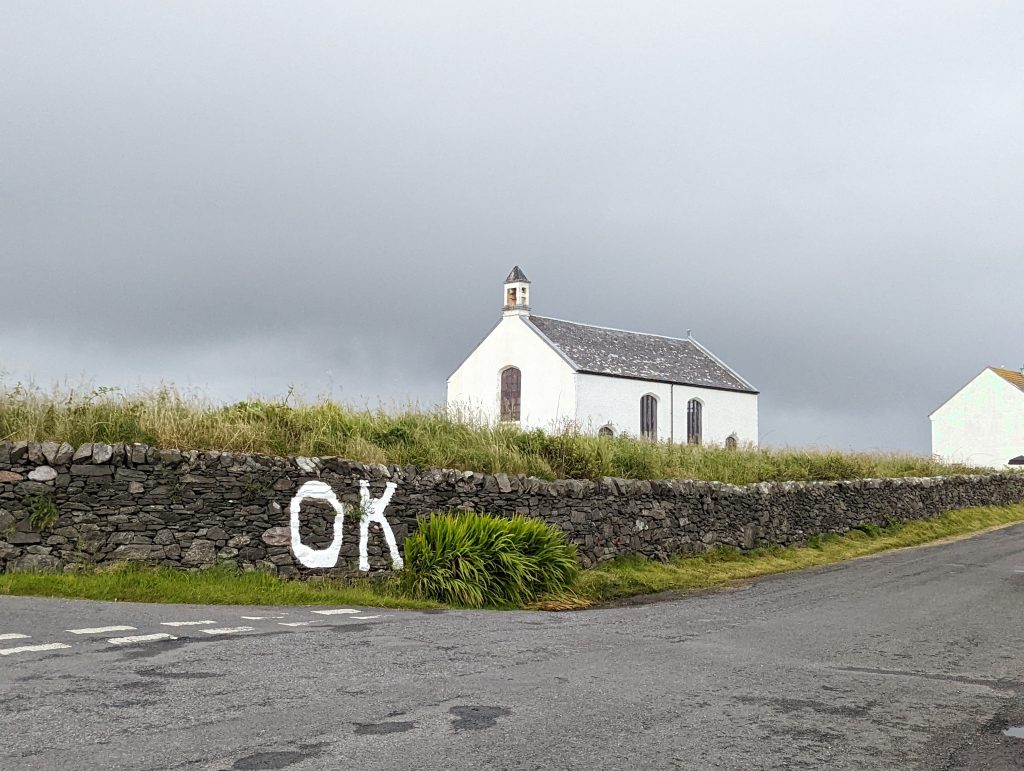
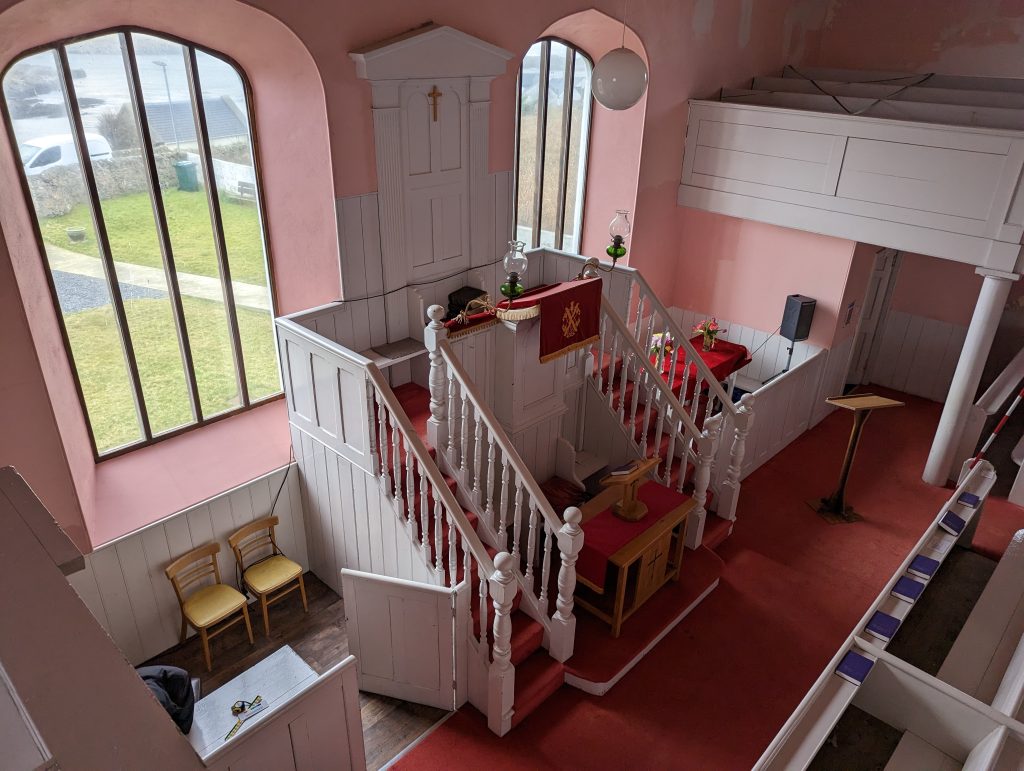
Portnahaven Parish Church is one of Scotland’s historic Parliamentary Kirks, built between 1824 and 1830 under the supervision of renowned engineer Thomas Telford.
Overlooking the harbour, this distinctive T-plan church has been a focal point of village life for nearly 200 years and retains many original features, including its galleries, central pulpit and box pews.
In 2026, the building was purchased by the Friends of Portnahaven Church, who are working to preserve this much-loved landmark and develop it as a vibrant cultural hub for the local community.
Interior of Portnahaven Church (c) Scotland’s Churches Trust
Accessibility
The church is accessible via a series of small steps at the door.
How to find Portnahaven Church
Address: 2 Church St, Portnahaven, Isle of Islay PA47 7SL
Getting Here: Portnahaven Parish Church is located in the centre of Portnahaven, overlooking the harbour. Limited parking is available nearby. Please take care on village roads and be considerate of local residents when parking.
ReACH is a two-year project led by the Society of Antiquaries of Scotland and Scotland’s Churches Trust, funded by the National Lottery Heritage Fund and The Pilgrim Trust.
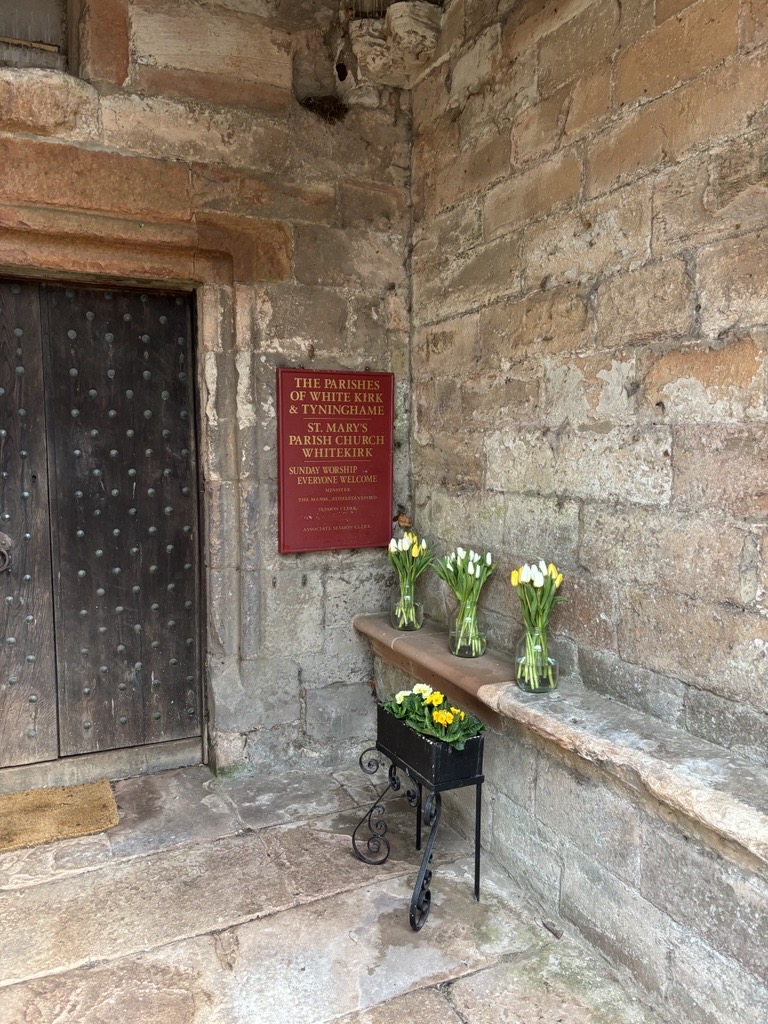
On a dreary winter morning in East Lothian, the doors of St Mary’s Church, Whitekirk, were wide open, with bright flowers welcoming visitors in.
Tulips at the doors of St Mary’s Whitekirk
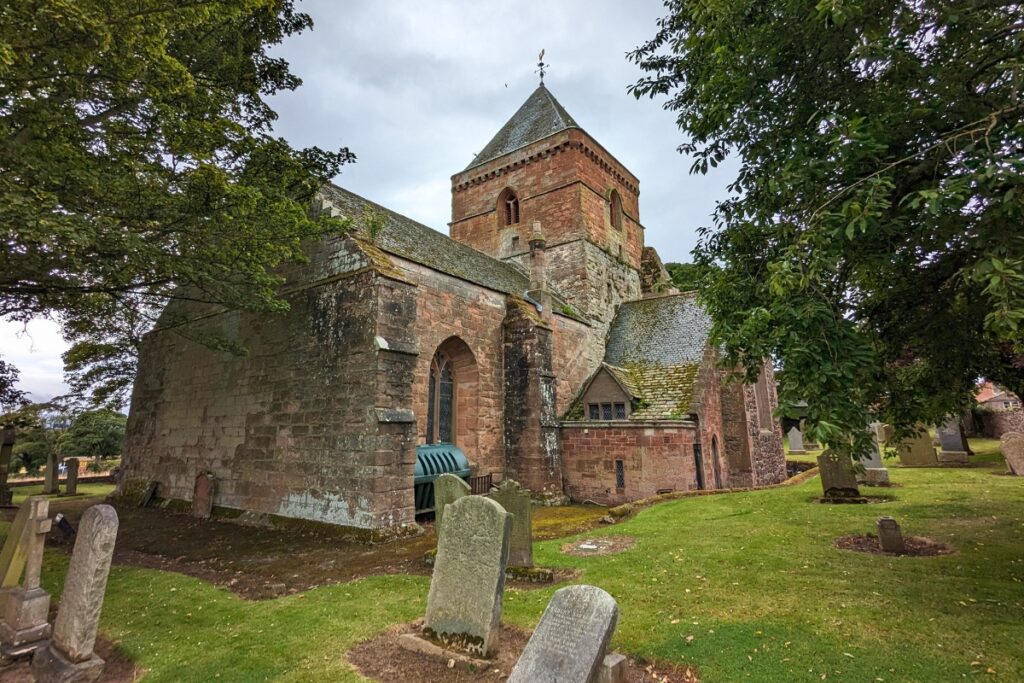
For centuries, St Mary’s has been a place that people have travelled to; once a medieval pilgrimage site dedicated to the Virgin Mary – famously visited barefoot by the future Pope Pius II -Whitekirk has drawn visitors seeking healing, prayer and connection. This sense of movement towards St Mary’s still continues today, and these stories of coming together at St Mary’s shone through in conversations with past congregation members and the local community.
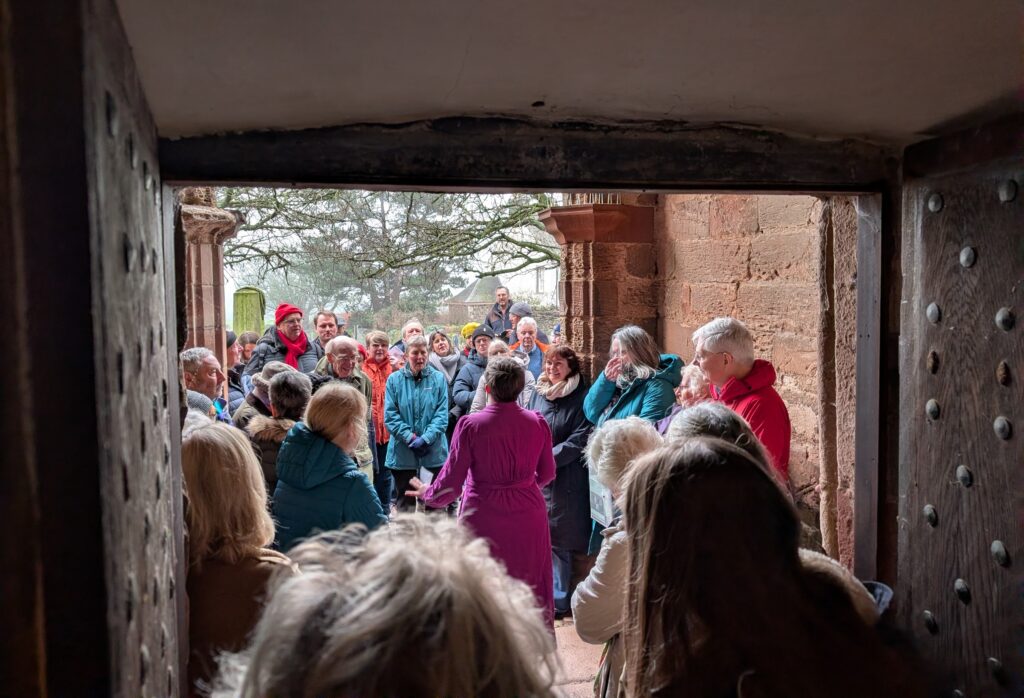
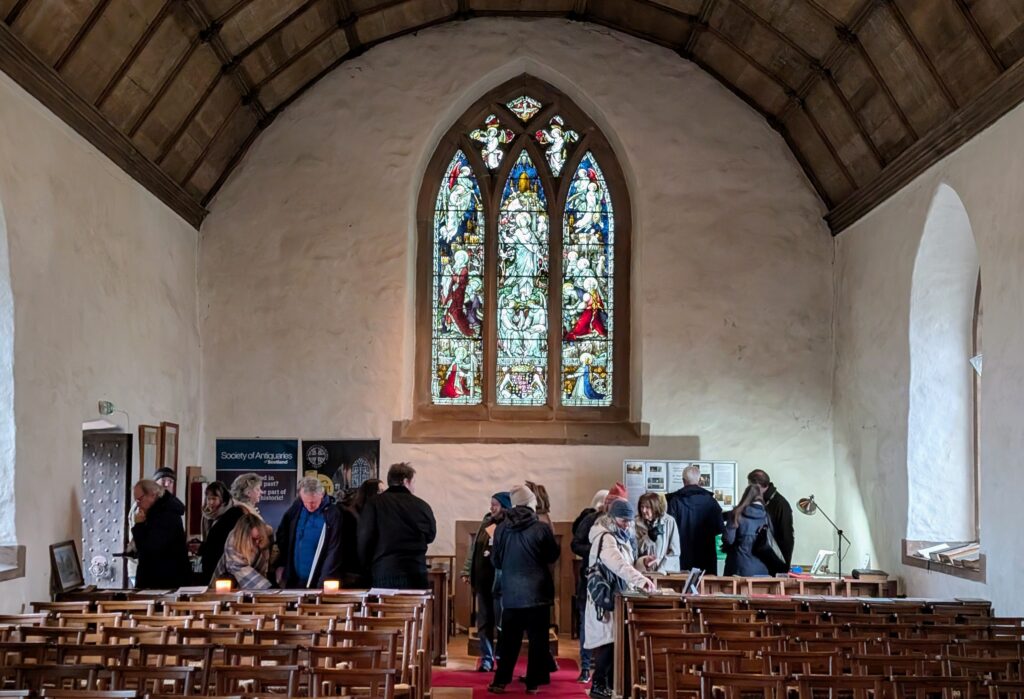
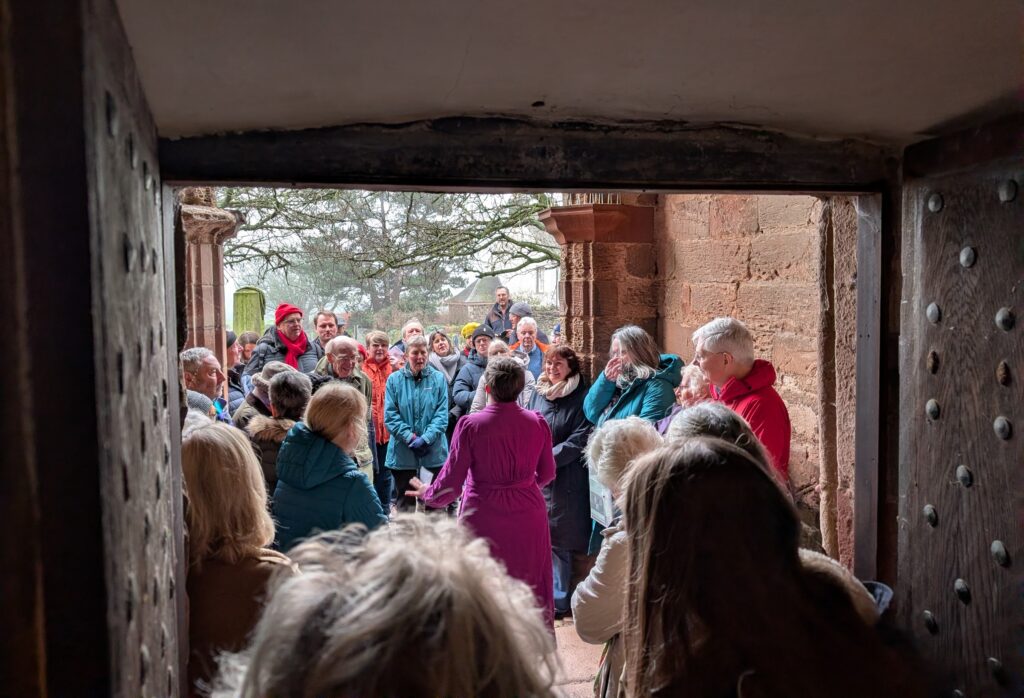
Visitors to the ReACH open day, on a guided tour
At the start of February, more than 200 people came through the doors of Whitekirk for our ReACH open day. Some arriving with stories ready to share: folders containing precious photographs, carefully folded newspaper clippings, old church newsletters and pamphlets. Others stepped inside for the first time, having passed the church countless times on the road, and curious to see what lay within.
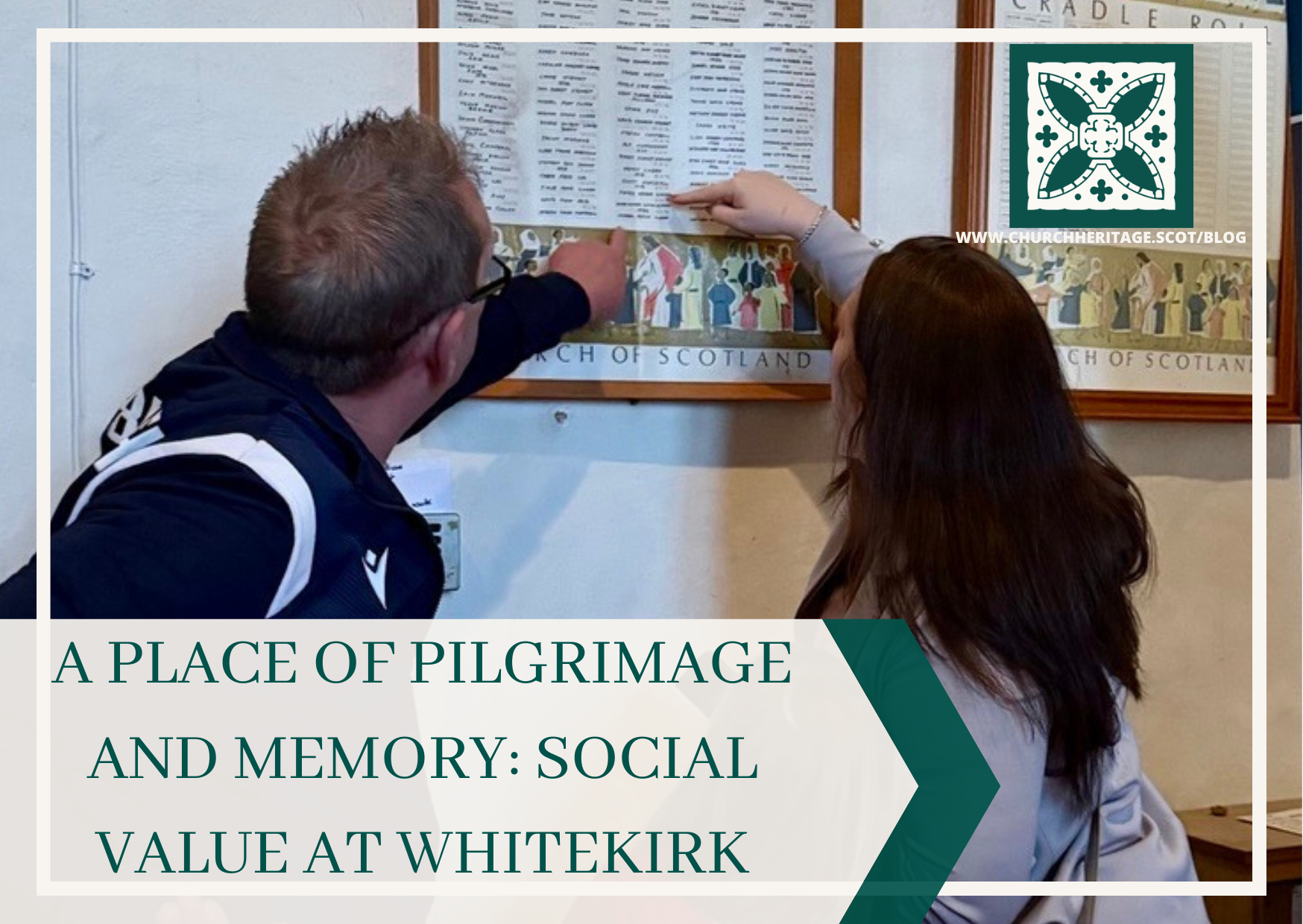
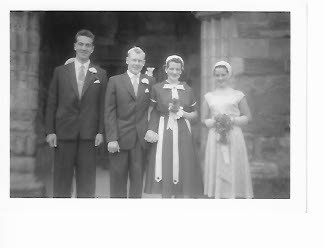
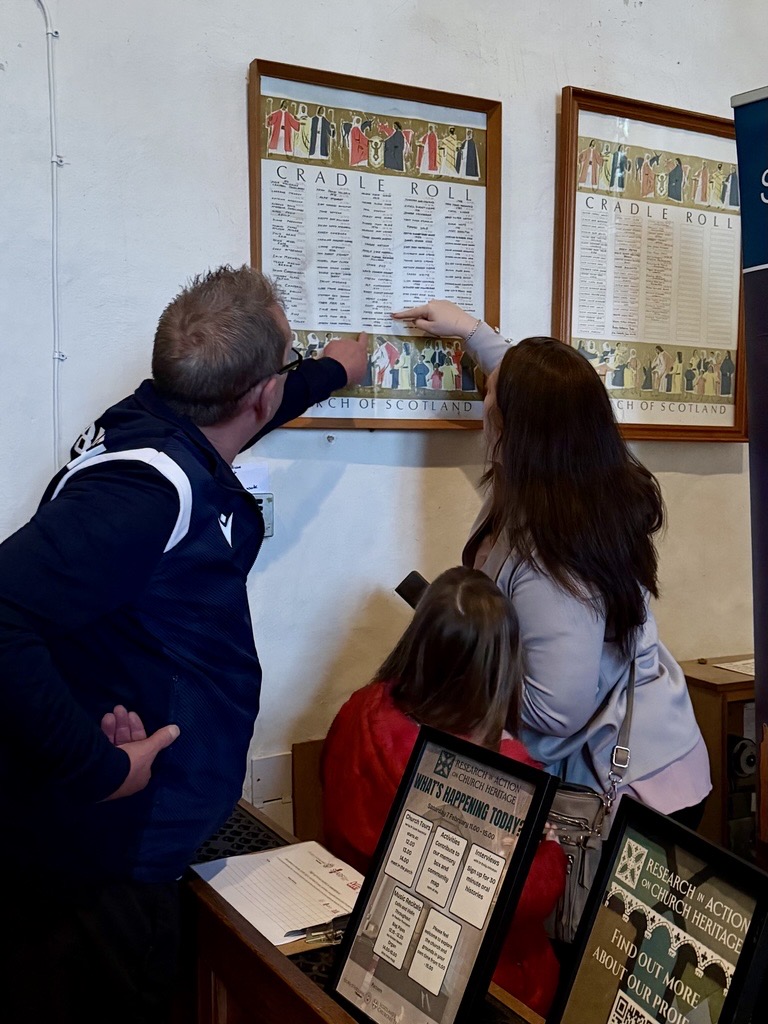
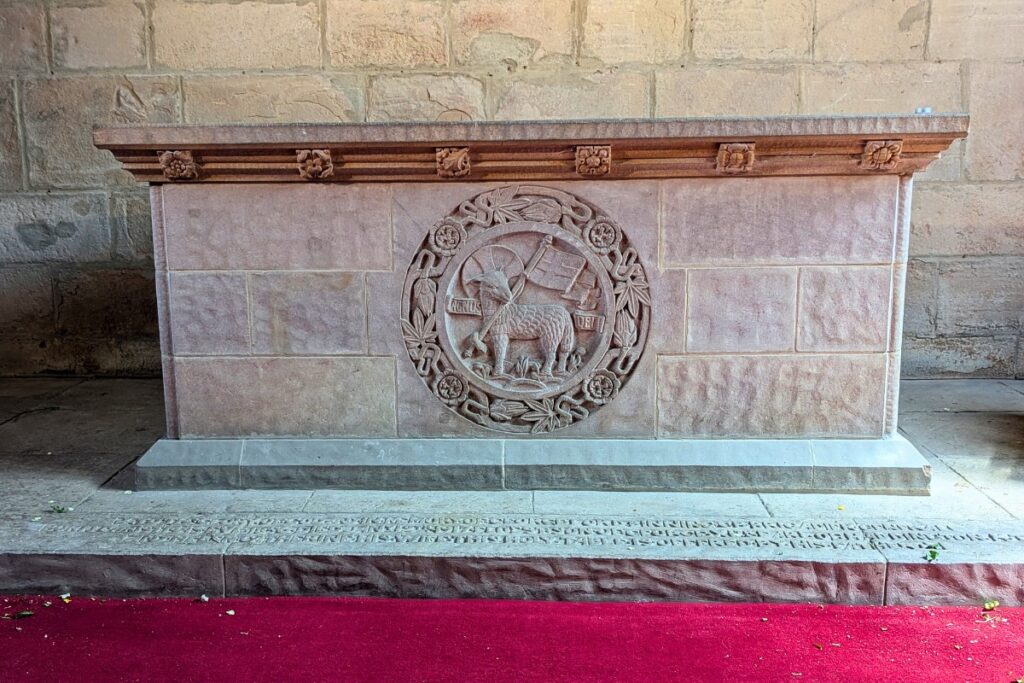
Visitors shared wedding stories – walking down the aisle themselves or watching their loved ones standing at the altar as they sat in the front pews. Others remembered baptisms, holding their children at the font, and took the opportunity to find their names in the cradle roll. There were loud joyful stories of Christmas services where the church was filled with the collective voice of the congregation singing advent hymns, Sunday school crafts in preparation for the Spring fete. There were quiet stories, too, of reflection and stillness, candlelight glowing in the window on a snowy Christmas Eve, and funerals of loved ones.
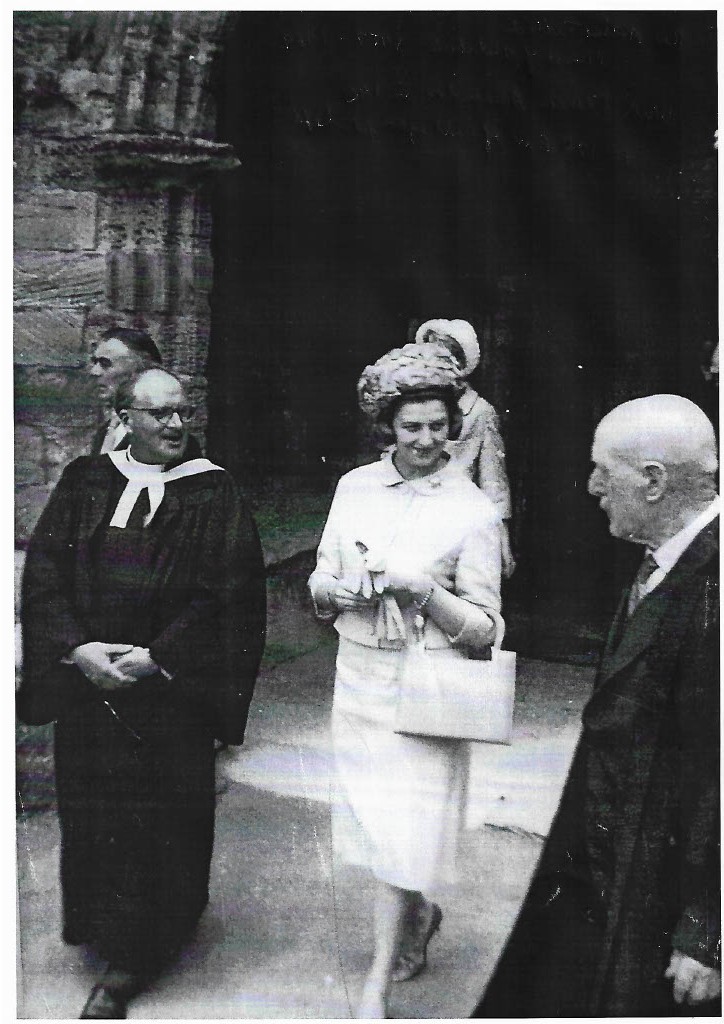
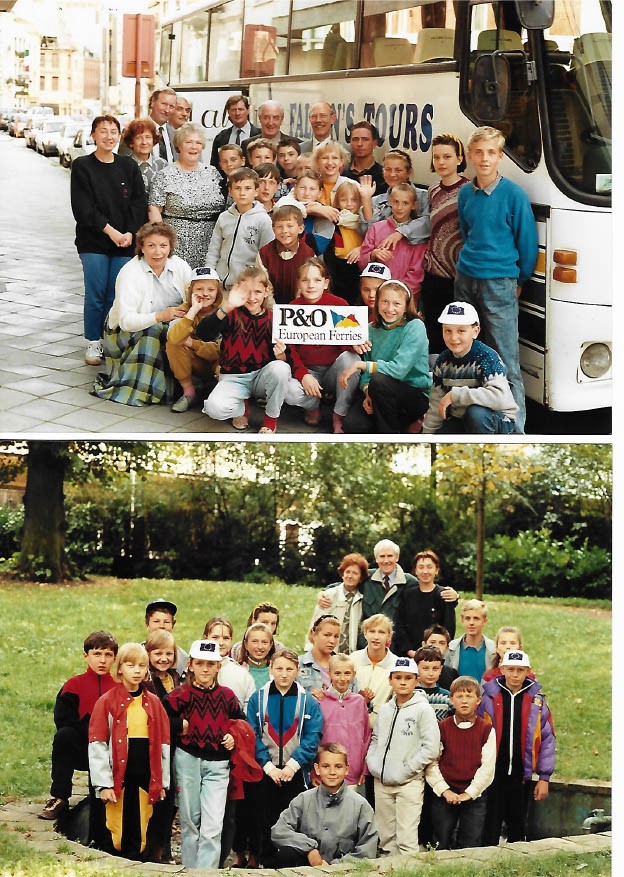
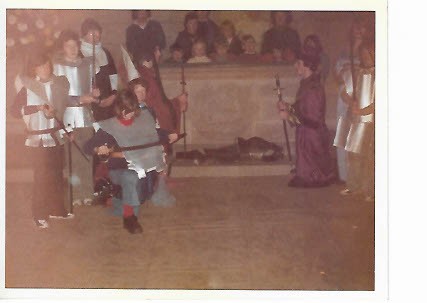
A wedding at WhitekirkA Royal Visit to WhitekirkChildren visiting from ChernobylSunday School children in the church
For many, Whitekirk is woven into the fabric of family life. Children once acting mischievously in the rafters, capturing pigeons to sell on at school. Games of hide and seek amongst the gravestones and the thrill of ringing the bell in the tower. The regular seats where parents sat each Sunday, later occupied by their children, now grown. One visitor described the church as a ‘marker’ – a place holding life’s milestones.
More recent memories also filled the space. Admiration for the acoustics during the Lammermuir concerts and moments shared at the weekly prayer group. Underpinning many reflections was a sense of hope and curiosity about what may come next under the care of Whitekirk New Life Trust.
Examining the Cradle Roll
Through each of the stories, what struck me the most was the sense of continuity. Across generations, people have gravitated towards this church, seeking faith, family, music, memory or belonging. Whilst the reasons may differ, the act of coming together at Whitekirk remains.
As churches across Scotland navigate change, these lived experiences remind us why they matter. The heritage recording can tell us one part of the story, and the people who have passed through the doors can tell us another. These experiences give the church building its identity.
Visitors to Whitekirk
The Whitekirk New Life Trust are working to secure the future of St Mary’s as a place of worship and community gathering. We are hugely grateful to the Whitekirk New Life Trust for their support, generosity and collaboration in making our research possible. Their team helped to facilitate the day, welcomed visitors and even provided delicious baked goods so that we could continue conversations over tea and cake.
On that grey February morning, the church was, once again, what it always has been: a place that people come to and will carry with them long after they leave.
You can now explore material from the Whitekirk case study on our dedicated case study page, including heritage highlights, oral history excerpts and a new interactive gallery bringing together memories and heritage from across the church.
Written by Dr Emily Johnston, Community Officer for Research in Action on Church Heritage
With the launch of the New Futures ‘Churches Route Map’ this week, the New Futures: Former Places of Worship team have shared this blog post for the Research in Action on Church Heritage Blog. For more information on the resource, or to contact their team, see here.
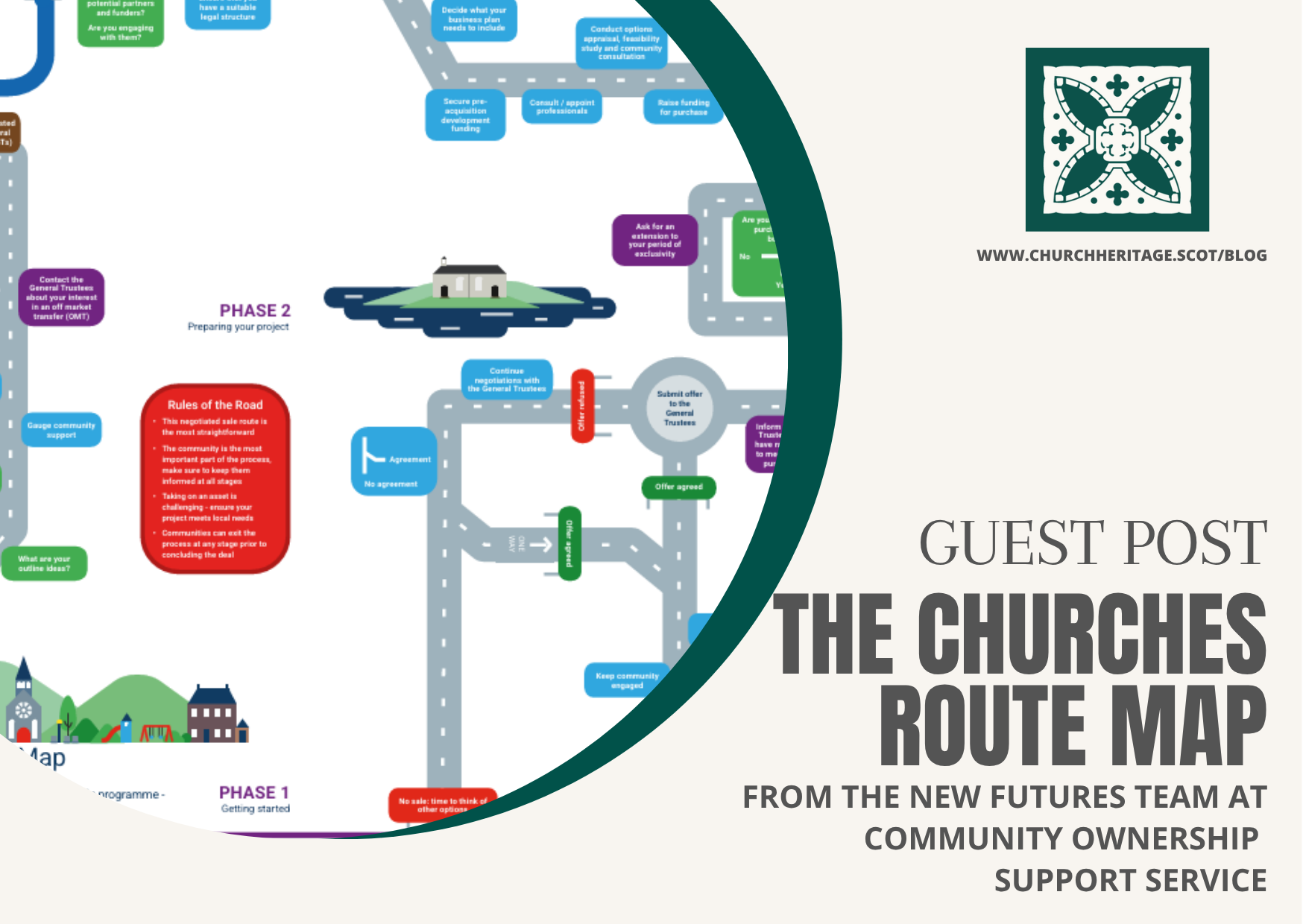
The New Futures team has designed and written The Churches Route Map to help guide community groups who are looking at purchasing a building owned by the Church of Scotland, through the steps to community ownership. The Churches Route Map incorporates the knowledge gained throughout the first year of the New Futures: Former Places of Worship programme, which was launched in January 2025 to provide enhanced support to community groups considering taking ownership of a former place of worship in Scotland.
Based on the Negotiated Sale Route Map, the Churches Route Map adapts this well-used resource to focus specifically on the steps to community ownership of an asset owned by the Church of Scotland.
Although the Negotiated Sale Route Map could be used, we realised that there was a need to include some very specific information, both in relation to the church building, and in relation to the Church of Scotland as owners. Given the time pressures that community groups are often under, we felt it was really important to have a clear and visual overview of the processes and procedures.
The Churches Route Map can be viewed online on the Community Ownership Support Service website, or can be used as a paper copy. The paper version is specifically designed to be used in an active way, with space left on the page for notes and ideas to be written down. The route map unfolds to detail four key stages: getting started, preparing the project, developing the project and finalising the purchase. Each road sign on the map corresponds to a description over the page which provides an explanation and further detail of that step. This resource illustrates the process in chronological order, allowing community groups to follow each step in detail as they progress through their journey to community ownership.
Thanks to the New Futures – Former Places of Worship team for sharing this new resource and writing this blog.
Guest post from Stephen Jackson, Stephen Jackson is Senior Curator, Furniture and Woodwork at National Museums Scotland, and the author of the book Scottish Furniture, 1500-1914.
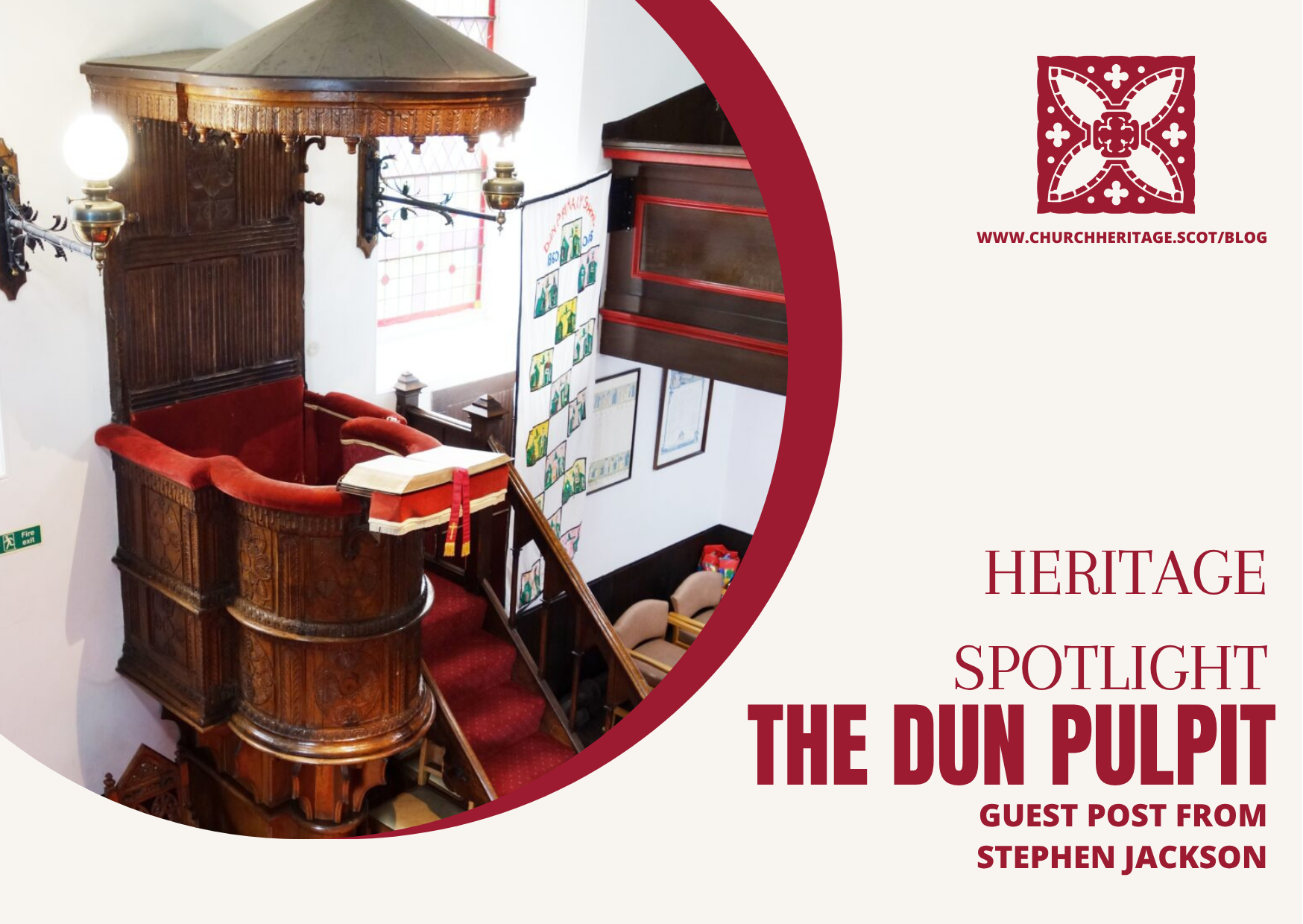
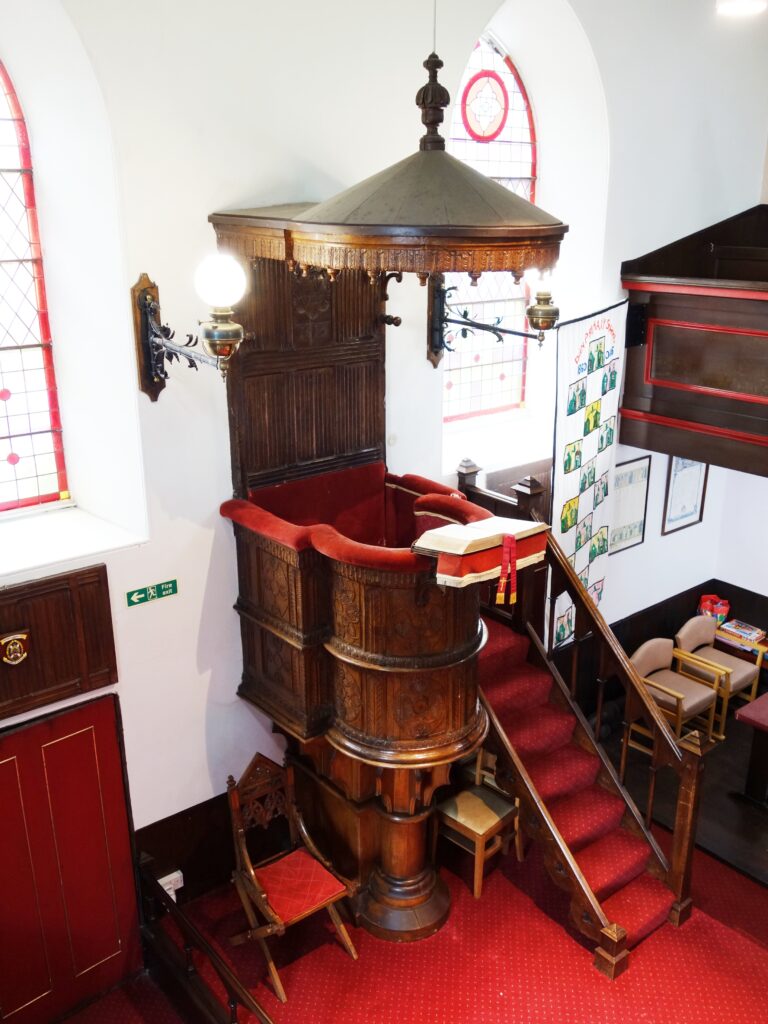
Is the national museum a repository of last resort? Sadly, not. Our storage capacity and operational resources are strictly finite and our collecting must balance historical and artistic merit against future needs and the financial cost of preservation in perpetuity. This recent case study concerns the now redundant church at Dun, in Angus. It was built in 1834 after the heritor, Margaret Erskine, Marchioness of Ailsa, decided to convert the medieval church into a family mausoleum, and thereby push the working church further away from House of Dun. The pulpit, dated 1615, had been removed during the late eighteenth century but was restored to the new building.
The Dun Pulpit (c) Stephen Jackson
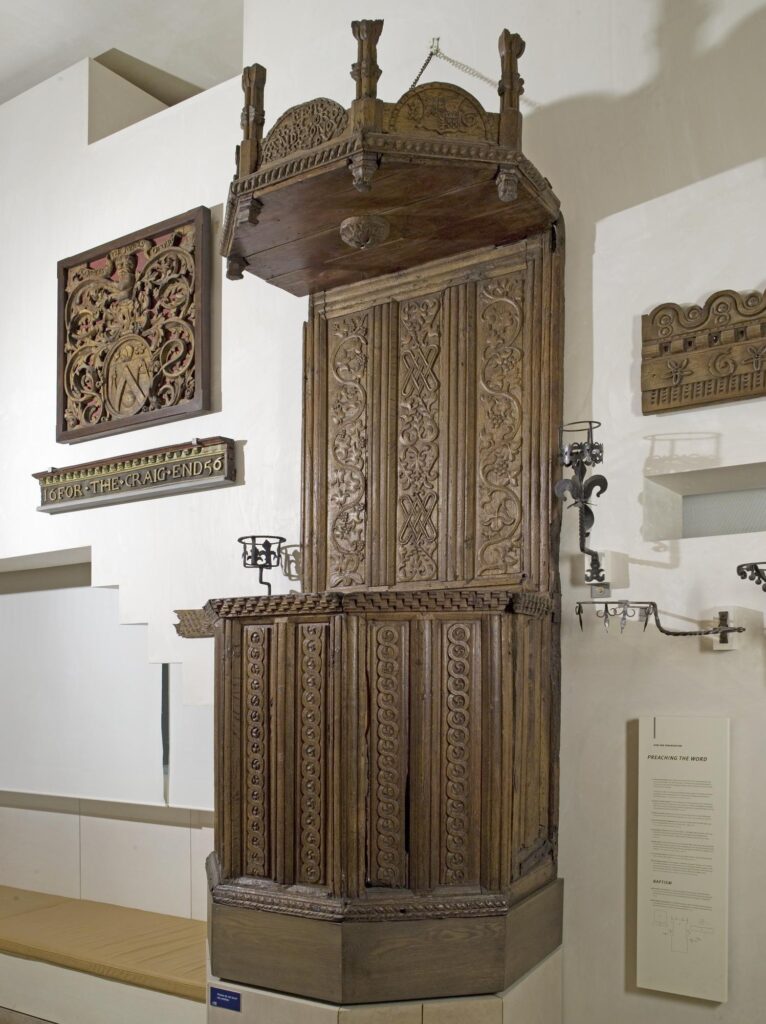
As an early-seventeenth-century furnishing event, it had an eye-catching genesis. In 1610 the lairdship of Dun fell to a boy of ten, who was placed in the care of his father’s cousin, the minister of nearby Ecclesgreig (St Cyrus). In 1613, however, his uncle and aunts succeeded in poisoning him. They were prosecuted and executed while his younger brother inherited and the minister, John Erskine, was appointed to the parish of Dun. It was he who commissioned the new pulpit, resplendent with his own arms. This gives us something of a parallel story to that of the pulpit erected at Parton in Kirkcudbrightshire in 1598, and given to the National Museum of Antiquities of Scotland in 1865. In that instance, the father of the minister, Robert Glendonwyn, had purchased the church lands of Parton in the wake of the Reformation and wrestled the right of presentation from a senior branch of his own family who remained Catholic into the nineteenth century.
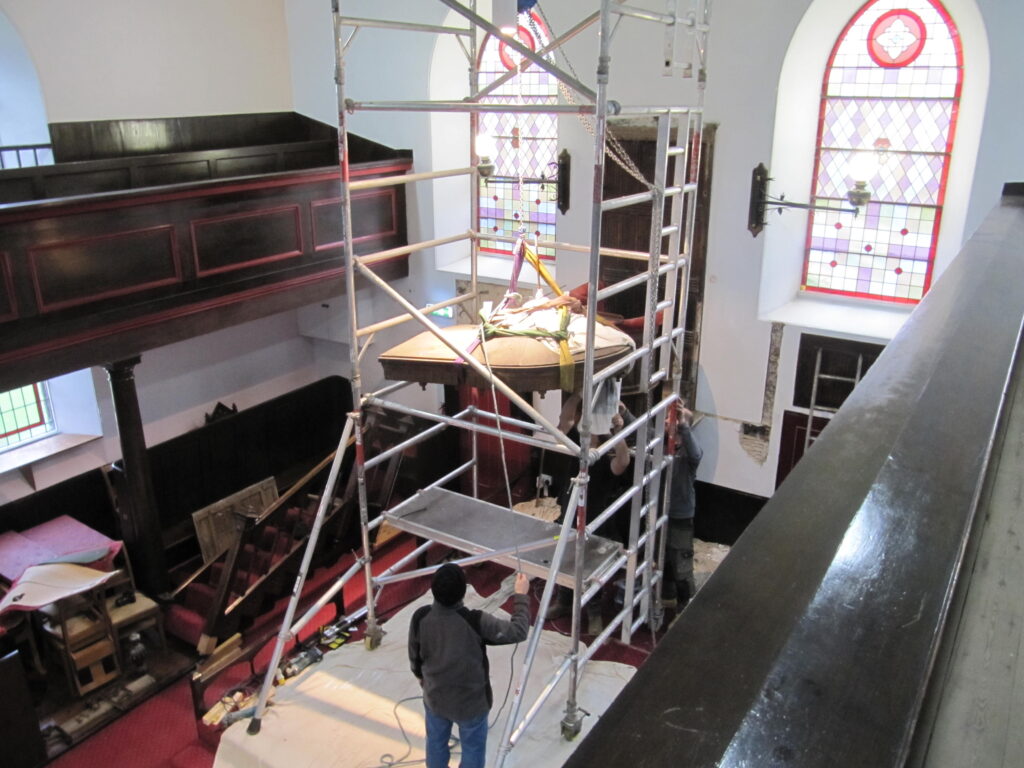
The Dun Pulpit (c) Stephen Jackson
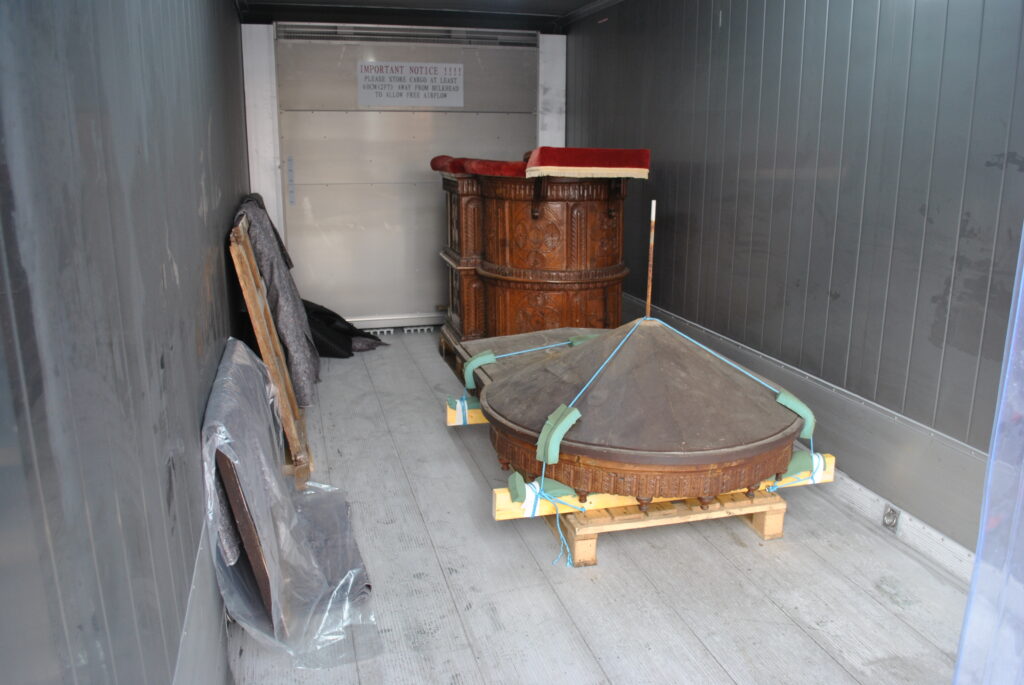
We don’t enjoy taking things out their contexts and nor do we want to build up a large holding of similar large objects. Yet when Anna Groundwater, Principal Curator, Renaissance and Early Modern History at National Museums Scotland and I learnt of the vulnerability of the Dun pulpit, we sought to calculate just what was at risk. We knew that there are not many more than fifteen seventeenth-century Scottish pulpits surviving, and that only four, at most, are older than this one. Several that are still in use are cared for in non-parochial settings, and hence comparatively secure, while the Dun example possesses a good degree of physical integrity compared with others that were over-restored in the past. Thus we accepted it as a gift from the General Trustees of the Church of Scotland, and with support from the Pilgrim Trust our conservators went about the complicated task of removing it, in collaboration with specialist contractors. We decided not to take the nineteenth century pedestal and staircase. Within the confined medieval structure for which it was made, although closer to the floor, it would have been even more imposing.
The Dun Pulpit (c) Stephen Jackson
Prosperity and renewal during both the late eighteenth and late nineteenth centuries resulted in considerable heritage loss. The twentieth century was largely a period of neglectful survival, yet anyone consulting the architectural historian George Hay’s 1957 inventory of church furnishings will read of once well-regarded objects that have since vanished without trace. Museums are not a one-stop solution for vulnerable heritage, however, and the enjoyment of things that remain in situ is greatly to be encouraged.
Parton Pulpit, in the NMS (c) Stephen Jackson
Our thanks to Stephen for sharing his reflections on our blog and at our launch symposium.
Throughout our work on this project, one thing that has become particularly clear is that ReACH is not a standalone project, but part of a wider network of people, projects and knowledge already shaping how we understand church heritage.
This is an active and ongoing conversation which is shaped by people, particularly those who care deeply about Scotland’s churches and willing to share their knowledge, time and experience to help think about what comes next.
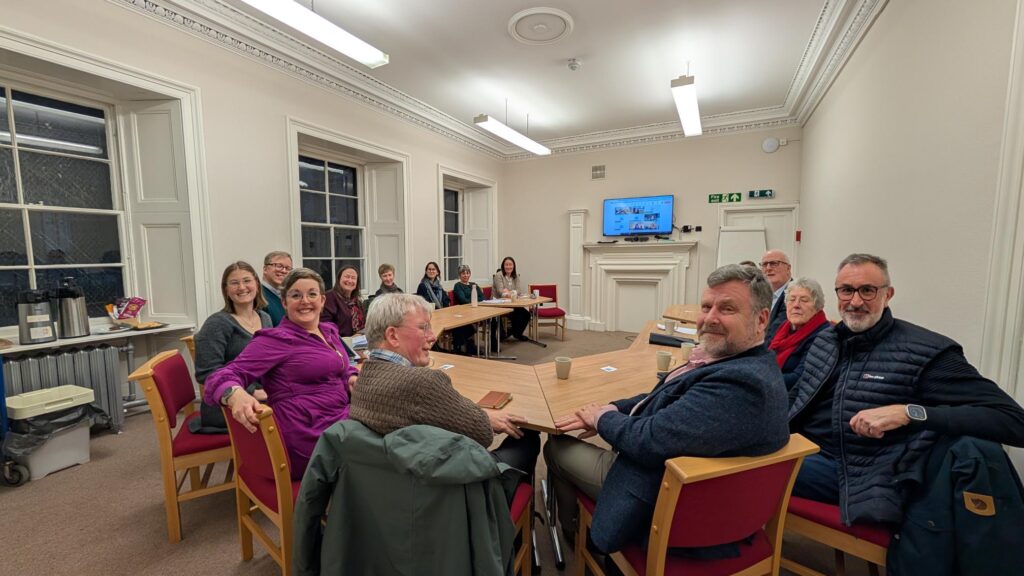
In January, we held a Heritage Action Group meeting, focussing on this theme of collaboration. What stood out wasn’t just the range of expertise in the room (both online and in person) but the openness of the discussion. Those who attended spoke honestly about the challenges around data and resources, and how we support communities facing difficult decisions about their buildings. Alongside this was a real willingness to work together.
Within the sector, there is a shared recognition that no single organisation can tackle this issue alone. But together, there is an extraordinary depth of knowledge and a genuine desire to make it more connected and accessible.
This sense of collaboration has been central to our work on the ReACH database. Behind the scenes, we’ve been thinking carefully about what it means to bring together information on church heritage at a national scale. Rather than starting from scratch, we are building something that reflects what already exists by linking to datasets, drawing together research and creating a space where different kinds of knowledge can sit alongside one another.
Our conversations with researchers, organisations and practitioners have been reflected this desire to collaborate across the sector and to ensure that work already done is not lost but, instead, becomes part of something wider.
(c) Scotland’s Churches Trust
This same sense of connection came to life in a different way at our recent open day at St Mary’s Church, Whitekirk.
Across the day, more than 200 people came through the doors. We carefully recorded the fabric and contents of the building alongside volunteer church recorders from Scotland’s Churches Trust. Visitors shared memories and stories, and throughout the day there were moments of laughter and reflection. We are hugely grateful to Whitekirk New LifeTrust for their generosity in hosting the day, and to everyone who contributed to it.
(c) Scotland’s Churches Trust
This collaborative approach continues beyond our own events – this Saturday (28th of March) we’ll be at Crail Kirk for their open day, where Dr Lizzie Swarbrick will be leading a talk and tour as part of the programme.
As the project continues, this collaborative approach will remain at the forefront. Through the Heritage Action Group and the development of the database, as well as our work with communities. Our aim is to reflect the many ways that people value and understand church heritage.
If you are working in this area, holding data and researching church heritage, or interested in being part of these discussions, we would love to hear from you – email us at churches@socantscot.org
If you’d like to receive quarterly updates via email, as well as other project news, sign up to our newsletter!
Guest Post by Dr Lizzie Swarbrick and Dr Mark Hall
St John the Baptist’s parish church in the centre of Perth is famous for having been the crucible of the Reformation in Scotland. It was here on the 10thof May 1559 that John Knox and others gave sermons to the populace which erupted the day after into a thorough, violent, and widespread destruction and looting of religious buildings in Perth. Knox wrote that, in the parish church itself, ‘the whole multitude cast stones, and laid hands on the said tabernacle, and on all other monuments of idolatry.’1 The ‘monuments’ in question were things which we might now call religious heritage – art and artefacts of all kinds – which were against Protestant doctrines. We know that images of Christ and the saints and liturgical items were particularly targeted in Scotland. However, in St John’s, Perth, the very heart of the Scottish Protestant Reformation, there are a few things which survived the attention of iconoclastic mobs.
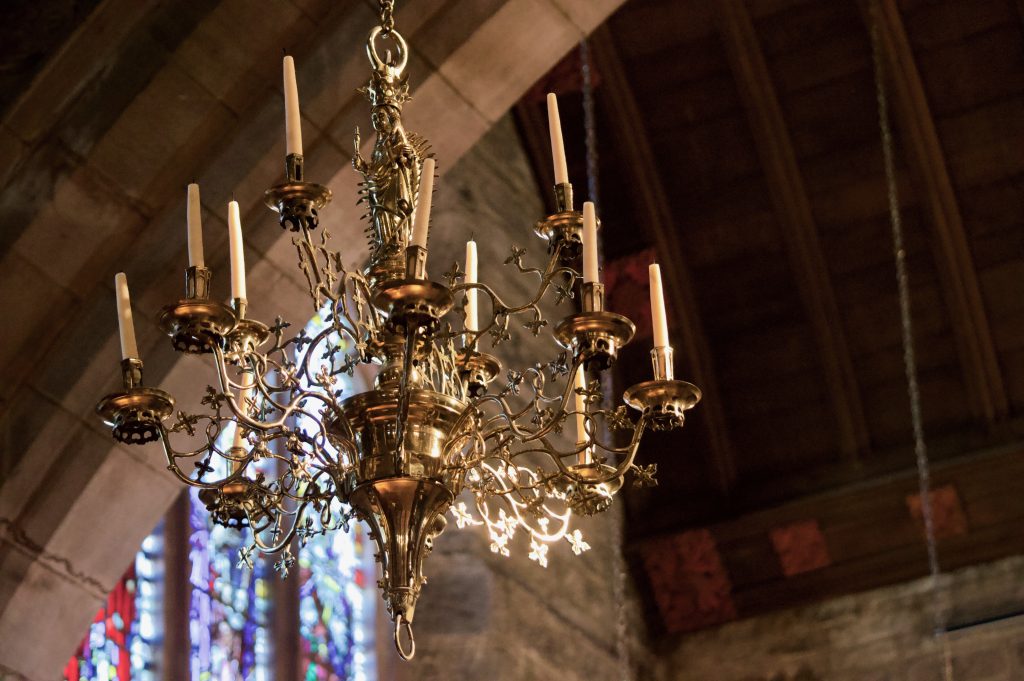
Perth St John’s Chandelier (c) Lizzie Swarbrick
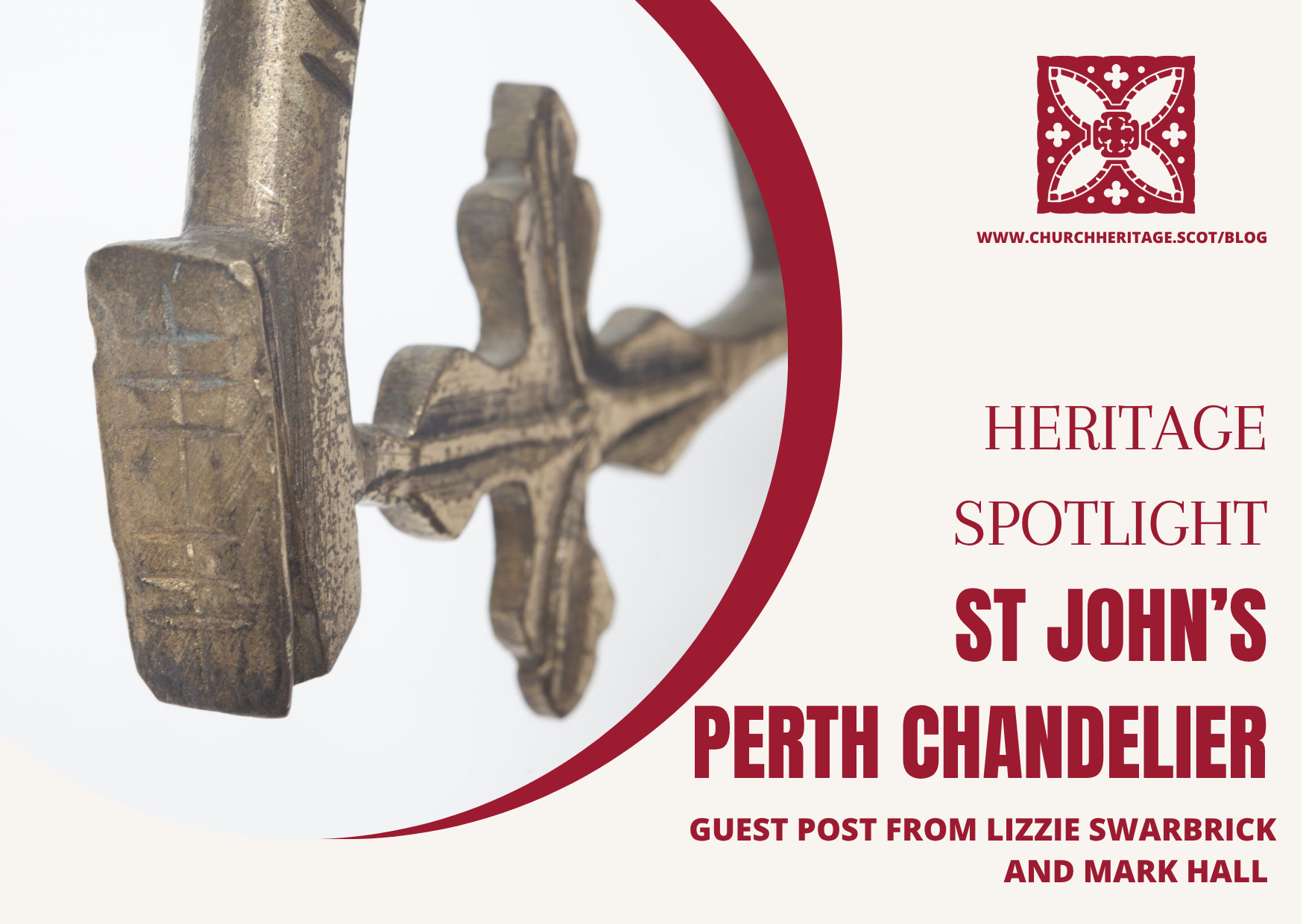
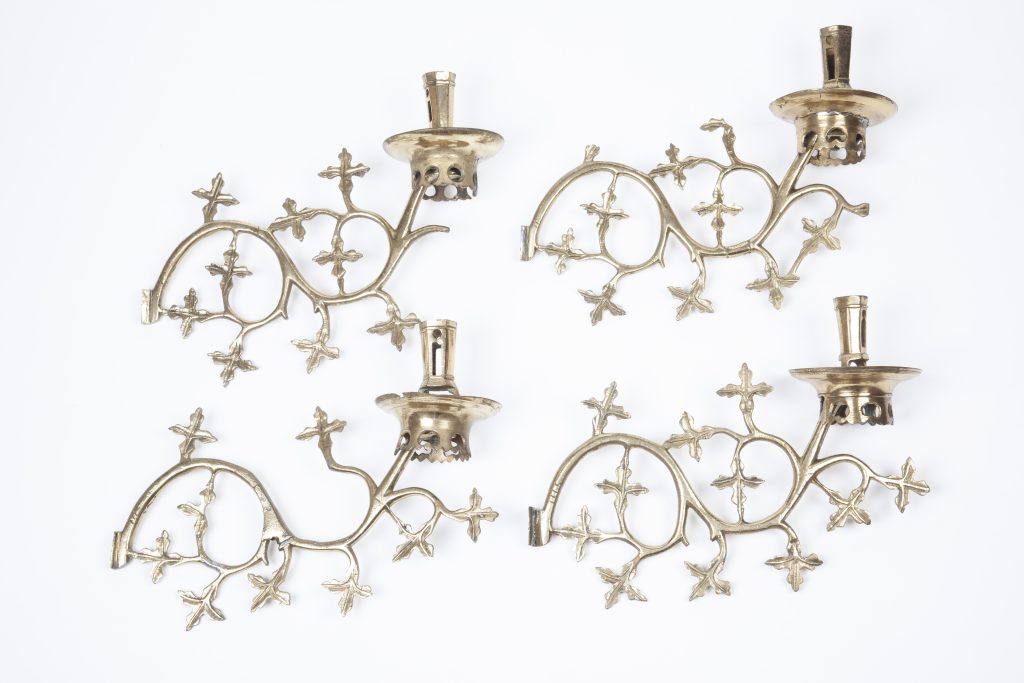
One of these tantalising traces of Scotland’s Pre-Reformation material culture, and perhaps the most spectacular, survives as a gilded brass chandelier, its elements made in the late Fifteenth Century in Flanders. Whilst we now know that this is a composite chandelier, refashioned into a single chandelier probably in the 18th century (see below) when it came to antiquarian attention in the late 18th century, it was understood as the example made for (or purchased by) the skinner or the shoemaker incorporation for their patronage of side altars within St John’s (typical practice of medieval trade and craft incorporations). It now hangs above the north transept, but it may have been made for a chapel dedicated to the Virgin Mary further east.2 This glittering light source has twelve branching brackets (complete with leaves) with cups for candles, a mouth of a lion holding a ring (which would have been used to lower and raise the chandelier when the candles needed replacing) and, at its centre, an image of the Beata Maria in Sole, the Virgin and Child wreathed in a fiery sunburst.
This imagery was particularly popular in Scotland, where it was quickly adopted after its original emergence in Rome in the 1470s-80s when it was linked to the devotion to the rosary.3 On the St John’s chandelier we can see the Virgin Mary, crowned as Queen of Heaven, holding the infant Christ and a sceptre, standing on a crescent moon, and with the sun’s rays shooting out from her mantle. She appears as she is described in the Book of Revelation 12:1: ‘a woman clothed with the sun, and the moon under her feet, and on her head a crown of twelve stars’. This is not the Mary of a cute Nativity scene with a wee donkey, but Mary as she would appear at the Apocalypse, where her role was to entreat Christ, her son, to show mercy to us sinful humans as we rise from our graves at the Last Judgement.
Detachable chandelier brackets each comprising holder, dish and arm (c) Mark Hall
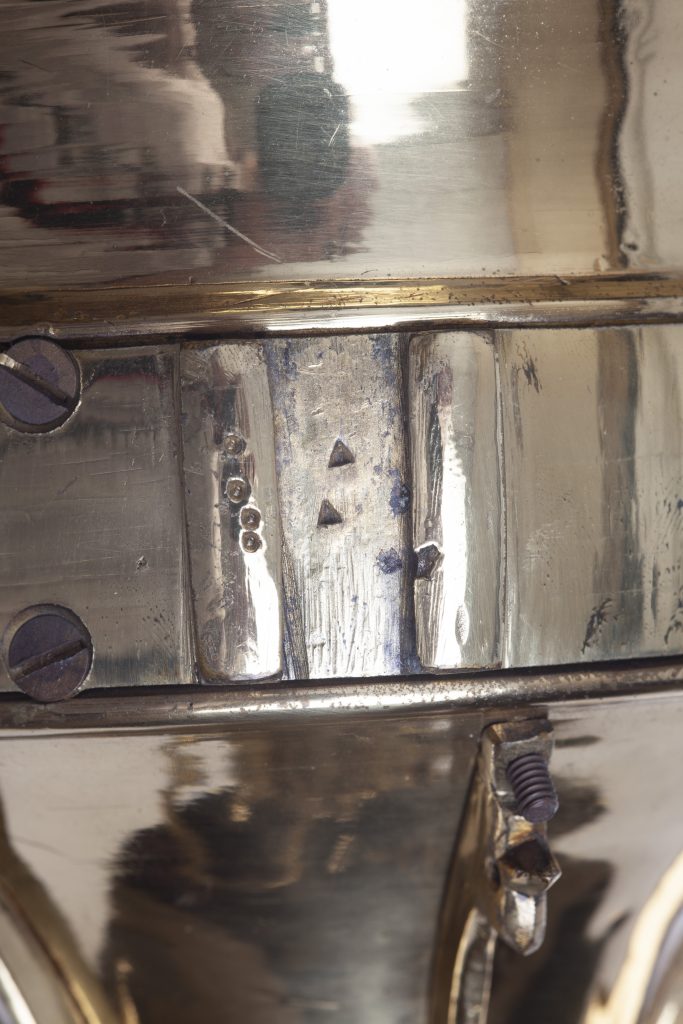
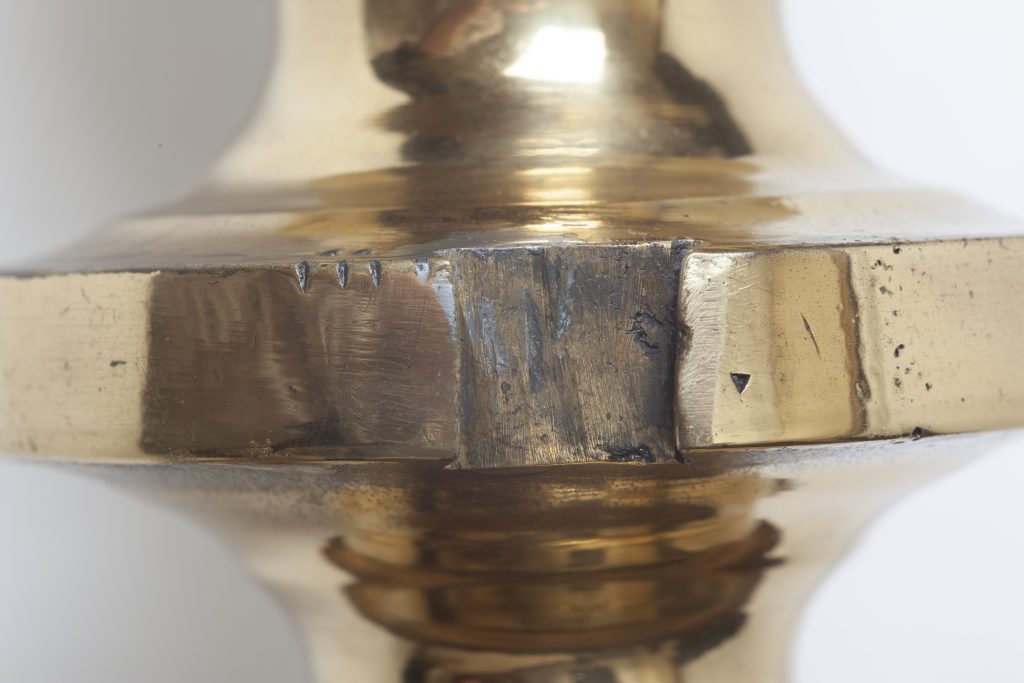
Though it still adorns the church for which it was made, the chandelier was purchased by the Perth Literary and Antiquarian Society in 1812.4 It is now part of the collections of the Society’s successor body, Perth Museum. It still hangs in the Kirk, where (apart from occasional inclusions in exhibitions elsewhere) the chandelier has been on loan since the 1920s after Robert Lorimer completed his restoration of the church interior. In 2010, the museum conducted a technical analysis of the chandelier, following its inclusion in the exhibition celebrating 800 years of Perth’s history. The museum’s analysis revealed that it is, in fact, a composite of several chandeliers, reconstructed from the remnants of various parts of chandeliers which survived the iconoclastic zeal of Reformers. This sort of collaboration between the Museum and the Kirk could serve as a model for the potential ways that heritage bodies and denominations could work together to protect church treasures.
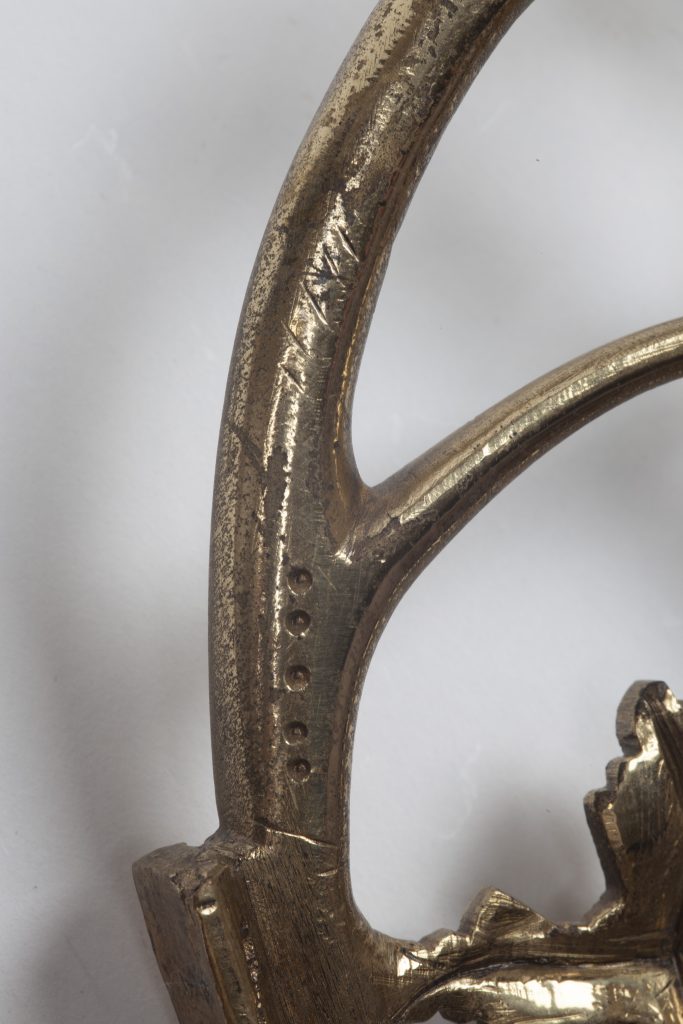
FLower body attachment point with two different symbol matching systems (c) Mark HallUpper body attachment point with three different symbol matching systems (c) Mark Hall
St John’s in Perth is cared for by the Church of Scotland. In 2025, St John’s was awarded a major grant from the National Lottery Heritage Fund, and it has been named as one of the Church of Scotland’s ‘Signature Churches’, a list of what it considers to be its most important properties. It certainly seems that the future of St John’s is as an active church within the Church of Scotland. Even if something were to happen to the church, the magnificent chandelier would be returned to the Museum, so the chandelier is absolutely safe. Both the church and the chandelier would be less significant were they ever to be separated because they add meaning to each other, which is why it’s so brilliant that the museum and the church work together to care for this important work of medieval art.
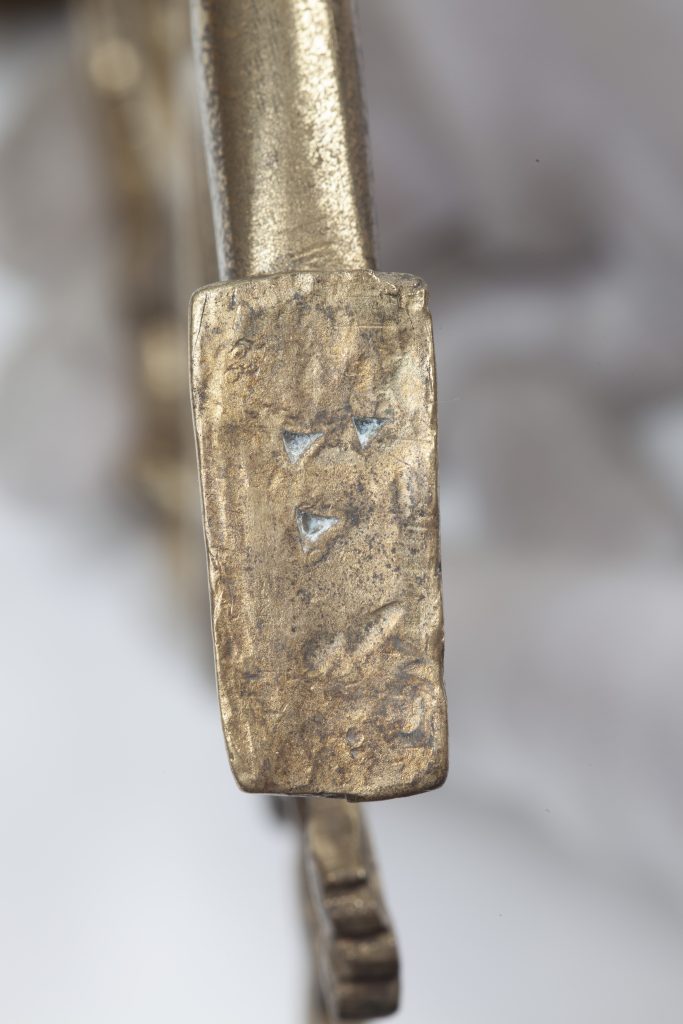
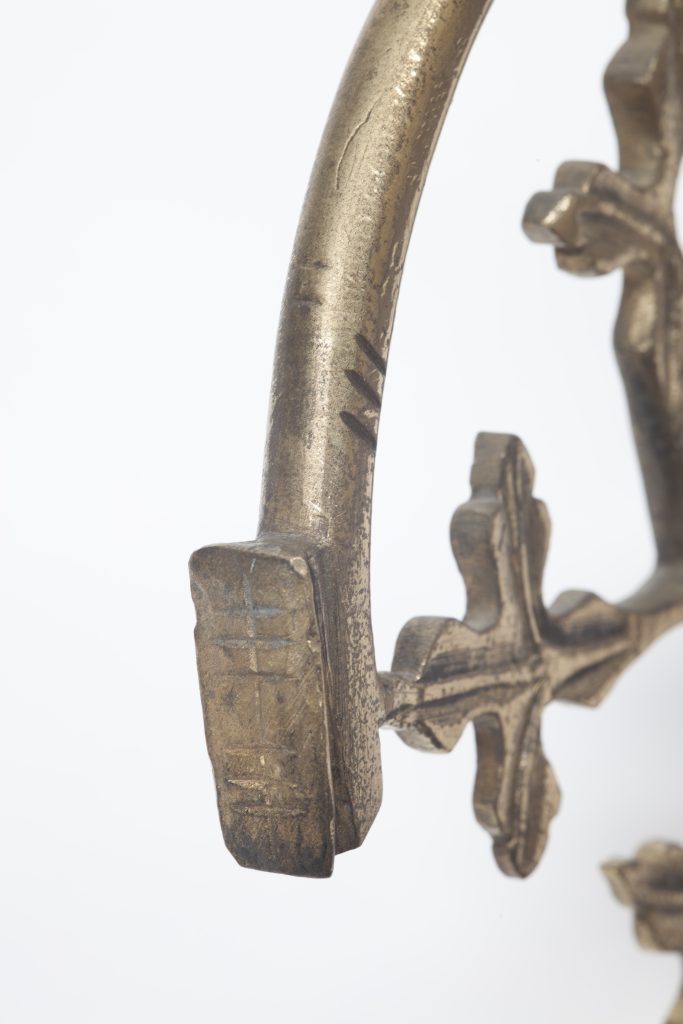
Bracket foot plate with stamped triangles to match slot on baluster (c) Mark HallTwo sets of attachment guide symbols on lower portion of bracket stem (c) Mark Hall
Within the Church of Scotland, the General Trustees own the church building with all its fixtures and fittings (though the congregation are responsible for its maintenance and insurance), and the congregation own furnishings and movable items within the church (except for communion ware, which was sold to Perth Museum with the aid of National Heritage Lottery funding). So, when a church is closed, there’s often a lot of questions around who owns what, and what should be done with the contents of a building. The Church of Scotland’s own guidance states that ‘The Church has been criticised in the past for cavalier treatment of movable items in church buildings’ before advising that congregations should conduct inventories and then clear the church of items prior to sale.5 Given the scale and rapidity of church closures at the moment, it’s difficult in practice for any denomination to look into every nook and cranny of a building, and even harder to access expert knowledge which could guide those responsible about what is historically significant.
arm with two different symbol systems to guide attachment (c) Mark Hall
Here at ReACH, we’re not saying that there are things like the magnificent St John’s chandelier in every closing church, but there certainly are innumerable objects which have played a part in people’s faith and sense of community. Some items might be nationally important, and others might hold significant memories for individuals. The church surveys by volunteers from Scotland’s Churches Trust have recorded all manner of things, from memorial plaques to hymn books with humorous sketches of locals. Also, because Scottish churches are understudied, there may be historic treasures lurking in a cupboard or forgotten on a dusty shelf. In some cases, those responsible for a church are extremely knowledgeable about the wonders they care for, but in other cases, people simply don’t know the significance of what they have. ReACH is currently bringing together data from all kinds of sources to build a record of the heritage of Scotland’s closing churches. By using this, people involved in heritage and communities caring for it can get a better understanding of what’s out there, and how important it is. All of these things are part of our shared heritage as a nation, and it’s crucial that we understand what we have before things are dispersed.
Perth St John’s (c) Lizzie Swarbrick
When the chandelier was first installed, the parishioners of St John’s in Perth would have gazed up at the glittering vision of the Virgin Mary and Christ Child, surrounded by candles which flickered and blazed, animating the holy figures. They may have been dazzled by the beautiful Virgin in the sun and felt moved to pray to her, they might have been made fearful for the Last Judgement, or perhaps they would have just been impressed by the shining gold – proud of the richness of their burgh’s church. Thanks to Perth Museum and St John’s Kirk, you can still go and look up at this gilded apparition, just as people did in the Fifteenth and Sixteenth Centuries. Why not make a visit? Bring a friend and listen to the guides there about how much they love their church. St John’s and its chandelier have a brilliant past and a bright future. Other churches, and the items within them, may not be so lucky, unless we all act on behalf of our shared heritage.
Our thanks to Lizzie Swarbrick and Mark Hall for their thoughtful contribution to our Heritage Spotlight series
For centuries, St Mary’s Church has been at the heart of Whitekirk’s life as a place of worship, gathering and memory. Now, as part of the Research in Action on Church Heritage (ReACH) project, we’re inviting you to share your stories and reflections to help document its cultural and community significance.
Whether your memories come from worship, local events or everyday encounters, we’d love to hear from you!
(c) Scotland’s Churches Trust
Join our open day
When: 7 February 2026
Time: 11am – 3pm (Drop in)
Where: St Mary’s Church, Whitekirk
What’s Happening?
Short expert-led tours on Whitekirk’s fascinating history will be held at 12.00, 13.00 and 14.00.
Throughout the day visitors can explore the church at their own pace and enjoy organ music.
Share your memories and experiences of Whitekirk
Participatory Mapping Show us which spaces in St Mary’s matter most to you at our interactive mapping station.
Memory Box Contribute in your own way: write, draw, sing, share photos or audio. Your piece will become part of a collective memory capsule.
Oral Histories Have a longer story to tell? Email Emily@socantscot.org to book a 30 minute chat and record your memories.
Speedy Interviews Got a short story or passing encounter? Share it in just 10 minutes!
Why Take Part?
Your contributions will help shape a new, publicly accessible database on Scotland’s church heritage. Together, we’ll capture the social and cultural value of St Mary’s for future generations.
The nearest bus stop is Ladysfield which services the 120 Dunbar – North Berwick
ReACH is a two-year project led by the Society of Antiquaries of Scotland and Scotland’s Churches Trust, funded by the National Lottery Heritage Fund and The Pilgrim Trust.
Dr Georgia Vullinghs is Curator of Renaissance and Early Modern History at National Museums Scotland. Her remit covers objects relating to Scotland 1450 -1750. With specialism in Jacobite objects, she is learning ever more about the church and religious material culture of the period.
Textiles are some of the larger-scale, non-architectural items of historical significance relating to Scotland’s churches. These include vestments, furnishings, flags and banners such as the pre-Reformation Fetternear banner. As well as providing devotional inspiration and glorifying God, these textiles carry images and words that represent the church community.
During the armed conflicts of the 17th century, banners were made and carried into battle by the Covenanters. Not strictly ecclesiastical textiles, these large painted cloth flags were a rallying point for the defence of the Scottish Presbyterian church from the 1640s right into the 18th century.
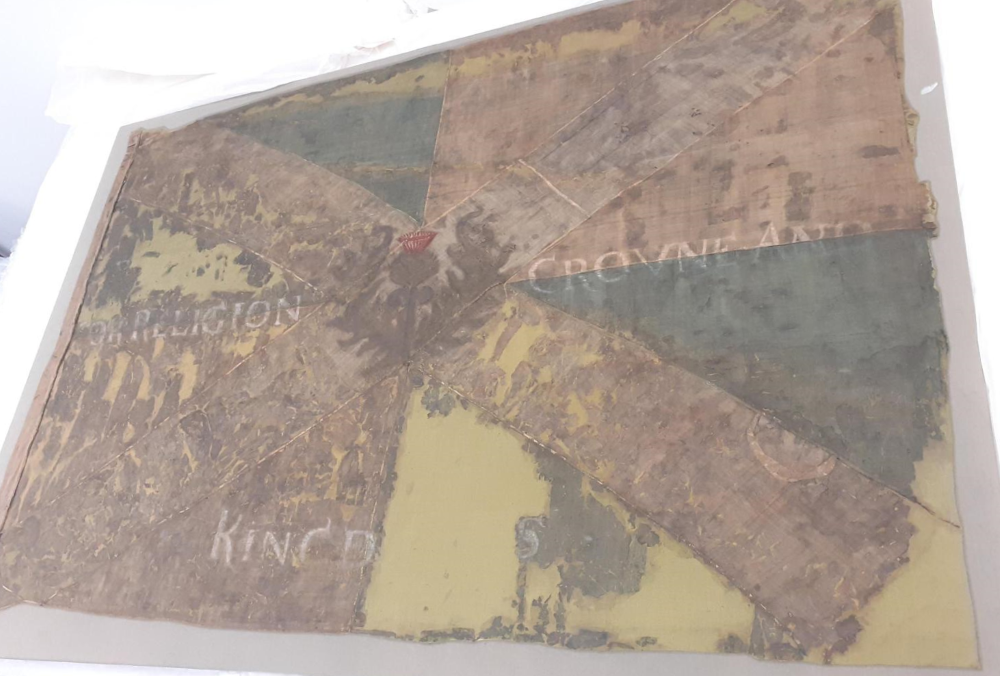
A key feature of ‘Covenanting’ banners is their use of words. Sometimes depicting a book, they emphasise the importance of the word of God as written in the Bible to the Presbyterian church. They also tend to carry distinctly Scottish symbols. One of the earliest, the Garscube flag (H.LF 3) is said to have been carried at the battle of Worcester by the Covenant-Royalist forces against Cromwell in 1651. It is made of silk, the design a saltire painted with the words ‘For Religion Croune [crown] and Kingdoms’ and a large thistle in the centre.
The Garscube flag (H.LF 3)
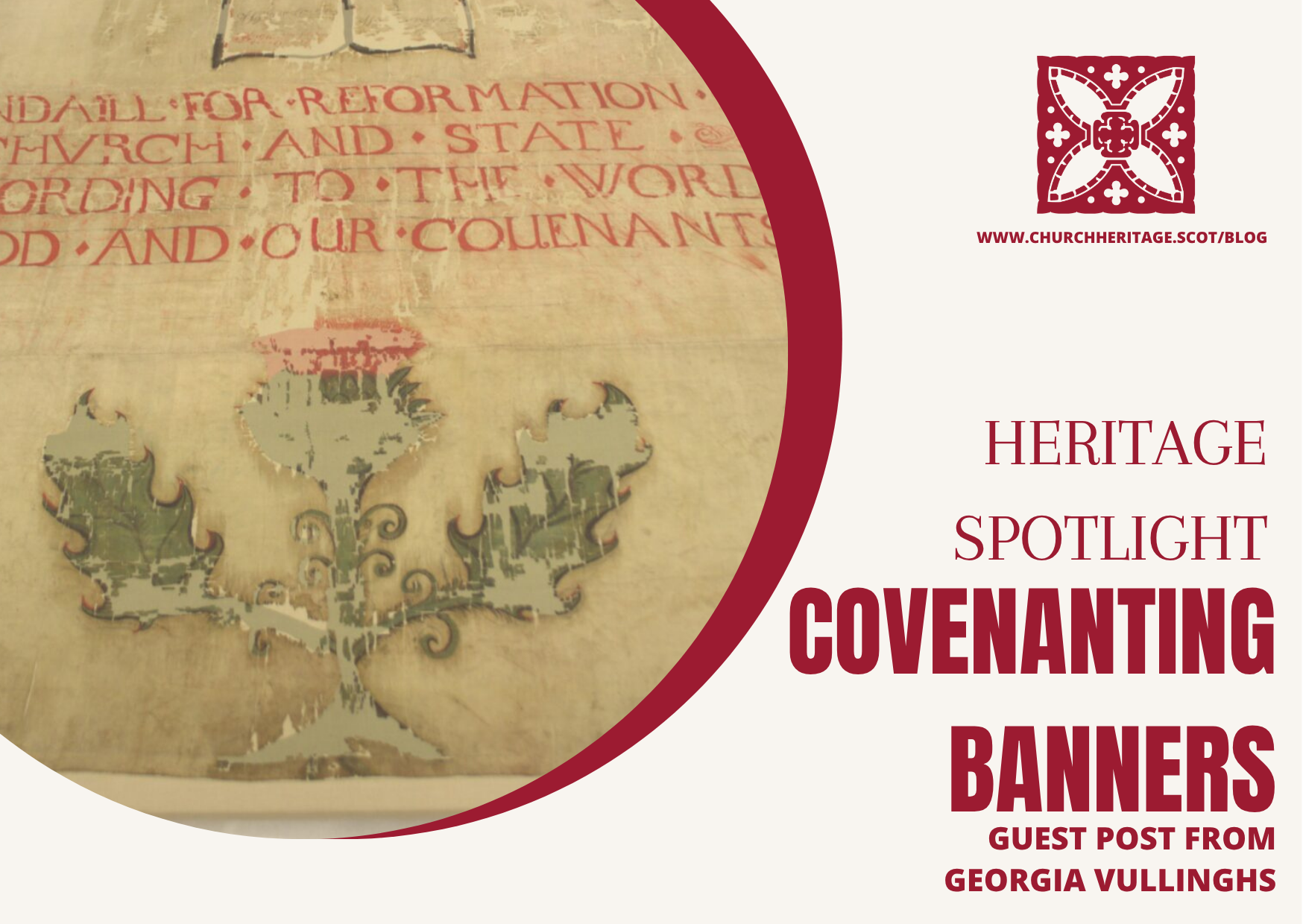
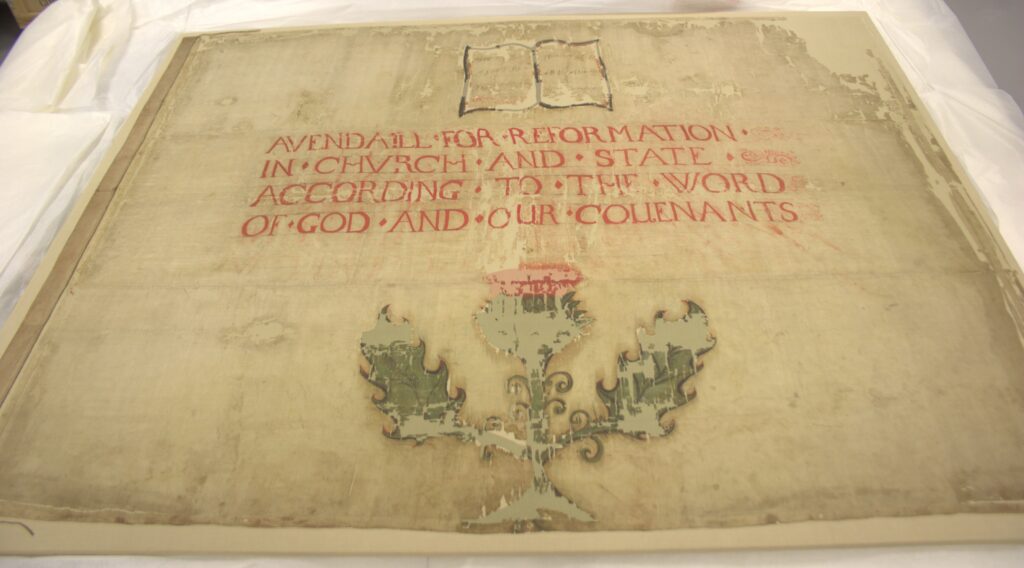
The Avendale banner (H.LF 8) is a key example of how the banners might rally a community around defence of the Covenants and church. Dating to the 1670s period of militant religious dissent, the motto reads: ‘Avendaill For Reformation in Church and State According to the Word of God and Our Covenants’. Avendale had a particularly strong Covenanter tradition. In 1679, a nearby conventicle – an illegal outdoor church meeting – famously turned into what is known as the Battle of Drumclog when the gathered congregation took an armed stand against the forces of John Graham of Claverhouse who had been sent to disperse such meetings (along with making arrests and punishing those captured).
The Avendale banner (H.LF 8)
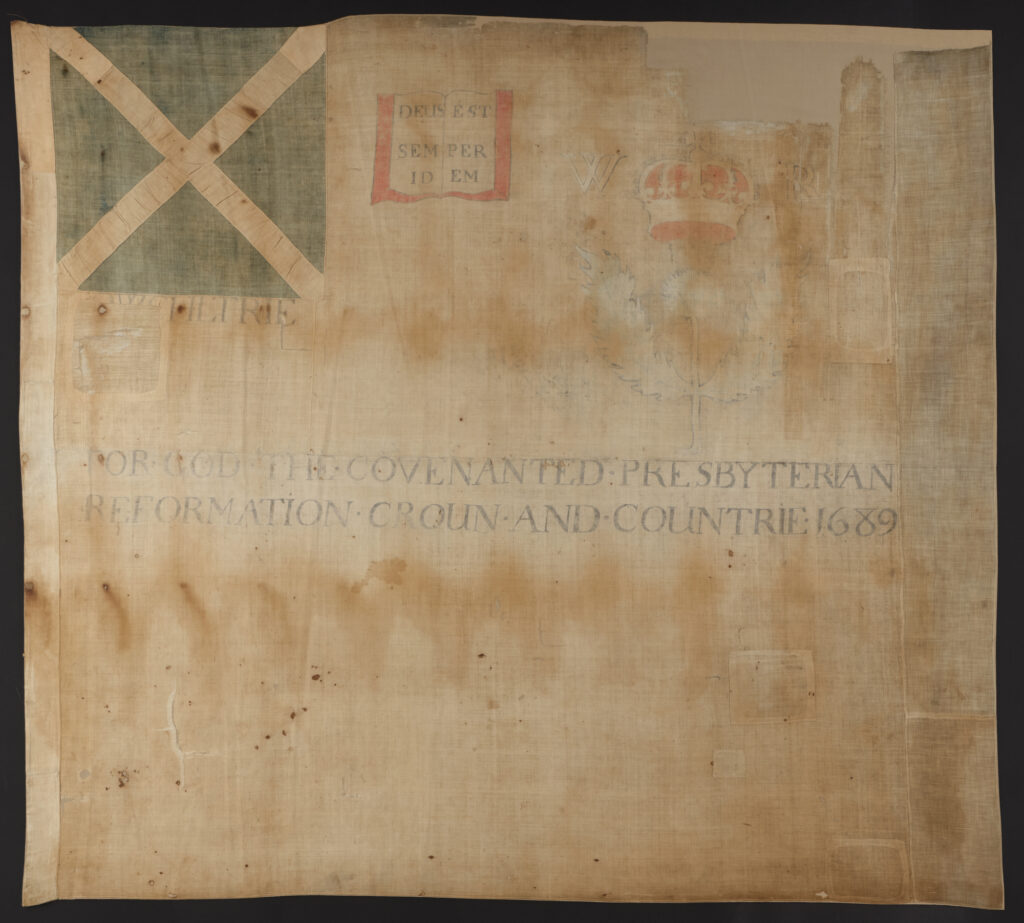
The Ochiltree flag (H.LF 14) demonstrates the legacy of the Covenanting banners and the lasting significance of the covenants to defence of the Presbyterian church into another phase of Scottish political and religious history. Painted with the words ‘For God the Covenanted Presbyterian Reformation Croun and Countrie 1689’, this banner demonstrates Scottish support for William and Mary’s overthrow of the Catholic King James VII. As well as a saltire and book with the motto ‘Deus Est Semper Idem’ (God is unchanging/always the same) the flag depicts a crowned thistle flanked by the letters W R for William Rex. Other flags with similar mottoes are associated with the Jacobite threats of the 1715 and 1745 risings.
The Ochiltree flag (H.LF 14)
Overall, the survival of these banners is remarkable given the circumstances of their use outdoors and in battle. While they belonged outside the walls of church buildings, they are a material legacy of a complex and violent period of Scottish church history, when the practices and powers of the established Presbyterian Church were disputed, threatened, and intertwined with national politics.
Our thanks to Georgia for sharing her reflections on our blog and at our launch symposium.