We’d be delighted to hold a short oral history with you to share your stories, memories and experiences.
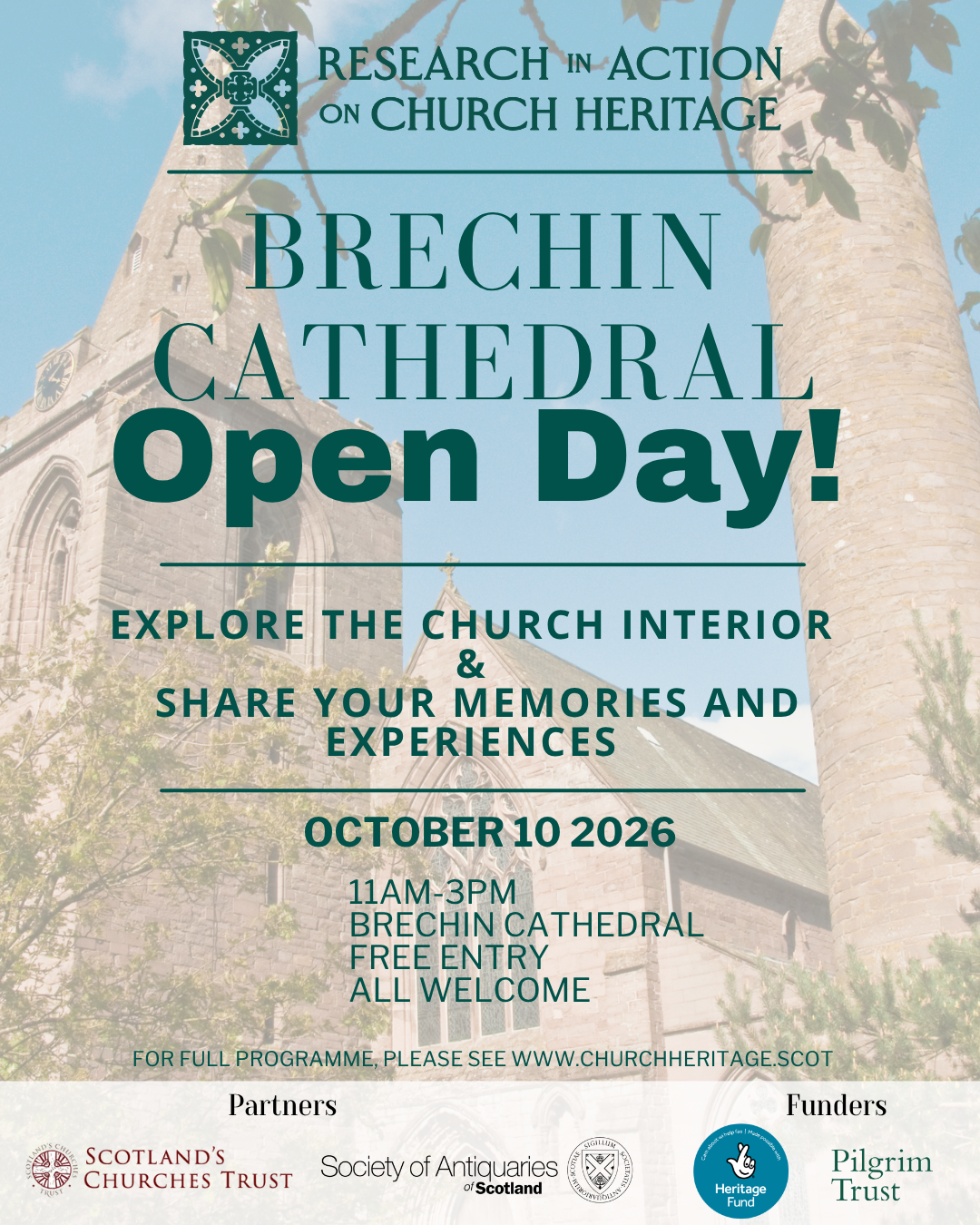
There will be opportunities to share your memories in the church on 10th October.
You can register your interest by contacting emily@socantscot.org
Map your Memories
Help us understand how people have experience Burntisland Old Parish Church by sharing memories connected to different parts of the building. Explore a plan of the church and add your own stories, favourite places and memories.
Why Take Part?
Come along and help us celebrate and preserve the story of Brechin Cathedral and its place within the wider history of the town. We’re inviting local residents, former congregation members, families and visitors to share their memories, photographs, documents and stories, helping us create a lasting community archive for future generations.
Whether your connection is through worship, weddings, baptisms, community events, music, friendships or family history, every memory contributes to a richer picture of the church’s role in Brechin life. Join us to explore the building, meet others with shared connections, and play a part in recording and safeguarding the history, heritage and voices that make Brechin Cathedral so special.
About Brechin Cathedral
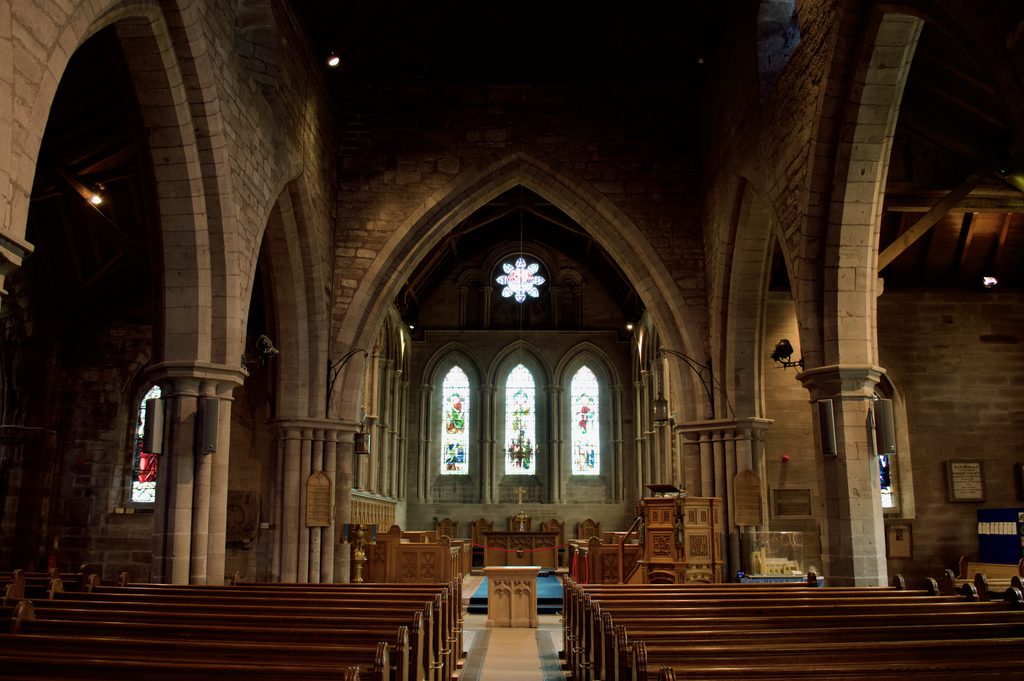
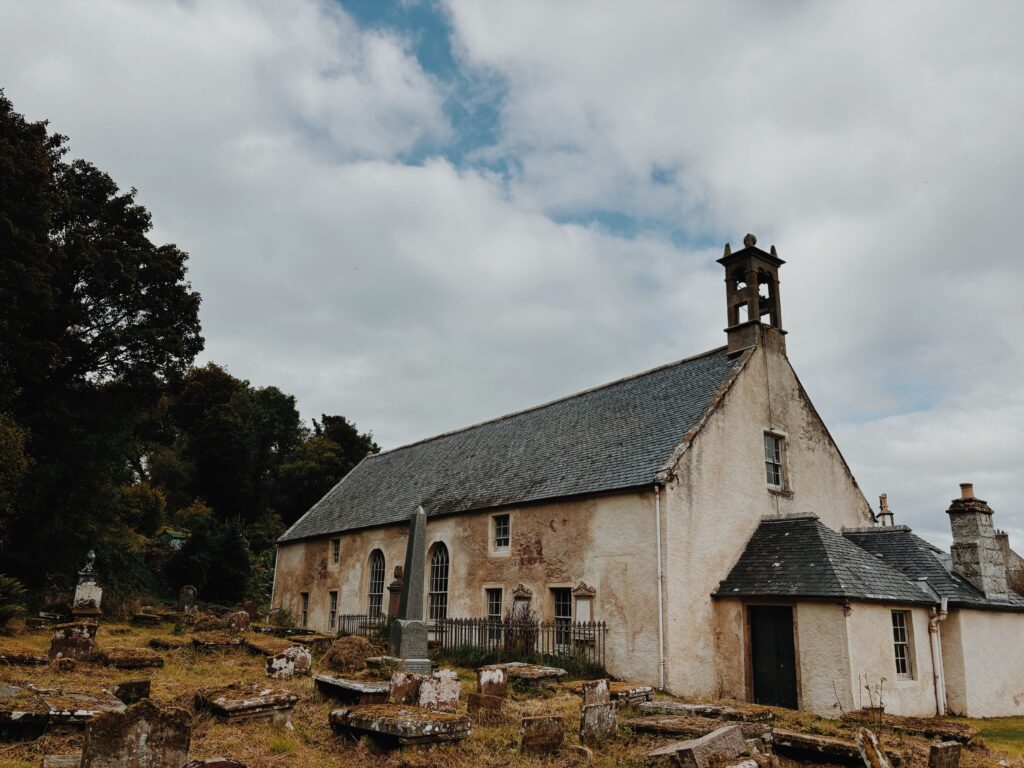
Brechin Cathedral dates back to the 13th century, with a Christian presence on the site stretching even further into the early medieval period. The cathedral is best known for its Round Tower, built around AD 1000 and one of only two surviving Irish-style round towers in Scotland. The cathedral retains elements of its medieval structure, including parts of the nave, choir and western tower, and contains a collection of historic stone carvings and stained glass.
(c) Lizzie Swarbrick
Accessibility
How to find Brechin Cathedral
Address: Brechin Cathedral, Church Street, Brechin, Angus, DD9 6EU
ReACH is a two-year project led by the Society of Antiquaries of Scotland and Scotland’s Churches Trust, funded by the National Lottery Heritage Fund and The Pilgrim Trust.
We’d be delighted to hold a short oral history with you to share your stories, memories and experiences.
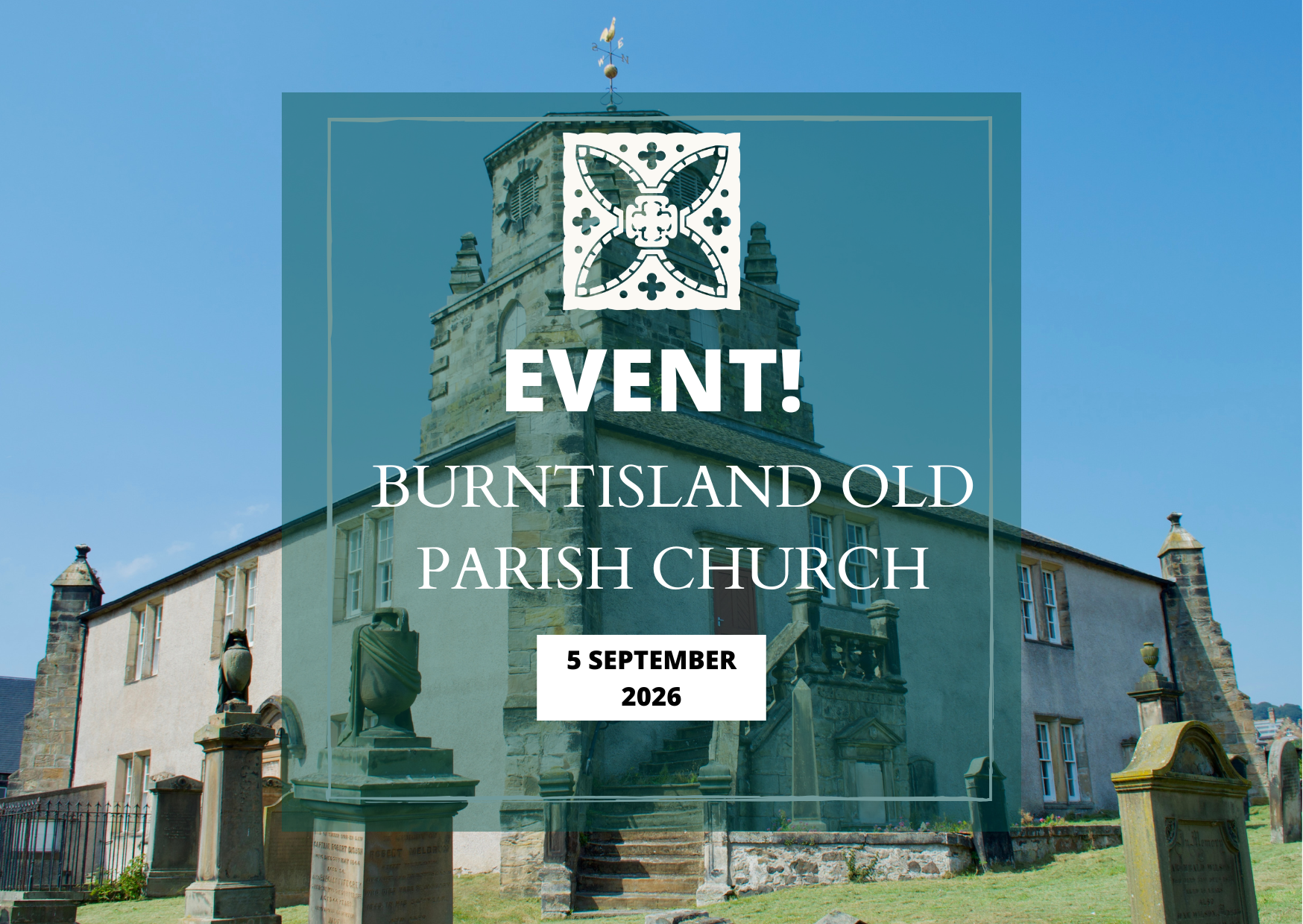
There will be opportunities to share your memories in the church on Friday 4th September and from 10-11 and 3-4 on Saturday 5th September.
You can register your interest by contacting emily@socantscot.org
Map your Memories
Help us understand how people have experience Burntisland Old Parish Church by sharing memories connected to different parts of the building. Explore a plan of the church and add your own stories, favourite places and memories.
Why Take Part?
Come along and help us celebrate and preserve the story of Burntisland Parish Church and its place within the wider history of the town. We’re inviting local residents, former congregation members, families and visitors to share their memories, photographs, documents and stories, helping us create a lasting community archive for future generations.
Whether your connection is through worship, weddings, baptisms, community events, music, friendships or family history, every memory contributes to a richer picture of the church’s role in Burntisland life. Join us to explore the building, meet others with shared connections, and play a part in recording and safeguarding the history, heritage and voices that make Burntisland Parish Church so special.
About Burntisland Old Parish Church
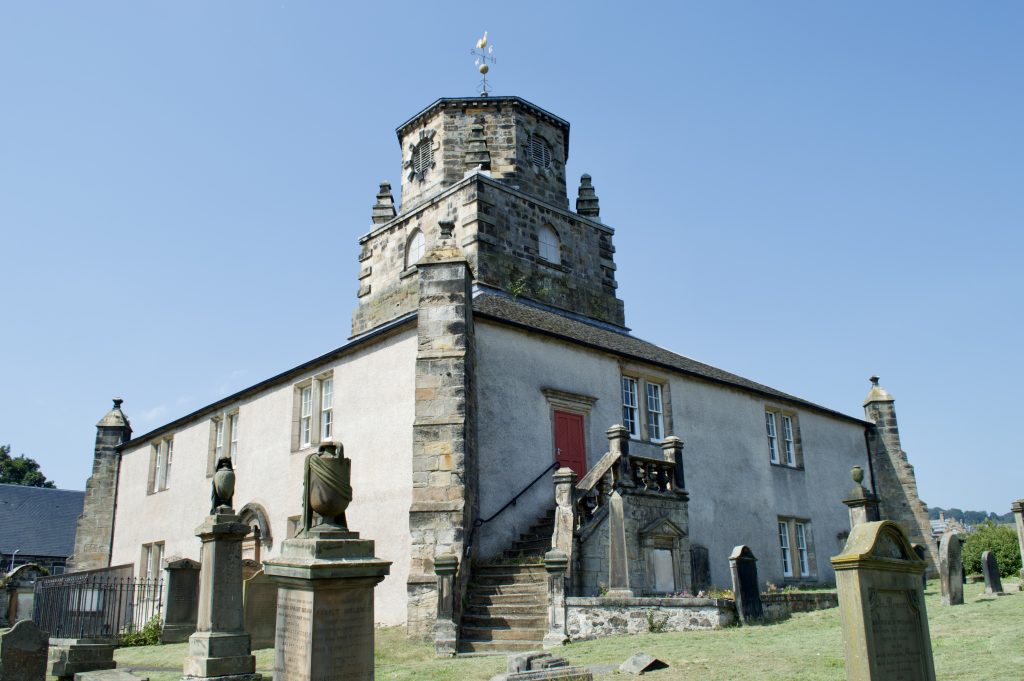
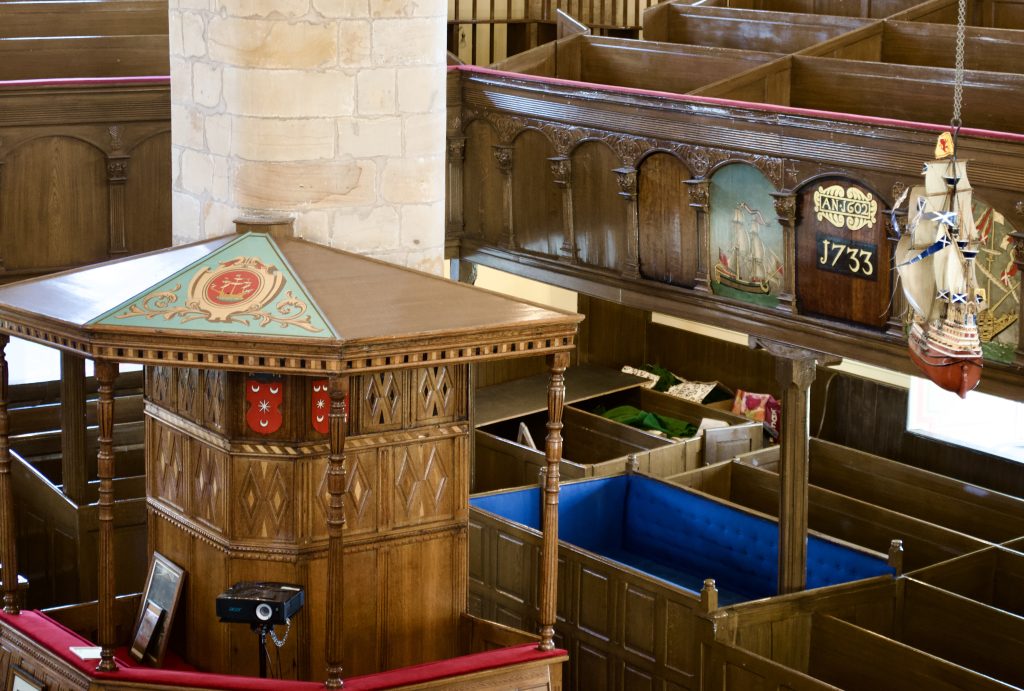
Burntisland Parish Church is one of the earliest churches built in Scotland after the Reformation, constructed between 1592 and 1596. Its unique square design, with worshippers seated on all four sides around a central pulpit and communion table, reflects the changing style of worship introduced in the post-Reformation Church. In 1601, the General Assembly of the Church of Scotland met here in the presence of King James VI and approved a new translation of the Bible, which later became the King James Bible. The church is also renowned for its striking interior, featuring painted woodwork, an ornate plaster ceiling, and maritime treasures including a model of the Great Michael, King James IV’s famous warship. Since 2024, the congregation has been united with Kinghorn Parish Church.
Interior of Burntisland Parish Church (c) Lizzie Swarbrick
Accessibility
There is step free access to the church, and wheel chairs and buggies can access the church. The passage way into the church is narrow and had uneven flooring.
How to find Burntisland Old Parish Church
Address: East Leven St, Burntisland KY3 9DH
ReACH is a two-year project led by the Society of Antiquaries of Scotland and Scotland’s Churches Trust, funded by the National Lottery Heritage Fund and The Pilgrim Trust.
We’d be delighted to hold a short oral history with you to share your stories, memories and experiences.
There will be opportunities to share your memories in the church on Friday 25th September and from 10-11 and 3-4 on Saturday 26th September.
You can register your interest by contacting emily@socantscot.org
Map your Memories
Help us understand how people have experience Burntisland Old Parish Church by sharing memories connected to different parts of the building. Explore a plan of the church and add your own stories, favourite places and memories.
Why Take Part?
Come along and be part of Portnahaven’s story! Whether you have fond memories of attending services, family connections to the church, or stories of village life through the years, we’d love to hear them. The open day is a chance to explore this historic building, meet others from the community, and help preserve the memories, heritage and traditions that make Portnahaven Church such a special place.
About Portnahaven Church
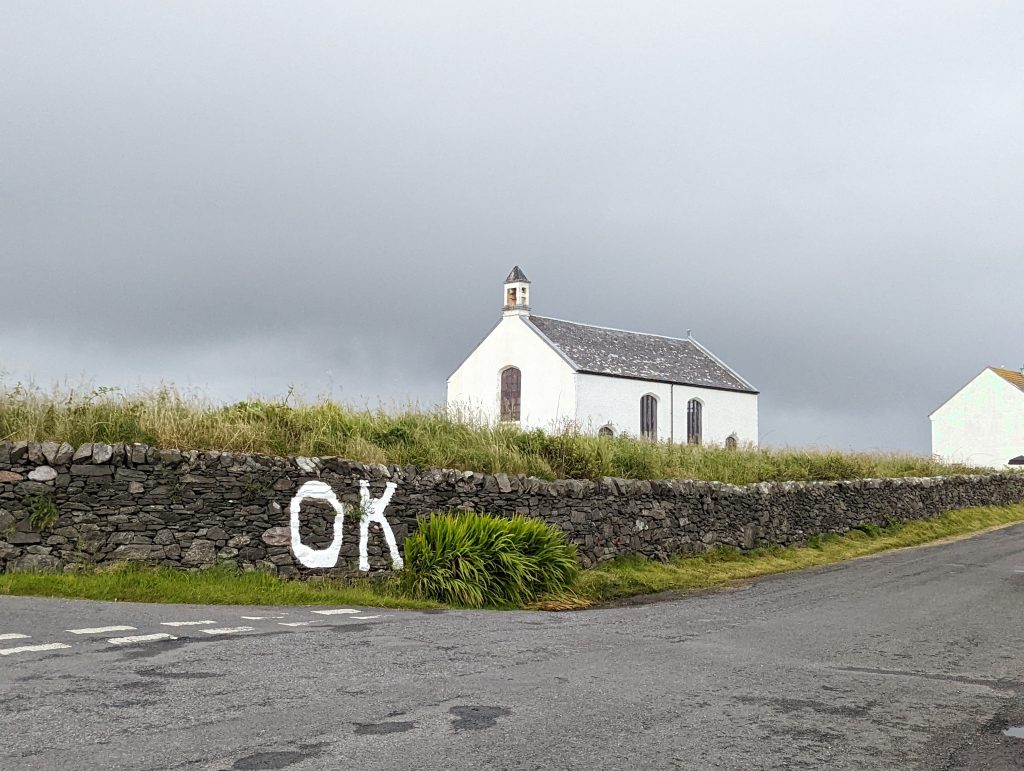
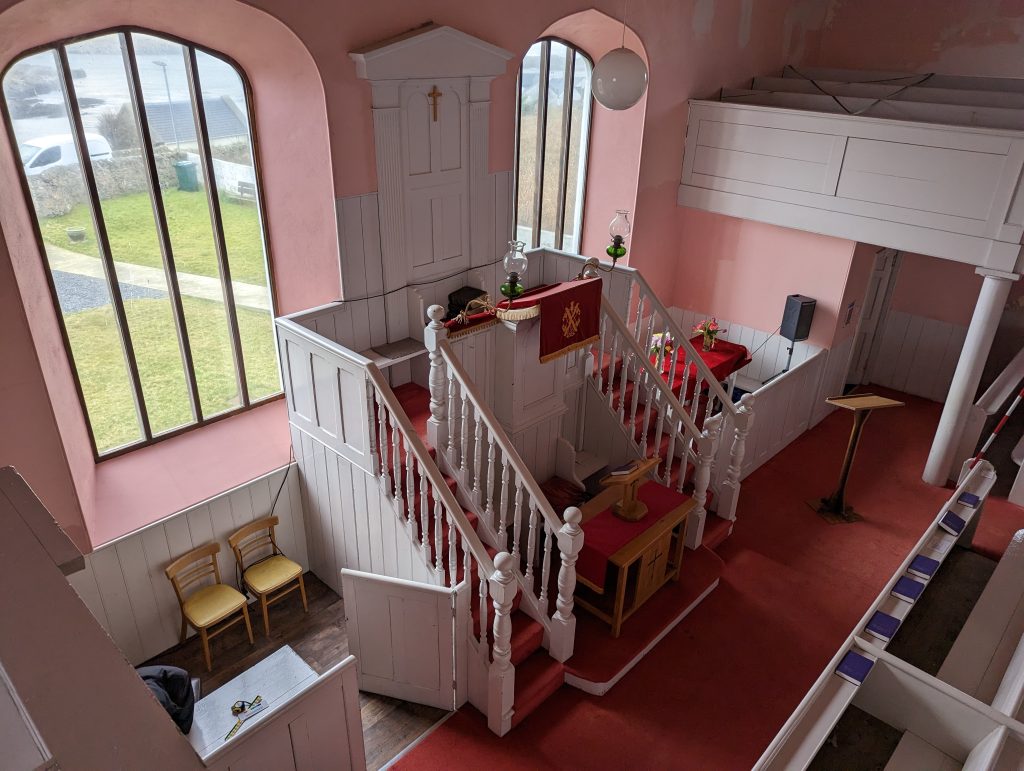
Portnahaven Parish Church is one of Scotland’s historic Parliamentary Kirks, built between 1824 and 1830 under the supervision of renowned engineer Thomas Telford.
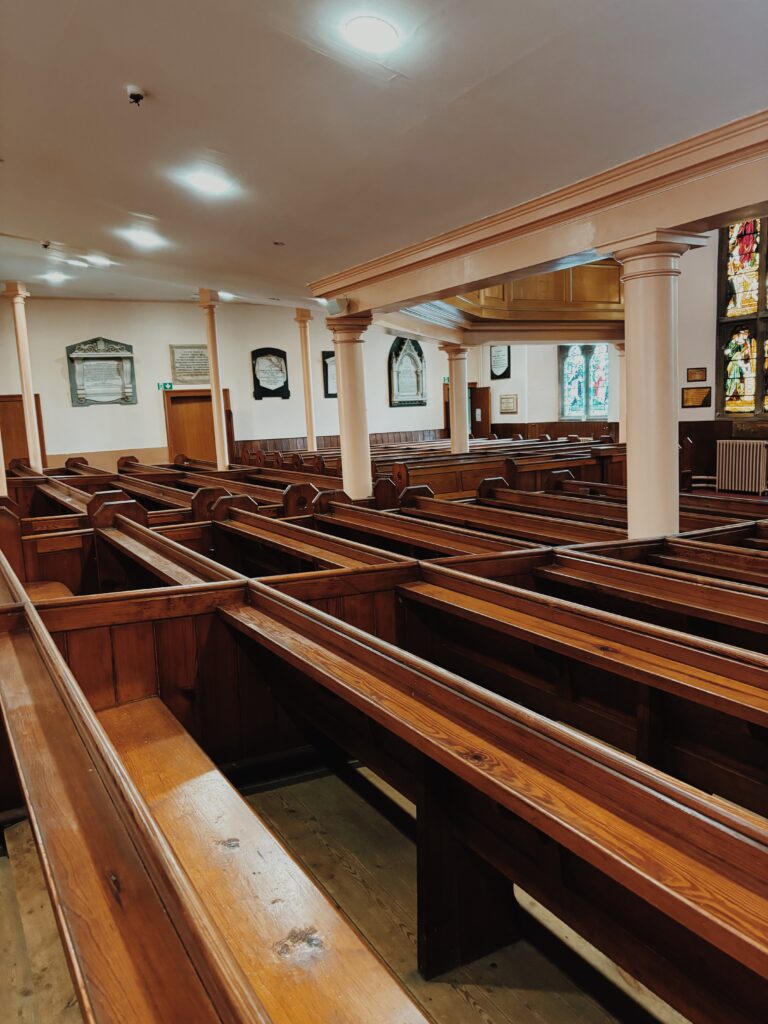
Overlooking the harbour, this distinctive T-plan church has been a focal point of village life for nearly 200 years and retains many original features, including its galleries, central pulpit and box pews.
In 2026, the building was purchased by the Friends of Portnahaven Church, who are working to preserve this much-loved landmark and develop it as a vibrant cultural hub for the local community.
Interior of Portnahaven Church (c) Scotland’s Churches Trust
Accessibility
The church is accessible via a series of small steps at the door.
How to find Portnahaven Church
Address: 2 Church St, Portnahaven, Isle of Islay PA47 7SL
Getting Here: Portnahaven Parish Church is located in the centre of Portnahaven, overlooking the harbour. Limited parking is available nearby. Please take care on village roads and be considerate of local residents when parking.
ReACH is a two-year project led by the Society of Antiquaries of Scotland and Scotland’s Churches Trust, funded by the National Lottery Heritage Fund and The Pilgrim Trust.
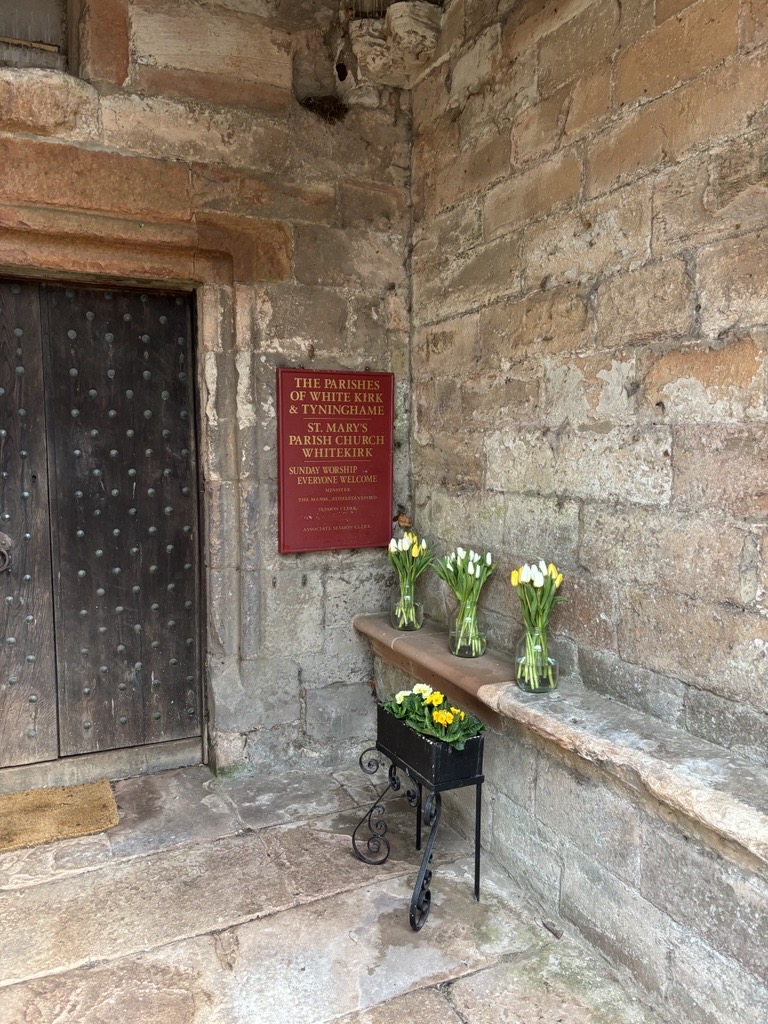
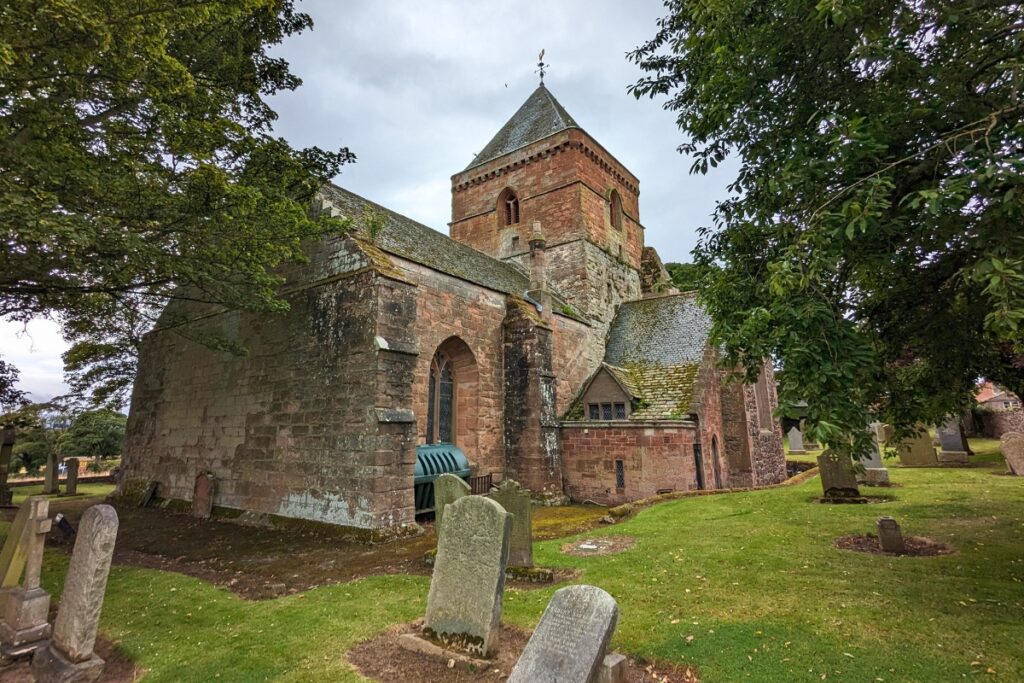
On a dreary winter morning in East Lothian, the doors of St Mary’s Church, Whitekirk, were wide open, with bright flowers welcoming visitors in.
Tulips at the doors of St Mary’s Whitekirk
For centuries, St Mary’s has been a place that people have travelled to; once a medieval pilgrimage site dedicated to the Virgin Mary – famously visited barefoot by the future Pope Pius II -Whitekirk has drawn visitors seeking healing, prayer and connection. This sense of movement towards St Mary’s still continues today, and these stories of coming together at St Mary’s shone through in conversations with past congregation members and the local community.
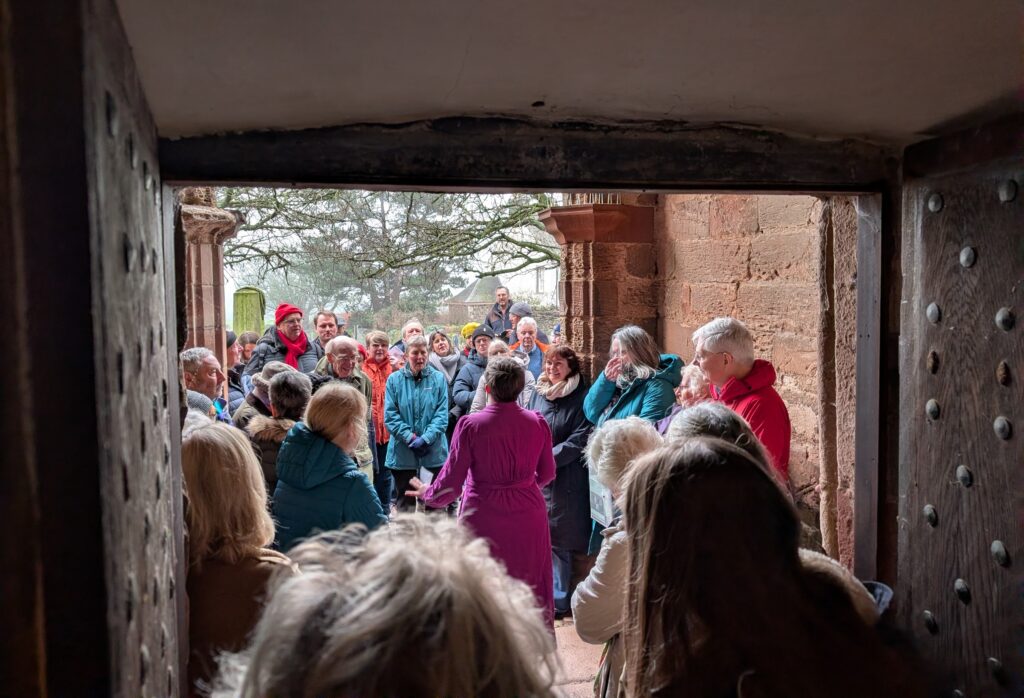
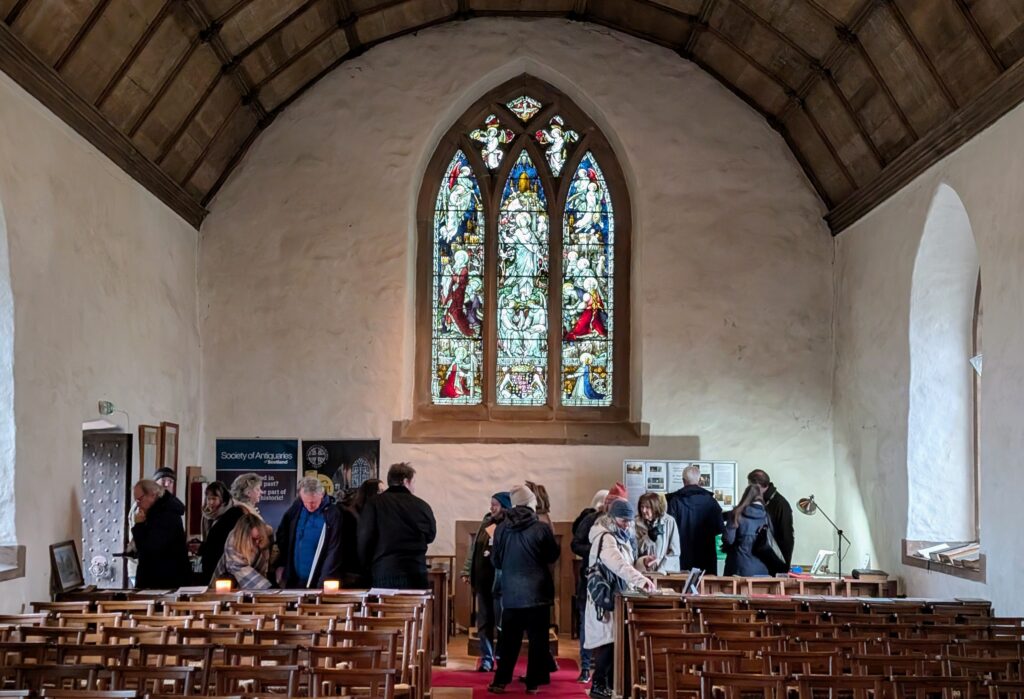
Visitors to the ReACH open day, on a guided tour
At the start of February, more than 200 people came through the doors of Whitekirk for our ReACH open day. Some arriving with stories ready to share: folders containing precious photographs, carefully folded newspaper clippings, old church newsletters and pamphlets. Others stepped inside for the first time, having passed the church countless times on the road, and curious to see what lay within.
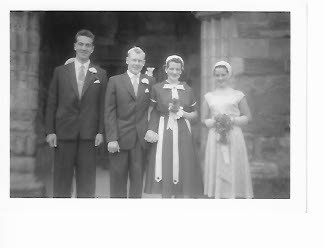
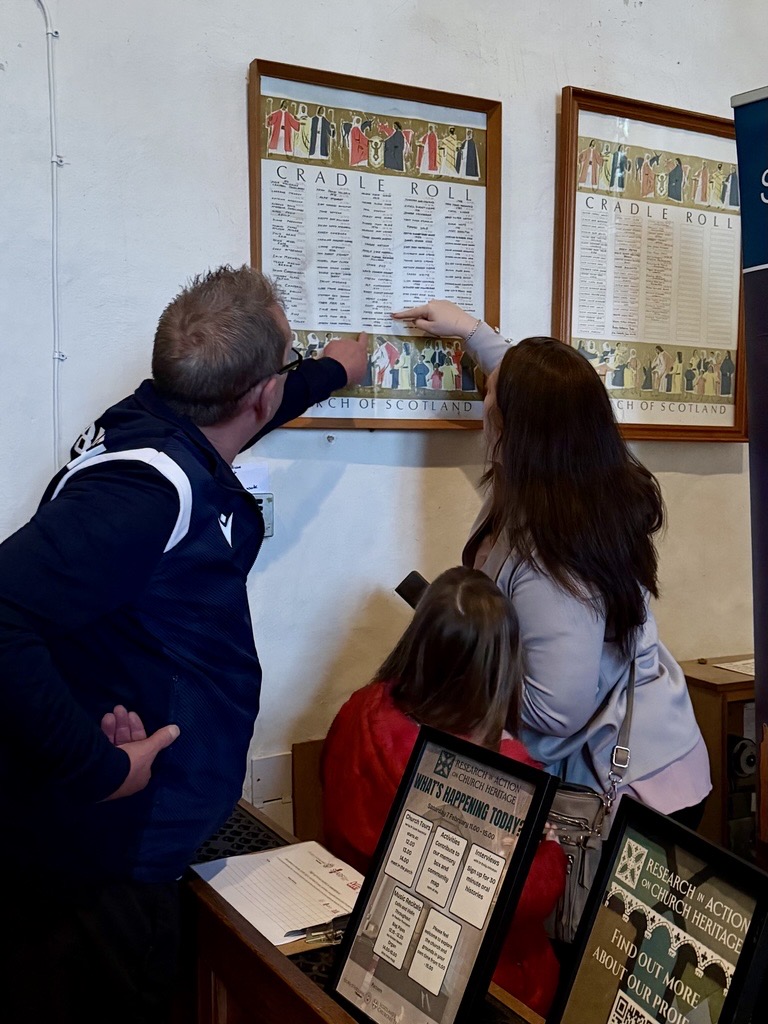
Visitors shared wedding stories – walking down the aisle themselves or watching their loved ones standing at the altar as they sat in the front pews. Others remembered baptisms, holding their children at the font, and took the opportunity to find their names in the cradle roll. There were loud joyful stories of Christmas services where the church was filled with the collective voice of the congregation singing advent hymns, Sunday school crafts in preparation for the Spring fete. There were quiet stories, too, of reflection and stillness, candlelight glowing in the window on a snowy Christmas Eve, and funerals of loved ones.
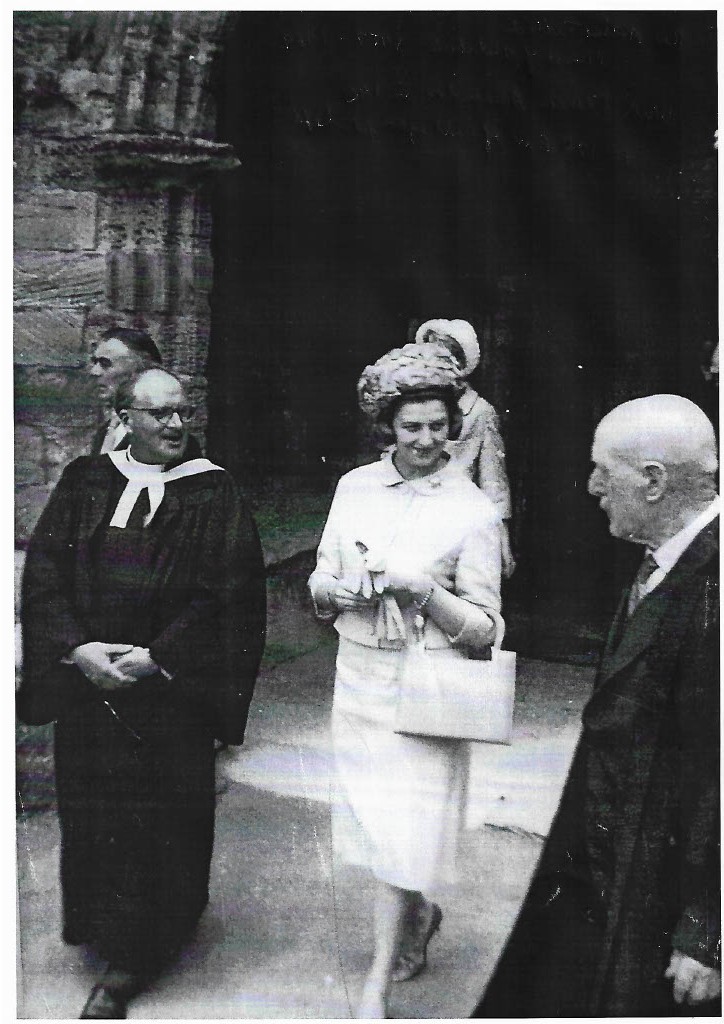
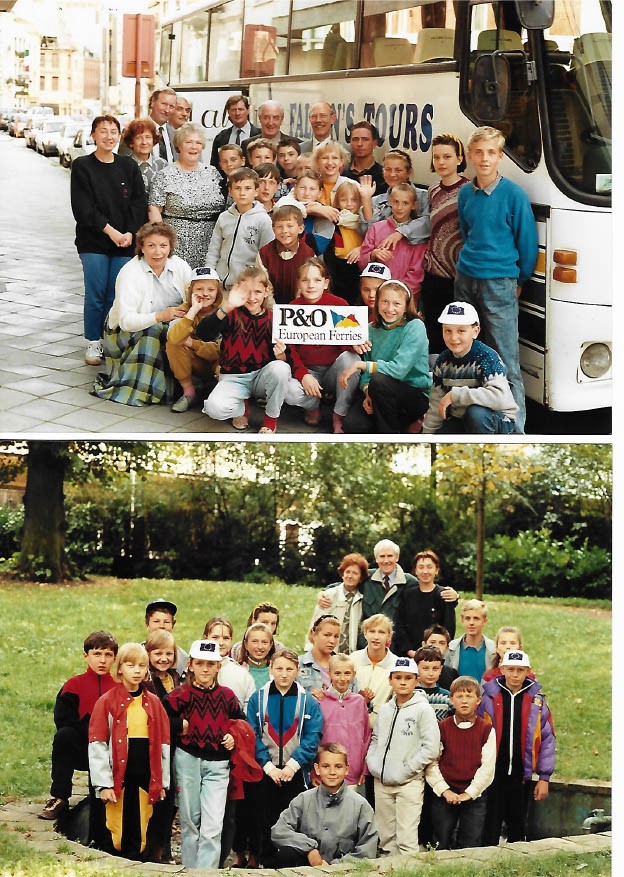
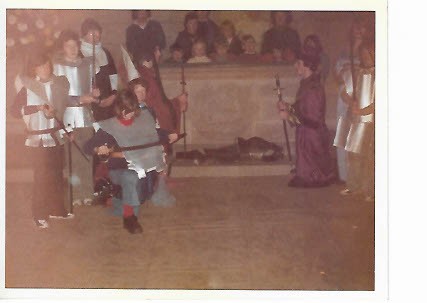
A wedding at WhitekirkA Royal Visit to WhitekirkChildren visiting from ChernobylSunday School children in the church
For many, Whitekirk is woven into the fabric of family life. Children once acting mischievously in the rafters, capturing pigeons to sell on at school. Games of hide and seek amongst the gravestones and the thrill of ringing the bell in the tower. The regular seats where parents sat each Sunday, later occupied by their children, now grown. One visitor described the church as a ‘marker’ – a place holding life’s milestones.
More recent memories also filled the space. Admiration for the acoustics during the Lammermuir concerts and moments shared at the weekly prayer group. Underpinning many reflections was a sense of hope and curiosity about what may come next under the care of Whitekirk New Life Trust.
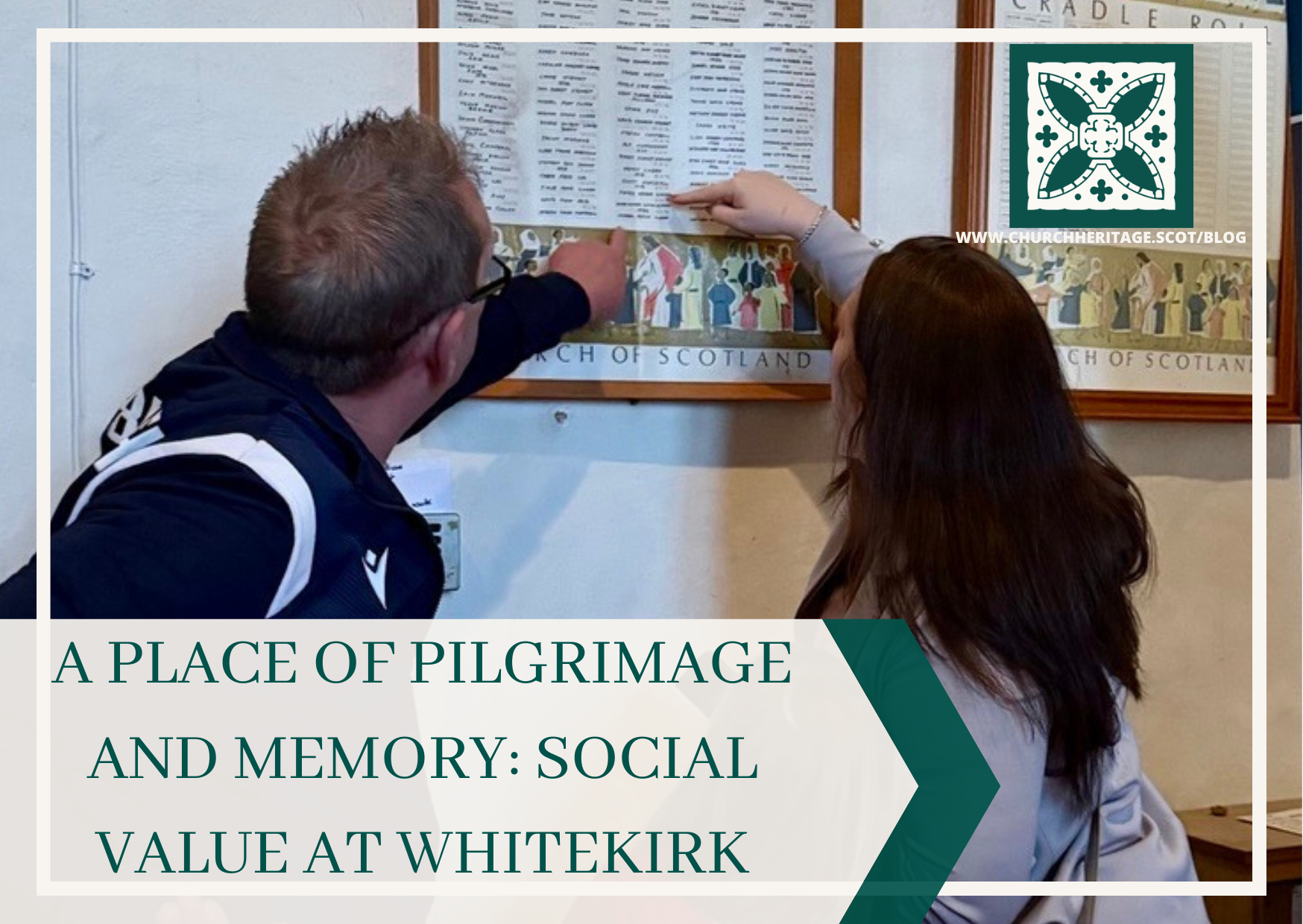
Examining the Cradle Roll
Through each of the stories, what struck me the most was the sense of continuity. Across generations, people have gravitated towards this church, seeking faith, family, music, memory or belonging. Whilst the reasons may differ, the act of coming together at Whitekirk remains.
As churches across Scotland navigate change, these lived experiences remind us why they matter. The heritage recording can tell us one part of the story, and the people who have passed through the doors can tell us another. These experiences give the church building its identity.
Visitors to Whitekirk
The Whitekirk New Life Trust are working to secure the future of St Mary’s as a place of worship and community gathering. We are hugely grateful to the Whitekirk New Life Trust for their support, generosity and collaboration in making our research possible. Their team helped to facilitate the day, welcomed visitors and even provided delicious baked goods so that we could continue conversations over tea and cake.
On that grey February morning, the church was, once again, what it always has been: a place that people come to and will carry with them long after they leave.
You can now explore material from the Whitekirk case study on our dedicated case study page, including heritage highlights, oral history excerpts and a new interactive gallery bringing together memories and heritage from across the church.
Written by Dr Emily Johnston, Community Officer for Research in Action on Church Heritage
For centuries, St Mary’s Church has been at the heart of Whitekirk’s life as a place of worship, gathering and memory. Now, as part of the Research in Action on Church Heritage (ReACH) project, we’re inviting you to share your stories and reflections to help document its cultural and community significance.
Whether your memories come from worship, local events or everyday encounters, we’d love to hear from you!
(c) Scotland’s Churches Trust
Join our open day
When: 7 February 2026
Time: 11am – 3pm (Drop in)
Where: St Mary’s Church, Whitekirk
What’s Happening?
Short expert-led tours on Whitekirk’s fascinating history will be held at 12.00, 13.00 and 14.00.
Throughout the day visitors can explore the church at their own pace and enjoy organ music.
Share your memories and experiences of Whitekirk
Participatory Mapping Show us which spaces in St Mary’s matter most to you at our interactive mapping station.
Memory Box Contribute in your own way: write, draw, sing, share photos or audio. Your piece will become part of a collective memory capsule.
Oral Histories Have a longer story to tell? Email Emily@socantscot.org to book a 30 minute chat and record your memories.
Speedy Interviews Got a short story or passing encounter? Share it in just 10 minutes!
Why Take Part?
Your contributions will help shape a new, publicly accessible database on Scotland’s church heritage. Together, we’ll capture the social and cultural value of St Mary’s for future generations.
The nearest bus stop is Ladysfield which services the 120 Dunbar – North Berwick
ReACH is a two-year project led by the Society of Antiquaries of Scotland and Scotland’s Churches Trust, funded by the National Lottery Heritage Fund and The Pilgrim Trust.
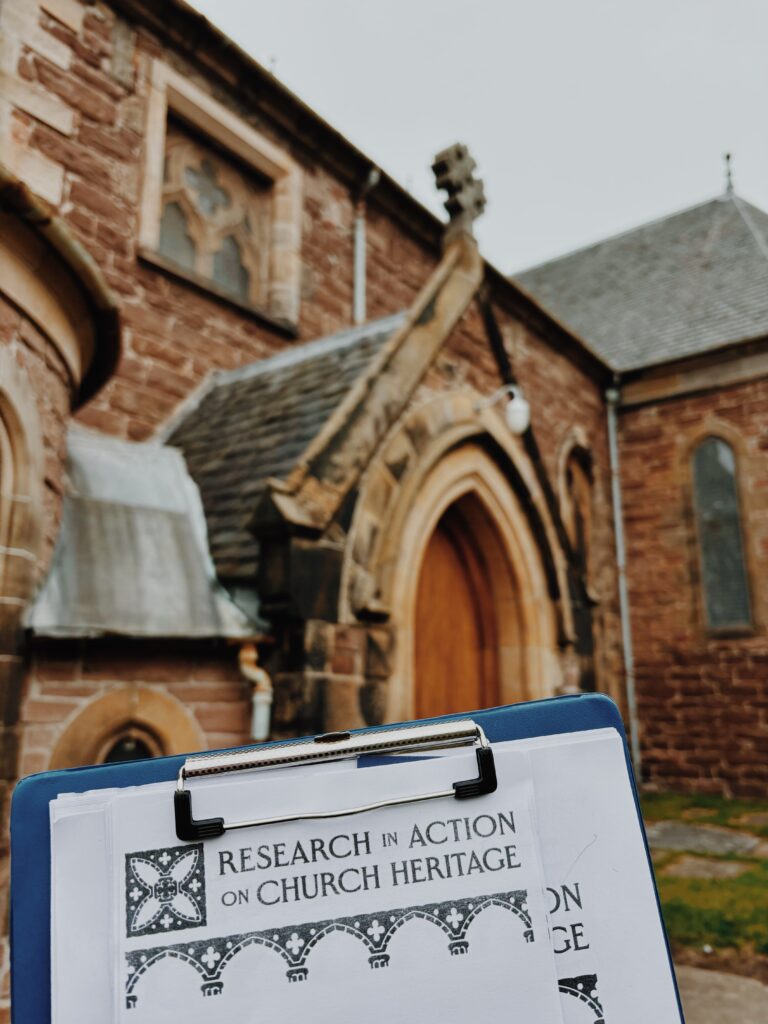
In late September, the Research in Action on Church Heritage (ReACH) team travelled north to Inverness, combining a visit to the Highland Archaeology Festival Conference with an opportunity to explore historic churches and meet the people who care for them. Across visits to Old High Church, East Church Inverness, Kirkmichael and East Church Cromarty, we encountered different approaches to preserving and reimagining Scotland’s church heritage: from community ownership and Gaelic culture to long-term conservation and interpretation.
Old High Church, Inverness
Our first stop was Old High Church, one of the city’s most recognisable landmarks which overlooks the River Ness. The site itself has a long history and is believed to be where St Columba converted King Brude of the Picts in 565AD. It has had a constant visual and spiritual presence, as well as associations with the Jacobite Rising with the clock tower acting as prison for Jacobite prisoners. Now, the churchyard welcomes fans of the Outlander book series and TV show, bringing the site to a whole new audience.
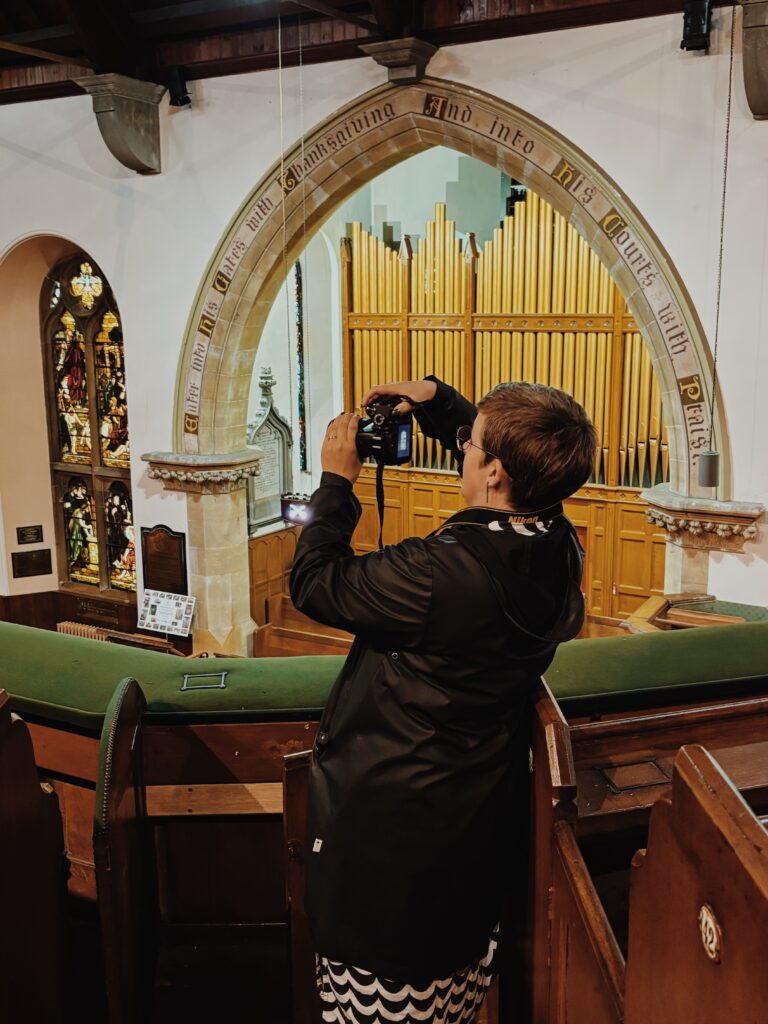
We were warmly welcomed by Chris, member of the community board who recently have purchased the church. Chris generously gave his time to show us around the church and share the story of the building’s recent move into community ownership and providing valuable connections amongst the local community – as well as where to find the best bowl of soup after a cold autumn morning. Inside, we were able to explore the historic interiors, photographing architectural details, including the stained glass, memorials and even the graffiti on pews. Exploring the church in this way gave us a real sense of how the space has evolved through use and repair.
From the pulpit and pews to the marble flooring and stained glass, the church offered an intricate record of its congregation’s history and craftsmanship. We poked into the nooks and crannies and looked closely at the layers of the building’s fabric, spotting phases of building work on the exterior walls.
Our visit also included conversations with local business owners and community members, who spoke about the value of the church to Inverness’s identity. Many shared personal memories of services, concerts, or simply the familiarity of seeing the spire rising over the city. Each conversation and reflection highlighted how deeply embedded Old High is in local life, not only as a historic religious site but as part of the city’s collective story.
Brief chats with visitors and tourists in the graveyard revealed the multiple ways people connect to such a place, from its Jacobite history and links to Outlander, to interests in graveyards or the quiet appeal of a peaceful green space in the city centre. These encounters demonstrated how church heritage continues to attract and inspire visitors for many different reasons.
East Church, Inverness
The following day we visited East Church, where we were welcomed by Murto who kindly gave us access and a guided tour whilst construction work is still underway. It was fascinating to see the space mid-transformation, with the scaffolding in place and the plans beginning to take shape.
The project to redevelop East Church as a Gaelic culture centre is inspiring. Its vision is to create a living hub for Gaelic language, music and community led by Culturlann Inbhir Nis.
Whilst this new use of the building requires the transformation of the space, it still maintains a deep respect for the building’s architectural and spiritual heritage, which previously led service in Gaelic. The plans are clearly well thought through and balance new uses with the conservation of historic features and once completed it will serve as a core for an active Gaelic community. Walking through the church with Murto, we could easily imagine the life that will return to the building: with Gaelic Pslam singing, conversations and events. It’s a powerful example of how heritage spaces can be adapted to sustain both cultural continuity and community relevance.
Kirkmichael, Dingwall
From Inverness, we travelled across the Black Isle to Kirkmichael, where we were warmly welcomed by Jim Mackay of the Kirkmichael Trust. Jim went out of his way to meet us, show us around and even invited us for a cup of tea.
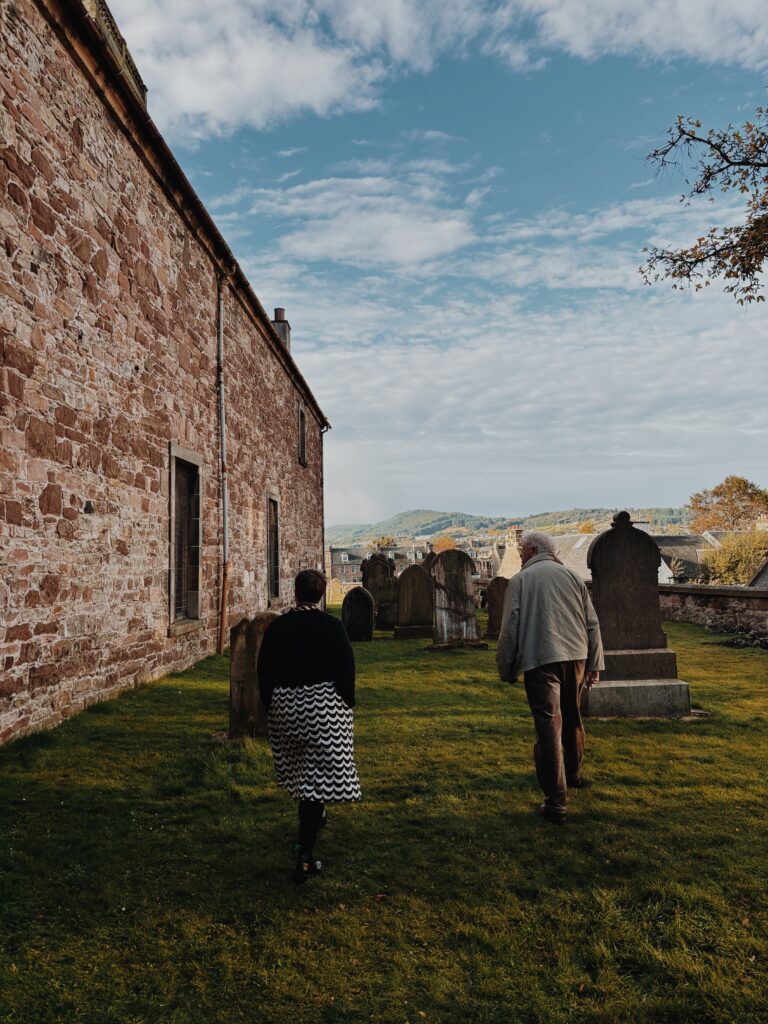
Listening to Jim talk about the Trust’s long-term work was deeply inspiring. His detailed knowledge of the church’s restoration and conservation, from structural repairs to interpretive design, reflects years of dedication. It was fascinating to hear how the church has changed over time and how it continues to be actively maintained, cared for and visited by tourists and locals. It was clear that the volunteers have taken time to research the history of each grave marker, learning techniques on how best to conserve the different types of stone, and how to enhance visitors experience to the site. With calm blue skies for our visit, we were able to experience the peace and tranquillity of the site for ourselves and understand why some have developed such an attachment to this place.
East Church, Cromarty
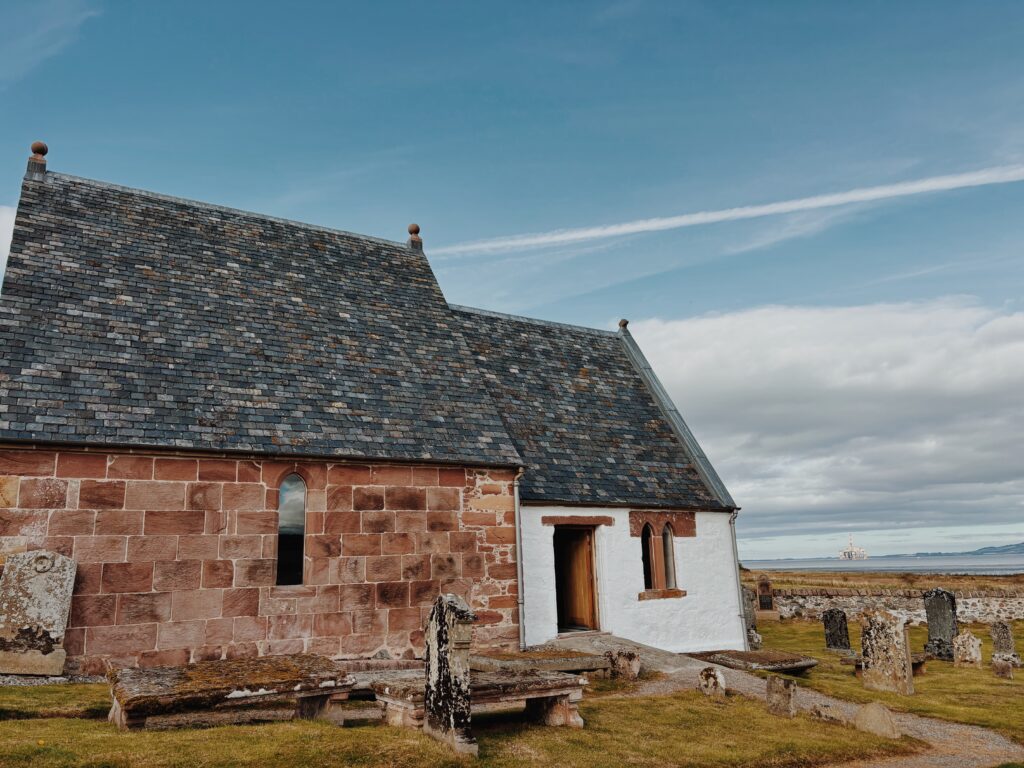
Our final stop was the East Church in Cromarty, a striking building with a rich layered history. The church is in the ownership of Historic Churches Scotland and was featured on BBC’s ‘Restoration Village’ in 2006. In 2007, it won a grant from the National Lottery Heritage Fund which has helped to preserve the building, as well as develop interpretation for those visiting the church.
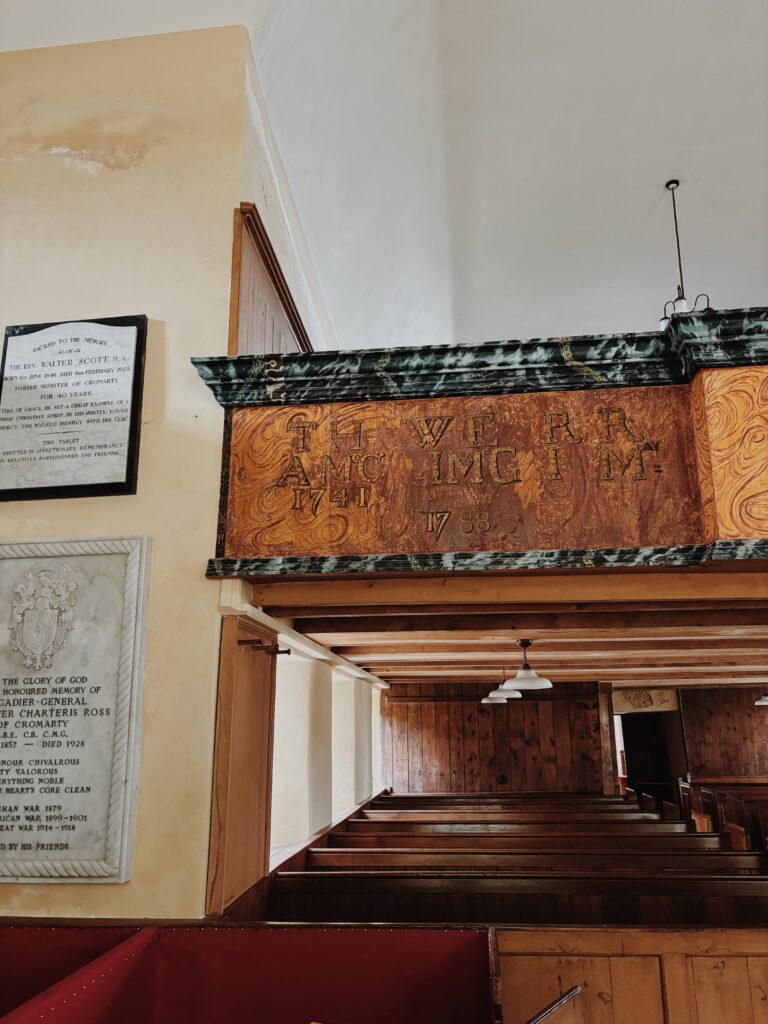
Interpretation panels guide visitors through the story of the church, its architecture and the people who shaped it. The presentation blends historical narrative with visual details, drawing out characteristics such as beautifully painted pew panels.
The East Church stands as an example of how interpretation can bring heritage to life and help guide visitor to key areas of interest.
Reflections
Our Inverness and Black Isle fieldwork offered us a vivid picture of church heritage in transition: from buildings seeking new uses to communities rediscovering old ones. Each site told its own story and spoke to us in different ways.
We left with hundreds of photographs, field notes, and, most importantly, a sense of gratitude for the generosity of everyone who shared their time and insights with us. Special thanks to Chris and Maureen at Old High, Murto at East Church Inverness, and Jim at Kirkmichael, for your openness and hospitality.
We’re excited to bring our learning from these field visits to the project and apply them as we move forward in our data collection and case studies.